
The Best Vanilla Cake Recipe
This post may contain affiliate links. As an Amazon Associate I earn from qualifying purchases. Please read my disclosure policy.
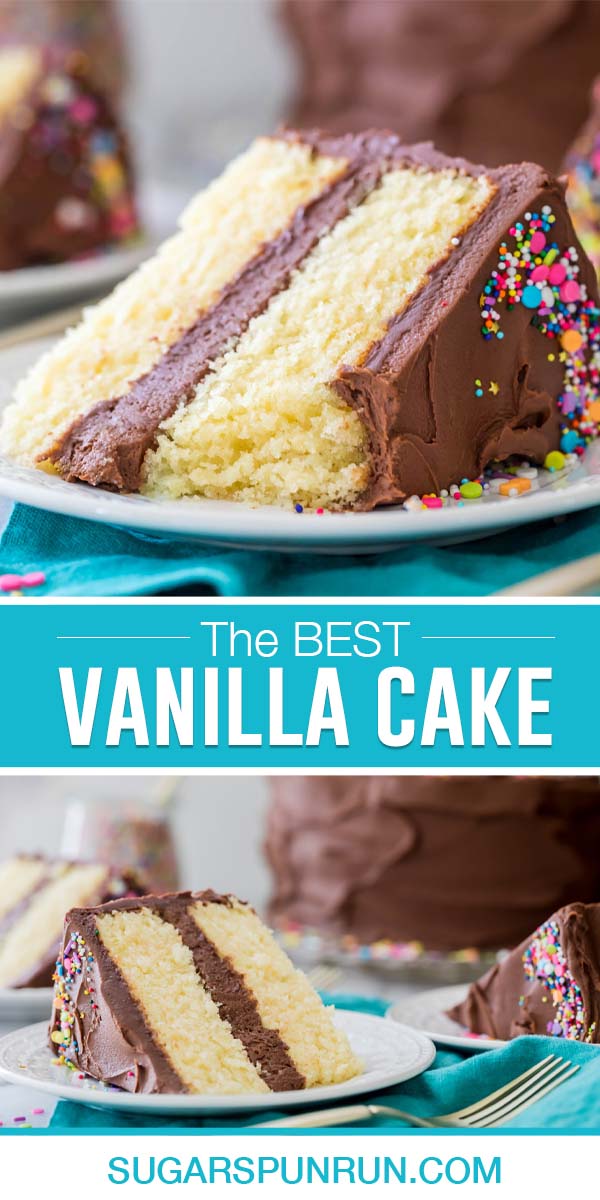
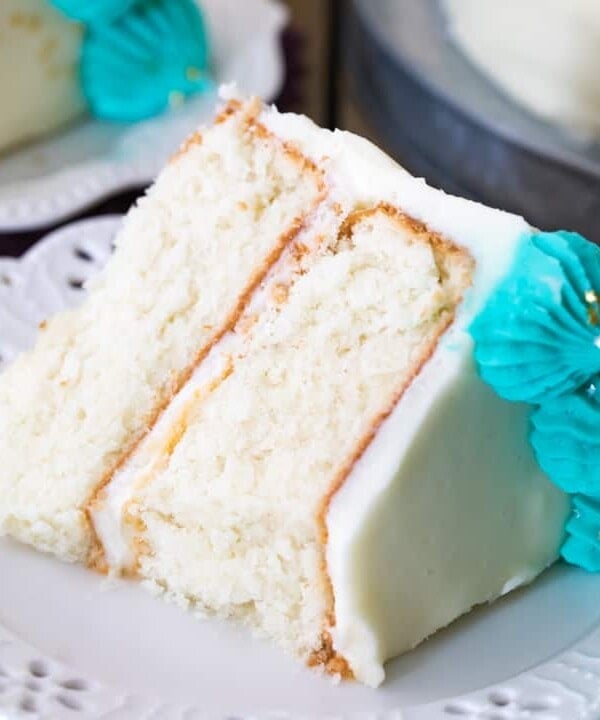
My vanilla cake recipe has a soft, plush, and perfectly moist crumb. It has a rich vanilla flavor, is perfectly beginner friendly, and is made entirely from scratch! If you’re looking for a classic homemade vanilla cake that works every time, this is it! Includes a video tutorial.
The BEST Vanilla Cake Recipe (Soft, Moist, and Made from Scratch)
Every baker needs a solid vanilla cake recipe in their repertoire, and today’s recipe is just that.
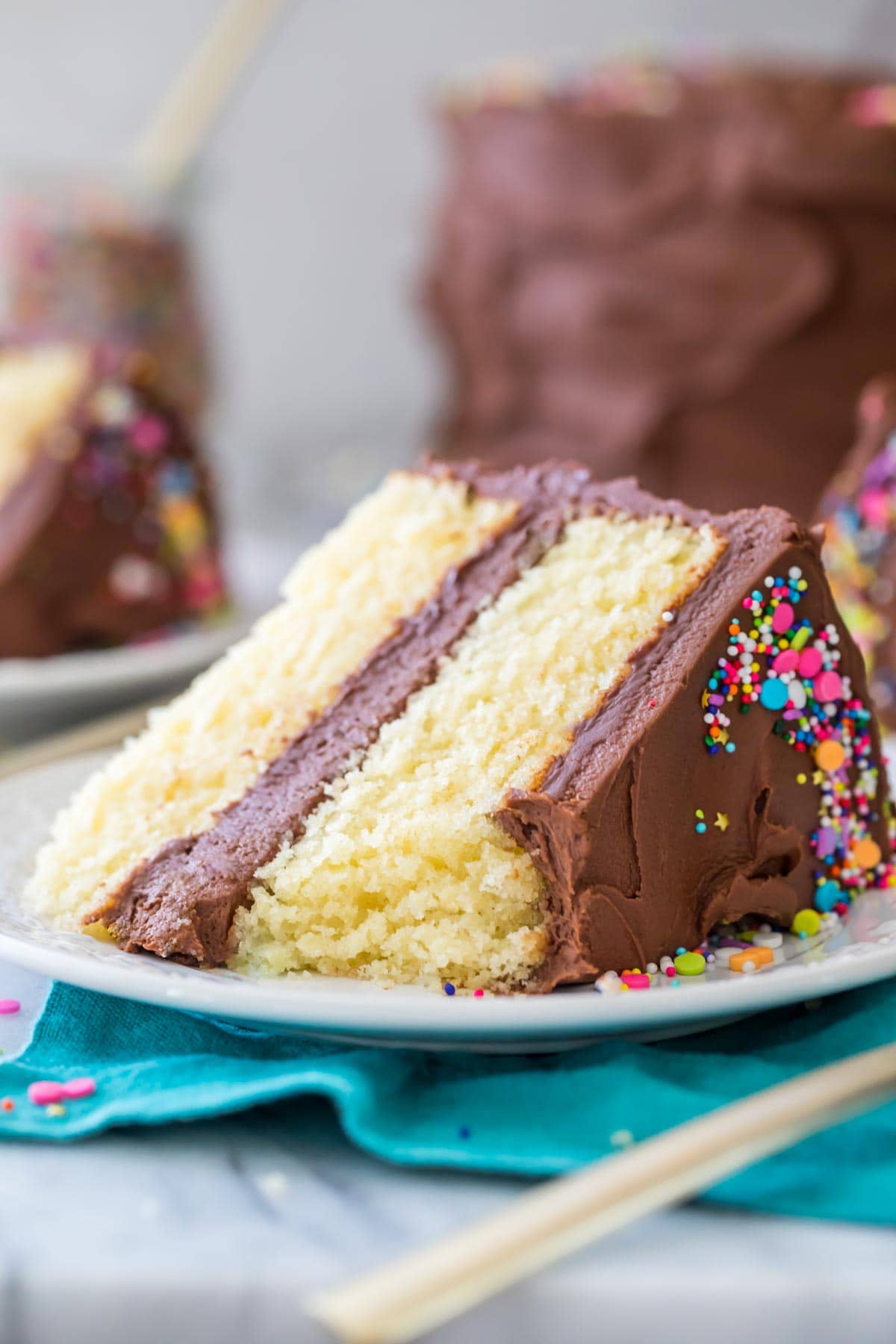
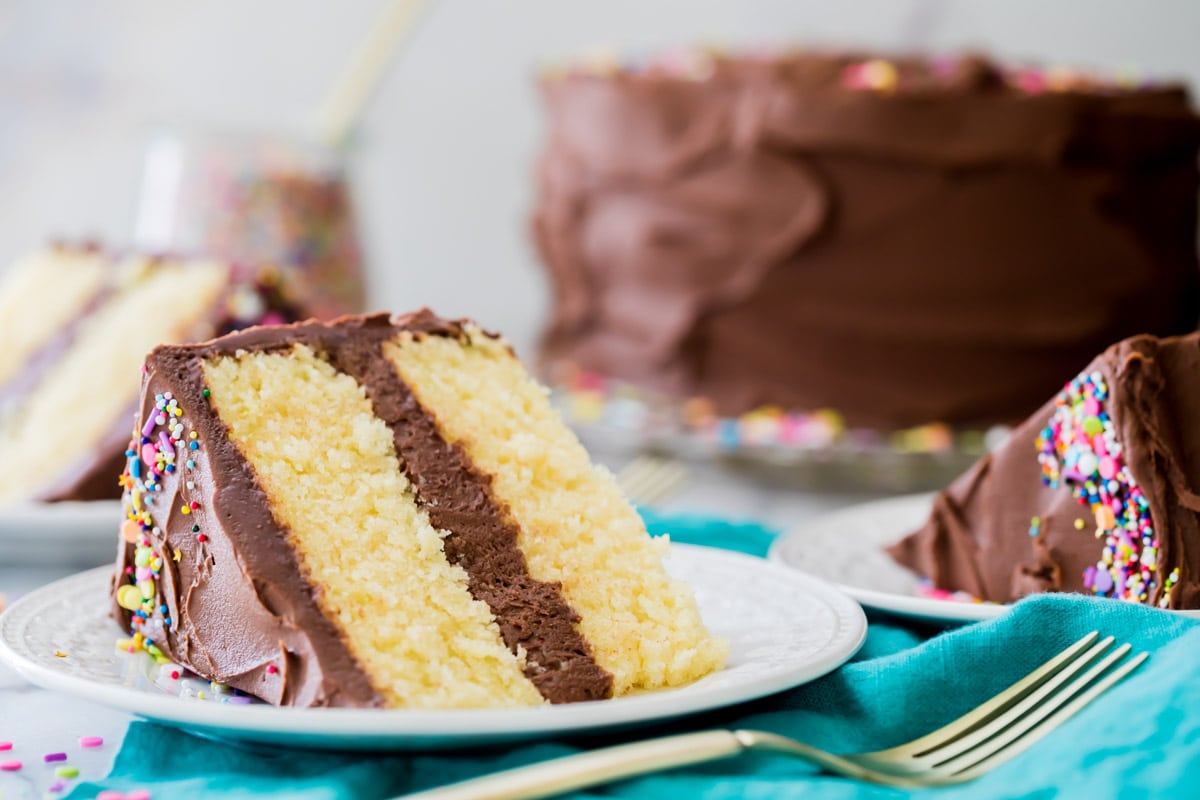
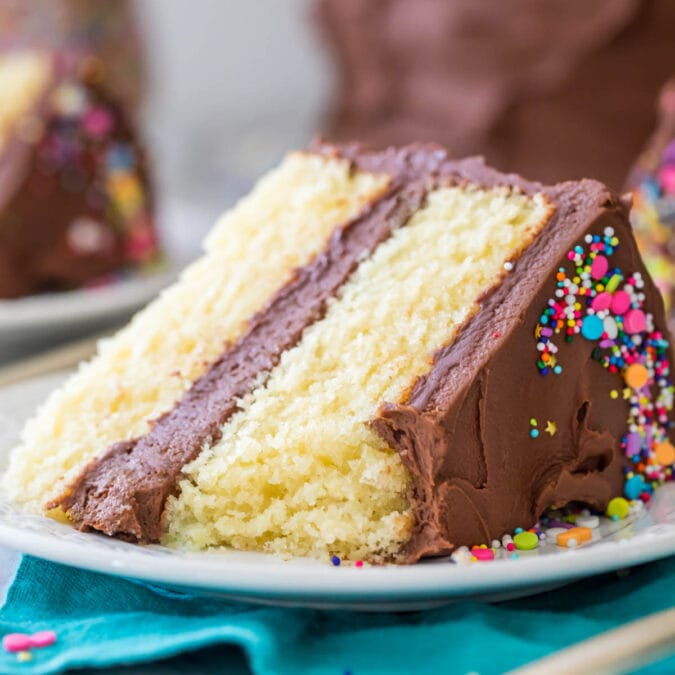
It’s soft, plush, and perfectly moist. Not to be confused with my white cake recipe, this recipe is a beautiful pale golden color and distinctly vanilla flavored. It pairs beautifully with any frosting, although a traditional chocolate frosting is my favorite finish!
Why This Vanilla Cake Recipe Works:
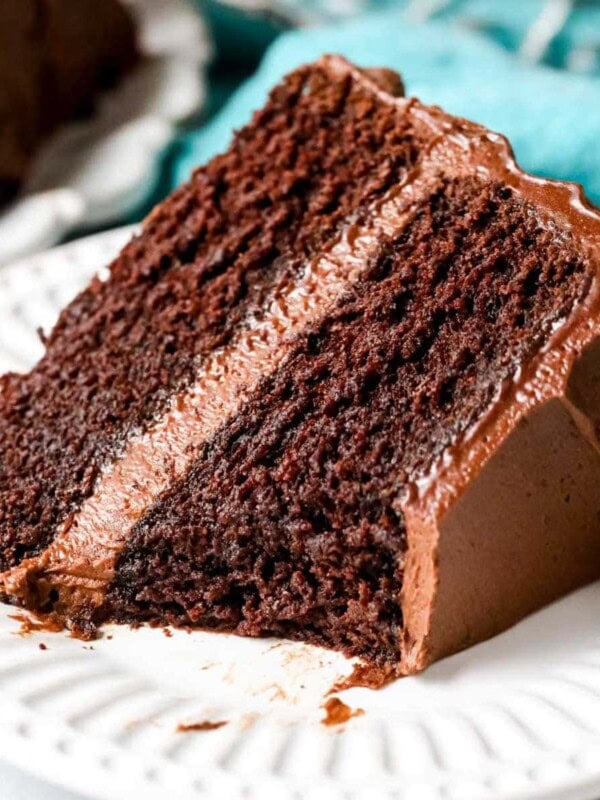
- Butter & oil combo. Using a blend of both butter and oil lets the cake reap the best benefits of both worlds: a rich, buttery flavor from the butter and soft, lasting moisture thanks to the oil. This technique worked so well in this cake recipe, I’ve used it in many recipes since then, including my chocolate cake recipe and marble cake.
- Buttermilk keeps the cake tender and adds subtle depth and richness.
- Light, fluffy texture. A full Tablespoon of baking powder gives the cake crumb lift for a soft, plush crumb that’s never too dense or heavy.
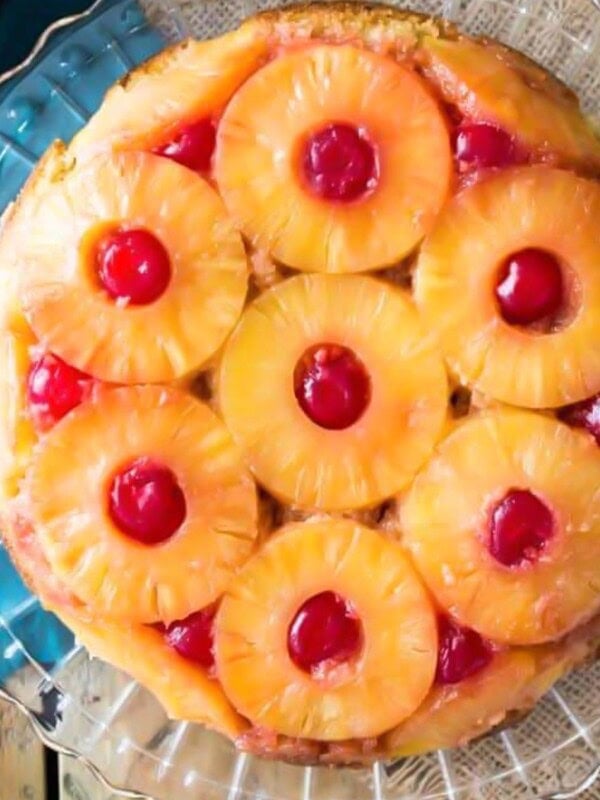
- Time-tested & reader-loved recipe. This vanilla cake recipe has been a long-time favorite on my website. It’s served as the base for many of my other cakes, including my popular pineapple upside-down cake.
Ingredients
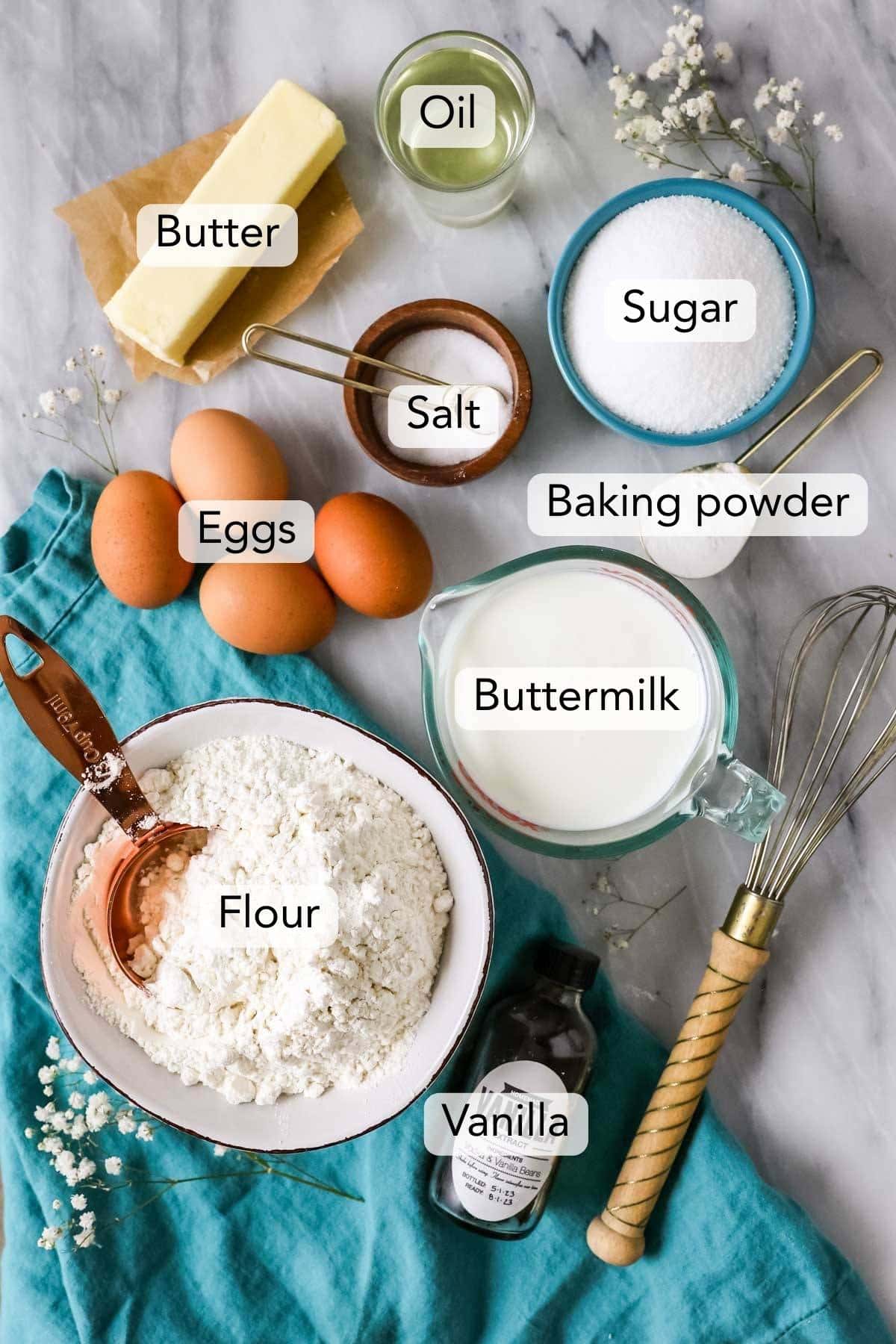
After testing many versions and combinations of ingredients, I’ve found that a good vanilla cake recipe needs the following ingredients:
- Oil AND butter. A blend of these two ingredients gives the cake the best possible flavor and texture. Butter provides flavor while oil adds moisture and keeps the crumb soft and moist rather than dry. A cake made with all oil would be moist but lacking in flavor, and an all-butter cake may have a more buttery taste, but would be more dry. Any neutral cooking oil will work here, but I typically recommend using either vegetable or canola oil. For the butter, unsalted is best so we have maximum control over the flavor of the cake.
- Sugar. Plain granulated sugar works best. Brown sugar would add moisture, but would detract from the classic vanilla flavor and even weigh down the cake a bit.
- Eggs. You’ll need four eggs, and it’s best if you bring them to room temperature before adding them (this helps them incorporate into the batter more evenly).
- Vanilla. You can’t have vanilla cake without vanilla! I recommend using a good quality vanilla extract, so if you’ve got a batch of homemade vanilla extract, use it here!
- Flour. I developed this vanilla cake recipe specifically to work with all-purpose flour and that’s what I always use. However, you *could* use cake flour instead. To substitute by weight, you would use the same amount, but if you are using measuring cups you will need to substitute your flour properly.
- Baking powder. I know a tablespoon of baking powder may seem like a lot, but that’s not a typo. It’s key for a soft, lifted cake crumb. Always make sure your baking powder is fresh and avoid using a generic brand, which I’ve had mixed results with in the past.
- Salt. You can just use plain table salt or a very fine sea salt.
- Buttermilk. I strongly recommend using full-fat buttermilk for the best flavor and texture. While I do have a buttermilk substitute, it doesn’t really make this vanilla cake quite as moist and flavorful as I like it to be, so now I strictly recommend using real buttermilk. And no, you do not *need* to have baking soda in a recipe in order to use buttermilk; we’re using it for its moisture and flavor here!
Sam’s Tip
One of the biggest mistakes you can make with this recipe is neglecting to measure your flour properly. If you over or under-measure your flour, your cake will not turn out right! Use the right method, be as precise as possible, and use a kitchen scale if you have one.
As always with my recipes, this is just an overview of the ingredients I used and why. For the full recipe please scroll down to the bottom of the post!
How to Make This Vanilla Cake Recipe (Step-by-Step)
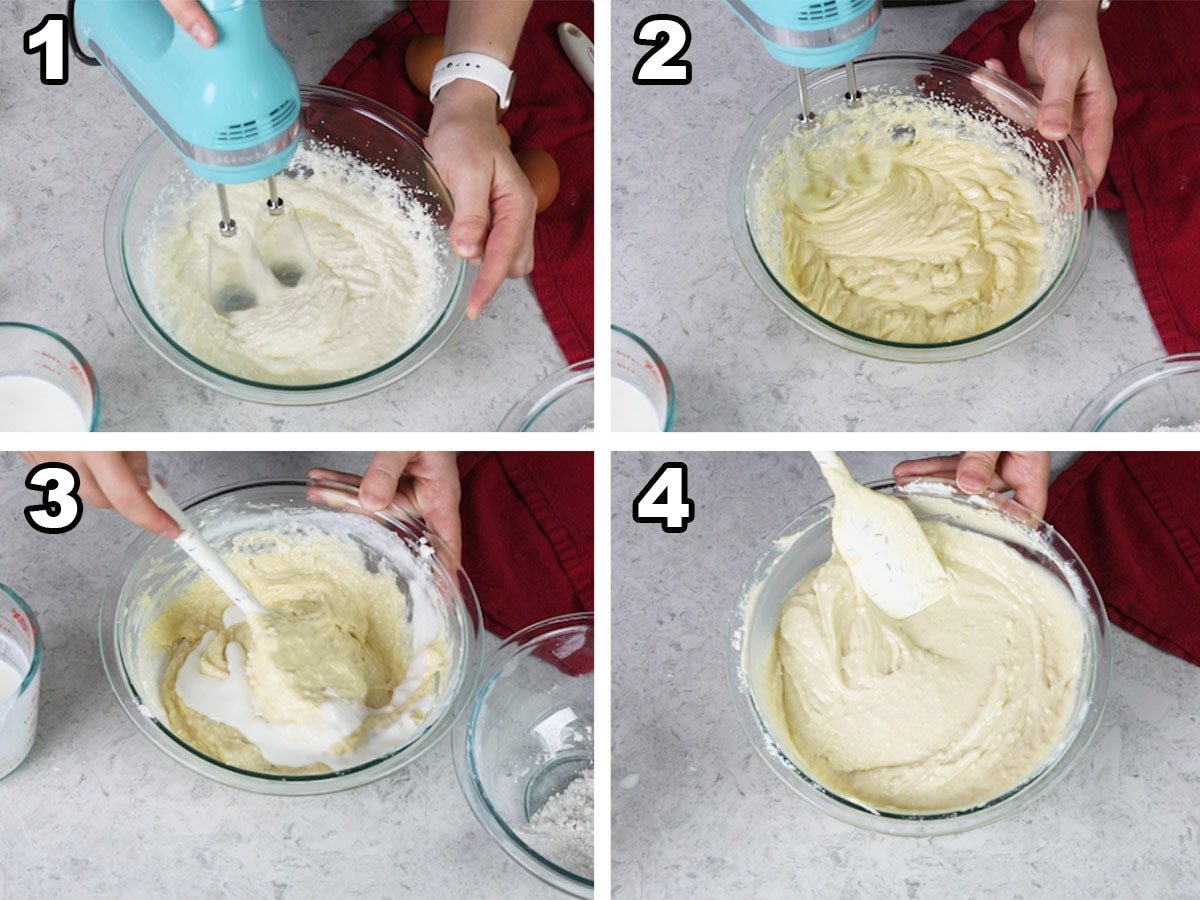
- Cream the butter, oil, and sugar in the bowl of a stand mixer.
- Add the eggs one at a time, beating well after each addition, then stir in your vanilla extract.
- Combine your dry ingredients in a separate bowl, then add about 1/3 of the mixture into your bowl. Use a spatula to gently stir until just combined. Follow this with about 1/2 of your buttermilk, and stir again until just combined.
- Add 1/2 of the remaining dry ingredients stir, and then add the remainder of the buttermilk. Finish with the final portion of dry ingredients and use your spatula to make sure the batter is smooth–do NOT overmix!
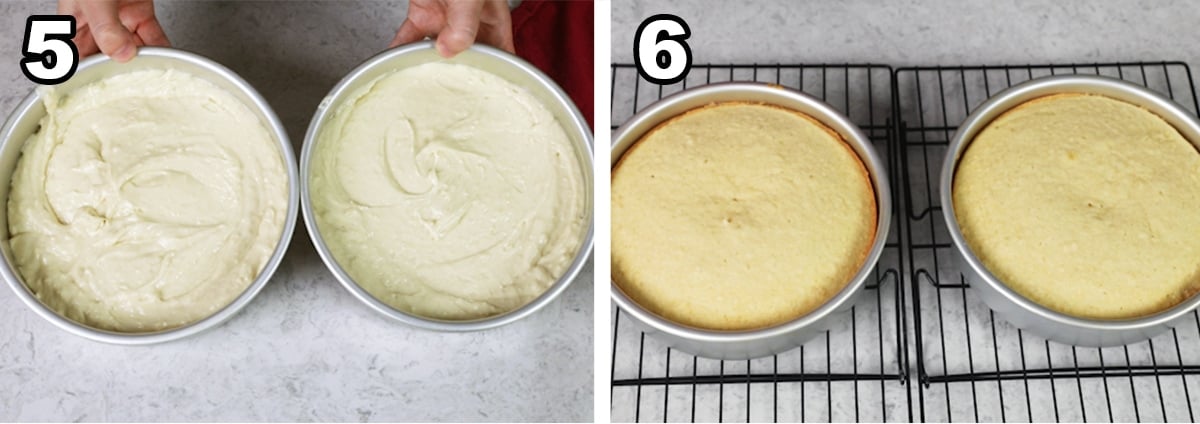
- Divide the batter evenly into two greased baking pans.
- Bake, then use a toothpick to test for doneness. Let the cakes cool in their pans a bit before inverting onto a cooling rack, where they’ll need to cool completely before frosting.
Sam’s Tip
While a toothpick that comes out clean indicates a fully baked cake, an over-baked cake will also yield a clean toothpick. It’s best to pull your vanilla cake out of the oven when a toothpick shows moist crumbs!
Frequently Asked Questions
A cake that has been over-baked or one in which too much flour was used will be crumbly when cut into. If you invert the cake too soon or try to handle it while it’s too warm, this could also make it break.
Cakes made from scratch require a bit more care and technique than those that come from a box-mix. When making any cake from scratch, take care to not over-mix, over-bake, or use too much flour, or the cake can end up tasting like cornbread. This applies to any cake that is made from scratch, not just this vanilla cake recipe!
Yes! This recipe will make approximately 24 vanilla cupcakes. Fill cupcake liners no more than 3/4 full and bake one pan at a time on 350F for about 17 minutes each.
Under-mixing your cake batter, not baking the cake for long enough, or opening the oven door too frequently while the cake bakes can cause the cake to sink as it cools.
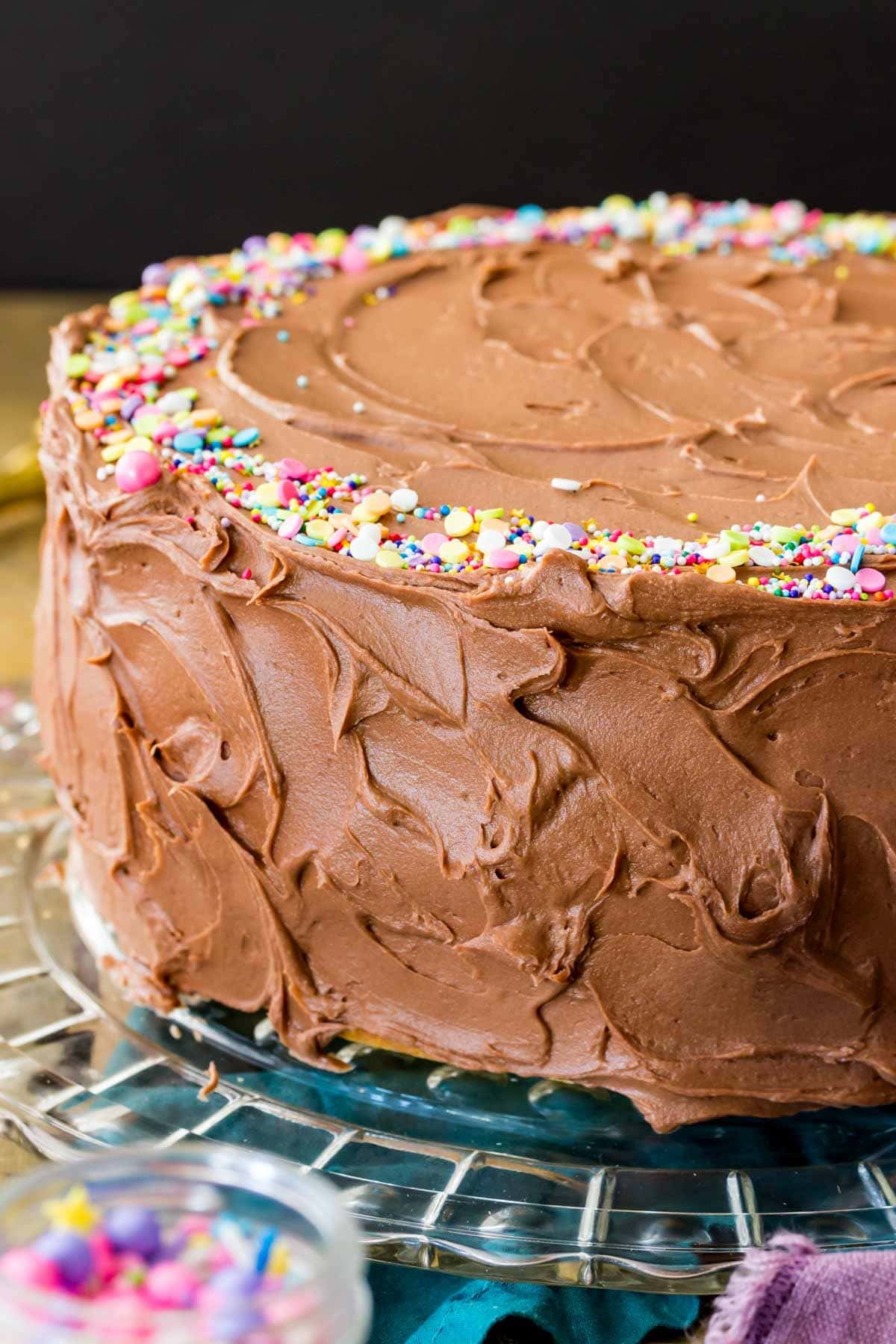
A good vanilla cake recipe is a blank canvas for your favorite frosting, it works with just about any icing. Some of my favorites include my chocolate fudge frosting, chocolate Swiss meringue buttercream, or classic chocolate buttercream (vanilla cake with chocolate frosting is a classic combo!), peanut butter frosting, cream cheese frosting, vanilla frosting, coffee frosting, or take a fruity spin with my strawberry frosting, raspberry buttercream, or even blueberry frosting. You can also top any of these frostings with my ganache drip.
Why Is My Vanilla Cake Dry?
Dryness is typically the biggest issue home bakers run into when making cakes from scratch, so I thought this FAQ deserved its own space. There are three main causes for a dry cake: over-measuring the flour (addressed above), over-mixing, and over-baking.
Over-mixing the batter:
Mixing the batter properly can be tricky and this is often where most mistakes are made with homemade cakes. To avoid over-mixing, thoroughly cream together the wet ingredients, particularly the butter, sugar, oil, and eggs. I highly recommend using an electric mixer for this step!
However, once you get to the point of combining your wet and dry ingredients, you need to be gentle and fold by hand using a spatula. Alternate adding the dry ingredients and the buttermilk, folding thoroughly, but not aggressively. The batter will be smooth and mostly cohesive; there may be some small lumps remaining, but so long as there aren’t any dry streaks and the batter is mostly uniform, that’s fine! Also, remember that while over-mixing can make your vanilla cake both dry and dense, under-mixing has its own risks and should be avoided as well!
Over-baking the cake:
Even a minute too long in the oven can cause a cake to be too dry and dense. Bake your cake layers on the center rack and use an oven thermometer to ensure your oven is running at the proper temperature.
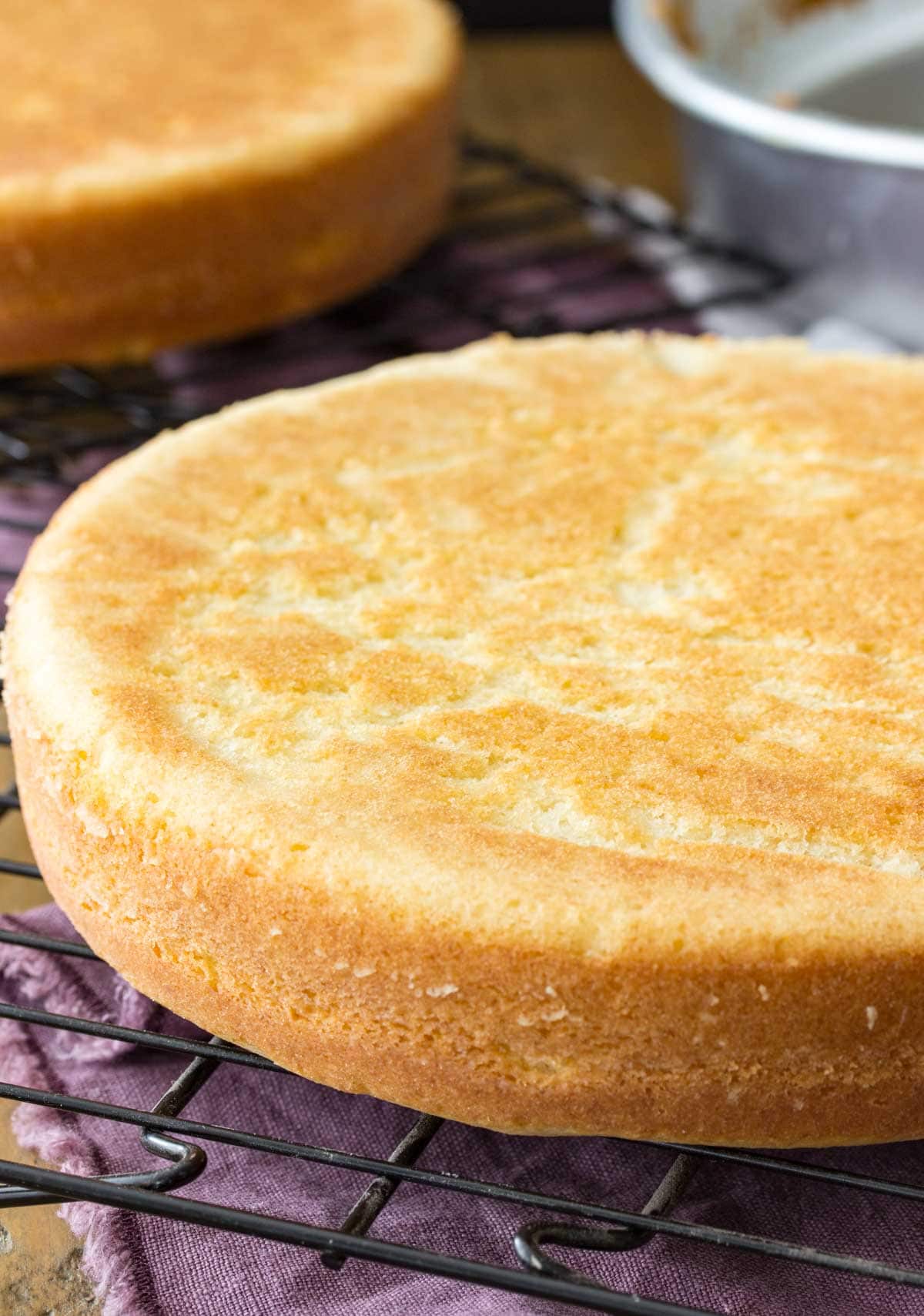
Don’t check your vanilla cake too early (that can make it sink!), but do keep an eye on it. When your cake is finished baking, the center should spring back if lightly touched–it should not deflate or appear jiggly. You can also use the toothpick test to check for doneness. To do this, insert a toothpick in the center of your cake; it’s done if the toothpick comes out with a few moist crumbs (not wet batter). Once your vanilla cake is finished baking, let it cool in the pan for only 10-15 minutes before inverting it onto a cooling rack to cool completely.
More Great Cakes to Try:
If you’re new to making homemade cakes (or just want to delve deeper into the process) make sure to check out my posts on how to decorate a cake and 3 ways you’re accidentally ruining your homemade cake.
Enjoy!
Let’s bake together! Subscribe to my newsletter to be notified of all the newest recipes, and find my free recipe tutorials on YouTube
Vanilla Cake Recipe
Equipment
Ingredients
- ½ cup (113 g) unsalted butter, softened to room temperature
- ½ cup (120 ml) avocado, canola or vegetable oil¹
- 1 ½ cup (300 g) granulated sugar
- 4 large eggs, room temperature preferred
- 1 Tablespoon vanilla extract
- 3 cups (375 g) all-purpose flour²
- 1 Tablespoon baking powder
- ½ teaspoon salt
- 1 ¼ cup (300 ml) buttermilk, room temperature preferred
- 1 batch Chocolate Frosting, click link for recipe, or use one of the other frostings recommended in the notes below
Instructions
- Preheat oven to 350F (177C) and prepare two deep 8" round cake pans³ by lining the bottoms with parchment paper and lightly greasing the sides. Set aside.
- In the bowl of a stand mixer (or in a large bowl using an electric mixer) cream together the butter, canola oil and sugar until creamy and well-combined.½ cup (113 g) unsalted butter, ½ cup (120 ml) avocado, canola or vegetable oil¹, 1 ½ cup (300 g) granulated sugar
- Add eggs, one at a time, beating until thoroughly combined after each addition.4 large eggs
- Stir in vanilla extract.1 Tablespoon vanilla extract
- In a separate, medium-sized bowl, whisk together flour, baking powder, and salt.3 cups (375 g) all-purpose flour², 1 Tablespoon baking powder, ½ teaspoon salt
- Using a spatula and gently hand-mixing, alternate adding flour mixture and buttermilk to the butter mixture, starting and ending with flour mixture and mixing until just combined after each addition. The batter should be thoroughly combined, but there may be some small lumps in the batter and avoid over-mixing (and do not use your electric mixer or stand mixer for this step).1 ¼ cup (300 ml) buttermilk
- Evenly divide batter into your prepared cake pans, and bake on 350F (175C) for 30-35 minutes. When the cake is done, the surface should spring back to the touch and a toothpick inserted in the center should come out mostly clean with few moist crumbs (no wet batter).
- Allow cakes to cool in their cake pans for 10-15 minutes before inverting onto cooling rack to cool completely before frosting.
- Frost cake using my chocolate frosting (or see notes for other favorite frosting options) and decorate with sprinkles (if desired).1 batch Chocolate Frosting
Notes
¹Cooking oil
You may use any neutral cooking oil instead of vegetable or canola oil. I generally don’t recommend olive oil, which is heavier and has a distinct flavor that could affect the end taste result of your cake.²Cake Flour
You may substitute cake flour for all-purpose flour. Use 3 1/3 cups or 375g of cake flour.³Different size baking pans
- 13×9″ pan: This recipe makes enough for one 13×9″ baking pan. Readers have reported the approximate bake time is 30 minutes.
- Two 9″ pans: Readers have reported this cake takes approximately 25 minutes to bake in 9″ pans.
- Bundt pan: Readers have reported this cake takes approximately 40-45 minutes to bake in a bundt pan
Vanilla Cupcakes:
This recipe will make approximately 24 vanilla cupcakes. Fill cupcake liners no more than 3/4 of the way full. Bake on 350F for 17-18 minutes or until a toothpick inserted in the center comes out with a few moist crumbs or clean.Frosting Options
The chocolate frosting I linked to in the ingredients is my favorite pairing with this cake, but here are some other great options:Storing
Store covered at room temperature for up to 2 days or in an airtight container in the refrigerator for up to 5 days. If refrigerated, it’s best to allow the cake to come to room temperature before serving for best texture and flavor.Freezing
Unfrosted cake layers can be wrapped tightly in plastic wrap and then foil and then frozen for up to 3 months. Thaw (without unwrapping) overnight and then bring to room temperature (still without unwrapping) to retain the best texture. Frosted cake slices can be wrapped individually and frozen and thawed overnight in the refrigeratorVideo note
In the video I mistakenly say to add more buttermilk than is necessary. The written recipe is correct with 1 1/4 cups of buttermilk.Nutrition
Nutrition information is automatically calculated, so should only be used as an approximation.
Like this? Leave a comment below!
This vanilla cake recipe was originally published in January 2019 but has since been updated to include new photos and helpful tips. The recipe remains the same.









I admire your persistence! Great post. Thanks for sharing your brilliance with us.
Do you have to use buttermilk?
Yes, you can make this substitute if you don’t have it on hand: https://sugarspunrun.com/easy-buttermilk-substitute/
Have you ever tried it using cake flour instead?
I have not, but someone else did and ended up with a dry cake. I’d stick with all-purpose.
I make a lot of cakes for people, as I love to bake and decorate them. I get asked to do it often! I love chocolate cake myself and have been in search of the perfect vanilla cake for years. This is it! I doubled the recipe for a half sheet cake and it turned out beautifully. Tender, moist, and so flavorful. Everybody raved. I myself wanted a second piece, which is saying something major since it is not my first cake flavor choice. So, so good! I did cut back on the sugar by about a half cup since I planned to top it with a buttercream frosting and that just seemed like too much sweet. Thank you so much for this recipe- I will use it often! 💕
I am so thrilled to hear that it was such a hit! <3
I tried this cake for a substitute for a box cake. My grandson like a coffee cake that uses a box. I used 2 sticks of butter instead of oil. Not fond of oil in cake. Excellent recipe. A moist tender cake. Will use it for my go to cake recipe.
So glad it was such a hit!
Hi! Looks so delicious! I need to make a 9” cake but only one layer. Should I half the recipe? Also do you have a good recipe for vanilla frosting?
Yup, you can cut it in half! I would use the vanilla buttercream that I used here for these cupcakes: https://sugarspunrun.com/confetti-cupcakes/
I hope you love it!
I have never baked a cake from scratch. Let me just start by saying…AMAZING! I was so surprised at how easy it was to make a moist, delicious cake. And of course I had to make your chocolate frosting. It was to die for! I made this for my wife’s birthday. She was blown away. So much better than store bought cake. I always think store and restaurant made desserts are way too sweet, so I always use half the sugar called for in the recipe. Plus I’m trying to avoid diabetes! I did the same for this recipe and it came out delicious! Thank you so much for posting it.
I am so thrilled to hear this!!! Aren’t from-scratch cakes the best!?
So happy to hear that you and your wife enjoyed (Happy Birthday to her!), and glad to hear that it worked so well with the reduced sugar!
Thanks for commenting to let me know how it turned out, Chris!
This looks like the perfect texture…and not too sweet, which I love! Question about the flour weight because I always weigh my ingredients. The recipe calls for 3 cups/390 g. I use King Arthur Flour, and according to their weight chart, 3 cups would be 360 g. I always get confused when there’s a difference in weights between their weight chart and recipes I find. This would be a difference of 30g. Any advice?
I’d stick with the 390, I always actually weigh out my ingredients after measuring them by cup so for me the 3 cups came out to 390g and that’s what I’ve used every time.
Generally, for me, a cup of all purpose flour comes out to 125g, which would be 375g for 3 cups and coincidentally right between the King Arthur measurement and what I have listed here. I do think you could use 375g of flour here and that would be fine if you are worried that 390g is too much, but I would not reduce it all the way to 360g. I hope that helps and I hope that you love the cake!
Thanks for the quick reply! I had to ask that question because I always run into the weight issue with recipes, and it boggles my mind! 😉 I go back and forth over what to use! Looking around at other vanilla cake recipes that use about 3 C of flour, it seems that yours has a bit more liquid in it, so maybe it’s safer to stick with your weight of 390 g. The texture really does look perfect! Anf I like I mentioned in my original comment, I love that there’s not as much sugar in this recipe (compared to others).
Sorry! One more question about this recipe. How do you think the cake would bake in a bundt pan (10 in/12 C)? I really appreciate your help 🙂
Ooh, I haven’t tried it in a bundt pan, I think it would work (make sure to grease and flour the pan well or use a baking spray that contains flour) but I am not sure what the bake time would be.
If you do try it out I really would love to hear how it turns out!
I will defintely do that! Thanks again!
Thanks Sam. I decided to use your recipe for my valentine cake. It turned out really awesome. I reduced the sugar and used vinegar + milk as I don’t have buttercream. Awesome! Thanks for sharing
I’m so glad to hear that you enjoyed it! Thank you for commenting to let me know how it turned out for you 🙂
Hello,
I plan to use this recipe for my daughter’s birthday tomorrow. I only have 10 inch round pans, can I still use this recipe?
Yes, but the layers will be much thinner, you will also need to reduce the time a fair bit so it doesn’t burn (I’m not exactly sure how much time so I would watch it carefully, but definitely not as long as it would take for the 8″ layers)
Can you make these into cupcakes? I assume you can but wanted to know if there was any reason why not!
Thanks
Yes you can! They will need to bake for less time — I’d start checking around 18 minutes
Do you know about how many cupcakes this recipe would make?
24 🙂
If I want to make the cake less sweet, what do you suggest I do with the reducing the sugar amount and should I replace it with something else in order to preserve the texture?
I’m sorry I haven’t made them with less sugar so I can’t say for sure how it would turn out
Would this recipe also work in a 9×13 pan?
Yup! 🙂
Baking time will vary though so I would keep an eye on it as it bakes
Good morning, I’m trying to make this cake for my daughter’s bday today. I must be missing something…When are you supposed to add the flour mixture to the creamed butter? Step 6 says to mix flour mixture with buttermilk but it doesn’t say anything about the creamed butter. Or did you want us to add the buttermilk to step 2? Please help!
Hi Heather! You alternate adding the flour mixture and buttermilk to the butter mixture, I’m sorry if that wasn’t clear and I went in and added the words about the creamed butter specifically to clear up any confusion. I hope that helps!
I loved your recipe! My cake came out very fluffy and delicious.
Can I use this recipe substituting vinegar for the eggs? Egg allergies.
I’m sorry Debbie but I don’t have experience with egg substitutes. Hoping someone will chime in!