
Swiss Meringue Buttercream
This post may contain affiliate links. As an Amazon Associate I earn from qualifying purchases. Please read my disclosure policy.
Tired of frostings that are too sweet? This one will be a game changer for you! Swiss meringue buttercream is silky smooth, versatile, and NOT too sweet. It’s made with a fraction of the sugar found in other frostings and pipes beautifully too! Recipe includes a how-to video.
A Perfectly Sweet Buttercream
If you’ve ever been the kind of person to scrape the frosting off your cake because it’s just too sweet, today’s recipe is for you.
Swiss meringue buttercream is one of the most common frosting recipes used by professional bakers, yet most home bakers haven’t heard of it. Instead, they use American buttercream frosting, which is thicker and typically very sweet. Swiss meringue buttercream, on the other hand, is light, buttery, and perfectly sweetened.
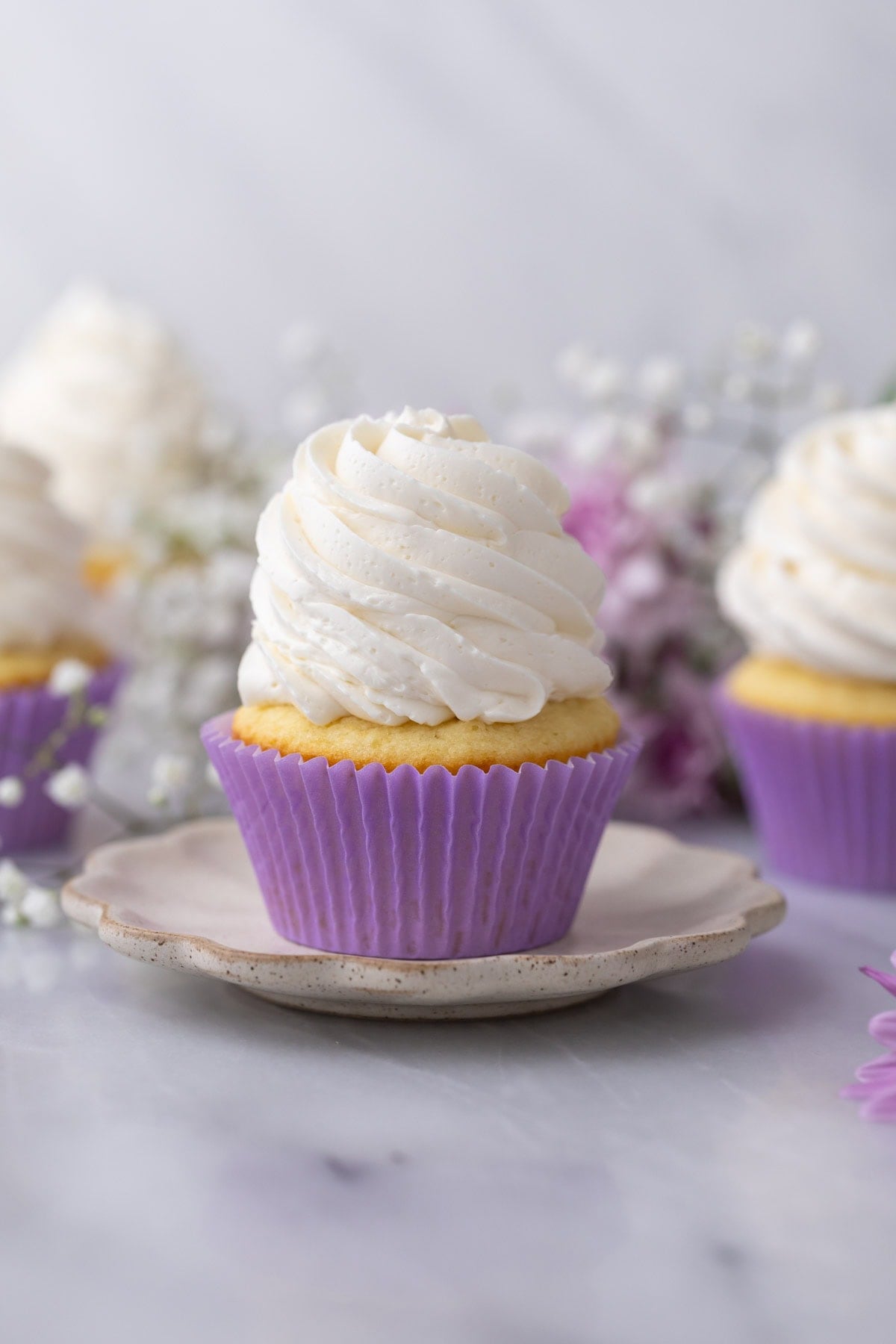
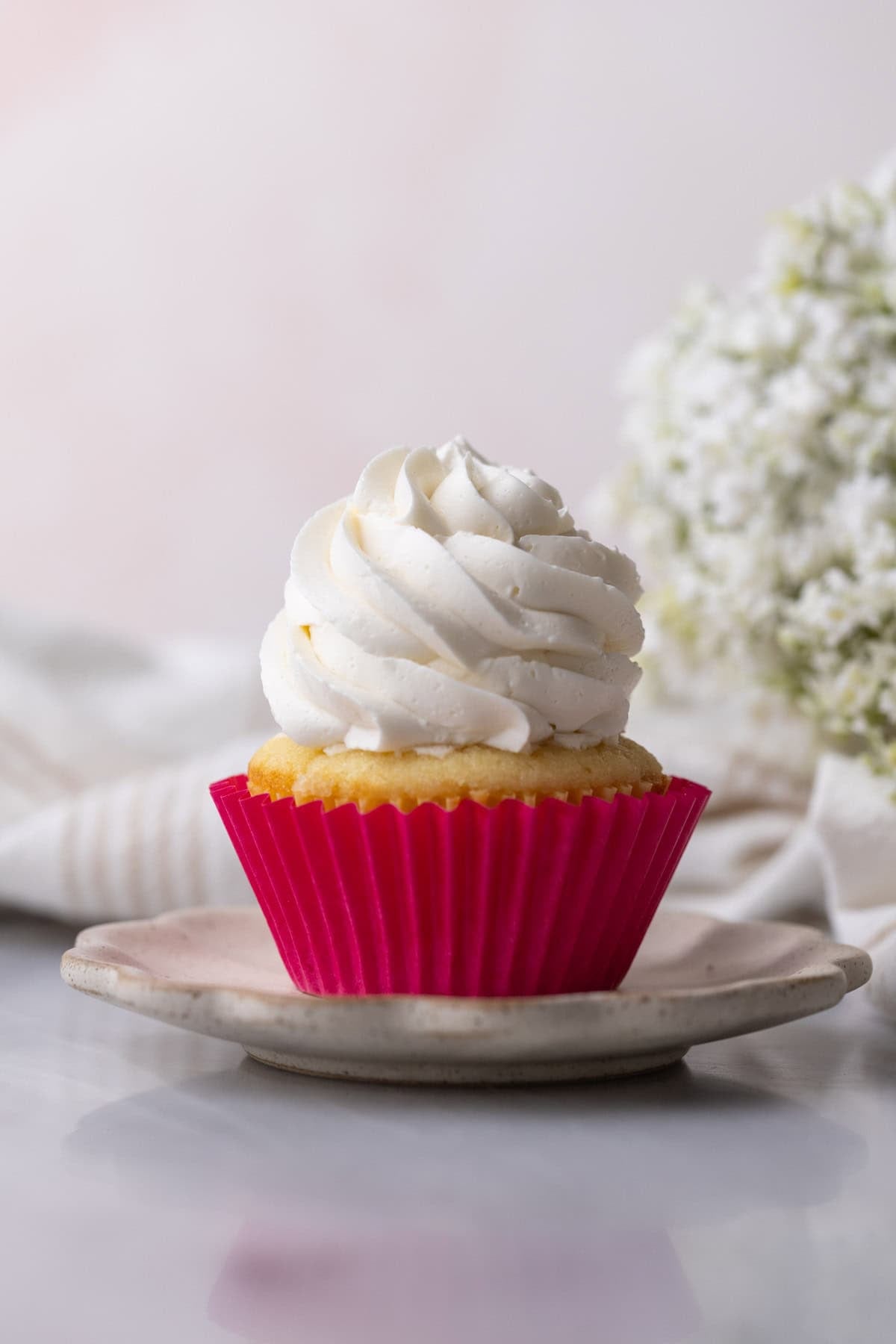
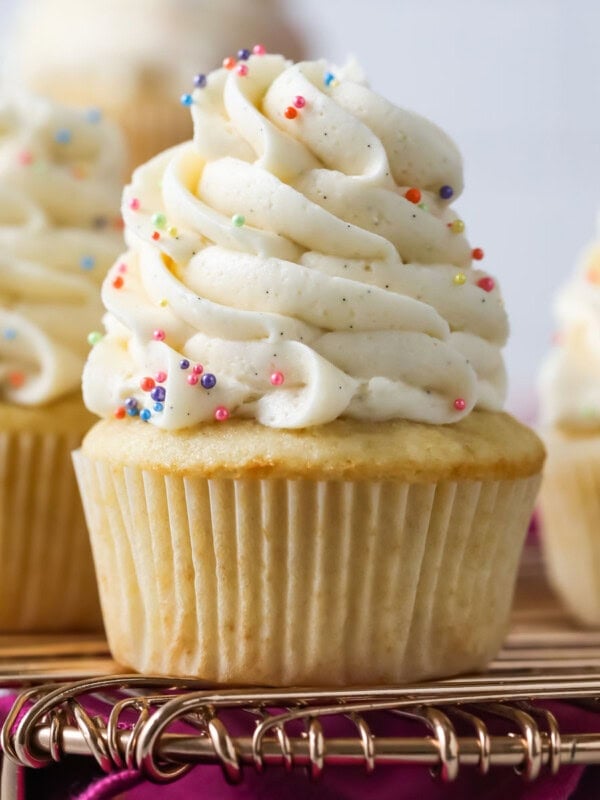
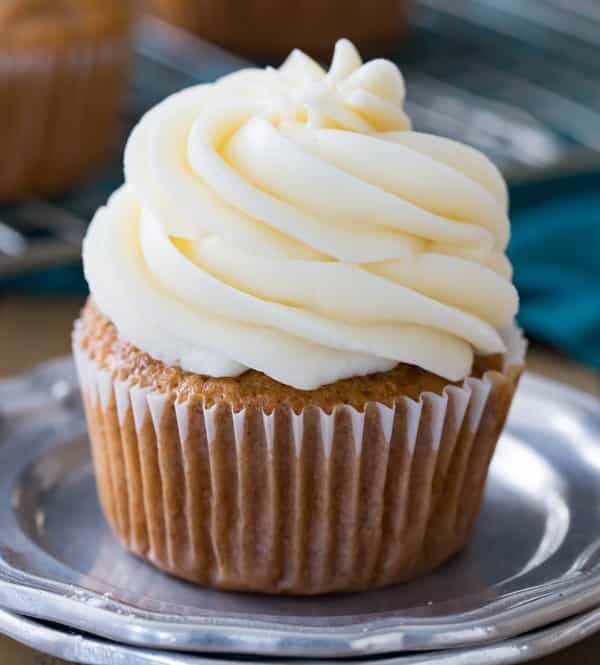
It also pipes beautifully (see the photo above!) and pairs well with just about any flavor cake. Have I convinced you to try it yet? 😉
Why You’ll Love This Recipe
- Incredible texture. This frosting has a light, silky smooth and perfectly buttery mouthfeel (and stays that way–it doesn’t crust!). The texture comes from a meringue base made of a reduced amount of granulated (not powdered!) sugar and egg whites.
- Pipes beautifully. Swiss buttercream holds its shape well, making it ideal for piping, decorating, and using under fondant.
- Easier than you think. Yes, you will need to spend some time by the stove (just like when making ermine frosting!), but I promise it’s not hard to make.
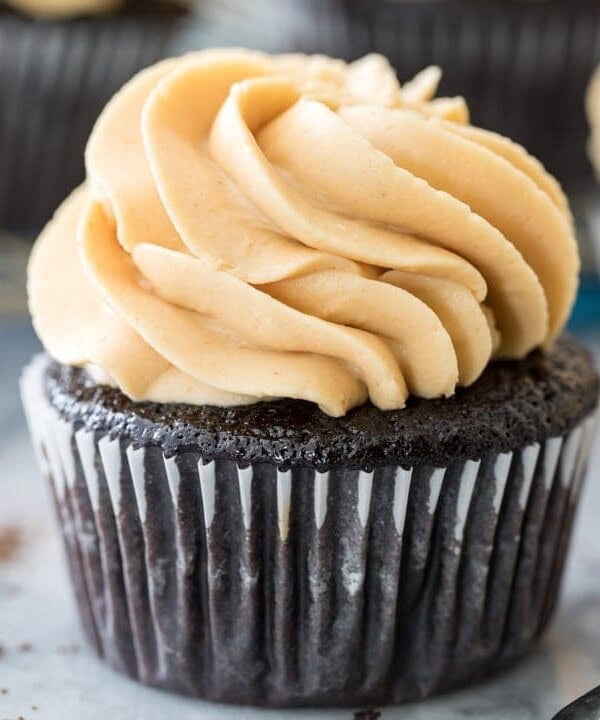
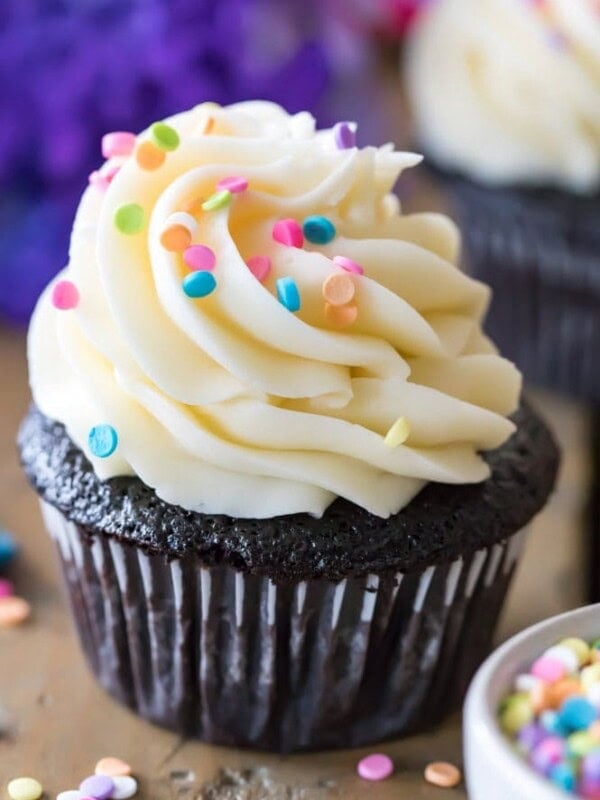
- Versatile; flavor and/or color it any way you like, and pair it with just about any cake. I love it with chocolate cupcakes or vanilla cake, but there are so many other great options to choose from (I include a few more below!).
Ingredients
Similar to my German buttercream, this recipe starts on the stovetop and ends with lots of butter (but I personally believe the Swiss version is less fussy and easier to get just right!). Here are the key ingredients you’ll need.
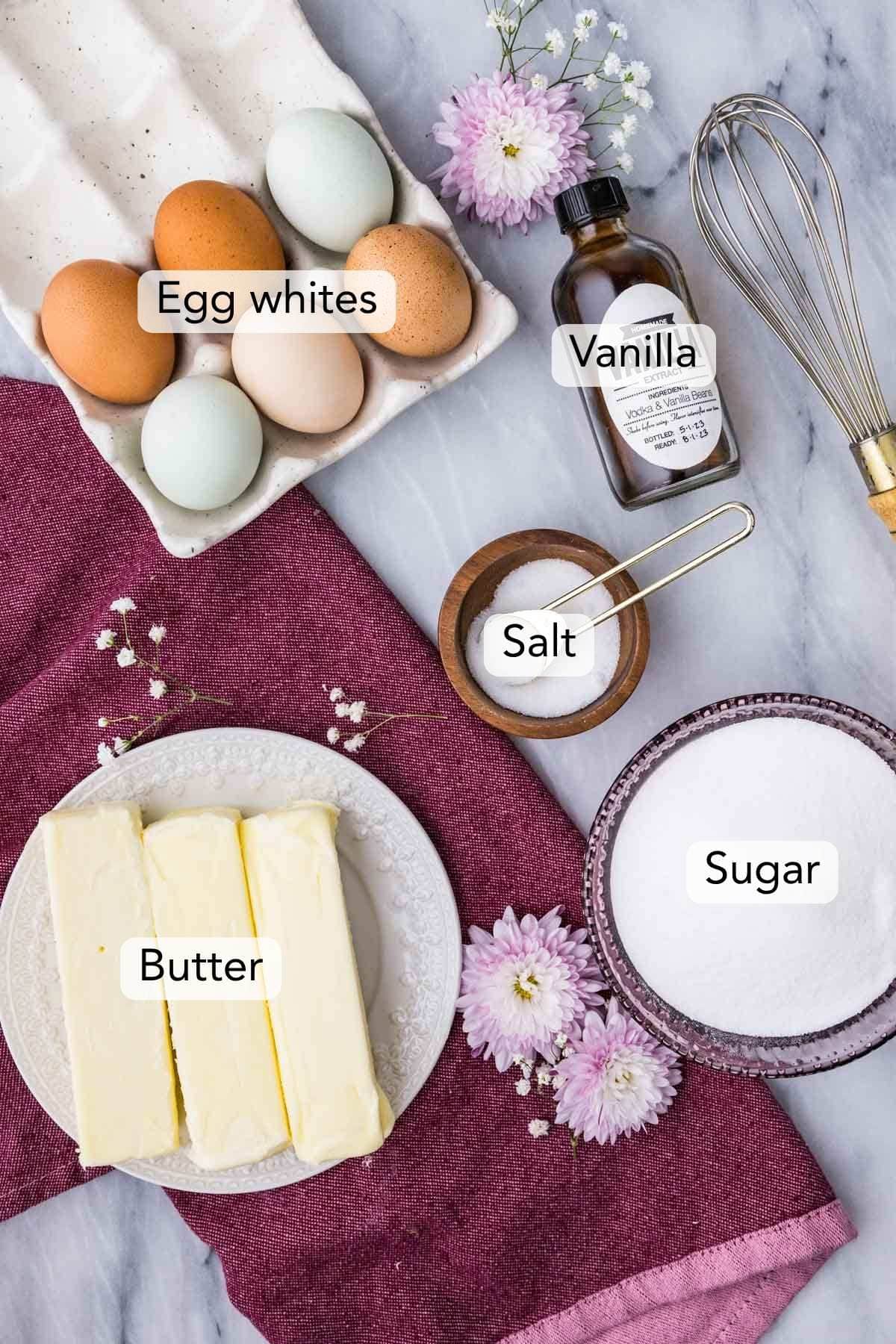
- Egg whites. For best results, use room temperature egg whites; I do not recommend using the kind you can find in a carton, as they don’t consistently whip properly (some of you who try will have success, others won’t!). Make sure you don’t have any yolk in your whites! We will be cooking the egg whites, so you won’t be consuming raw eggs in this frosting.
- Butter. It’s important to use softened (NOT melty!) butter. It shouldn’t be greasy or melting out of the wrapper. I usually set mine out of the fridge about an hour before I begin making my buttercream.
- Granulated sugar. Unlike most frostings, this recipe uses granulated sugar instead of powdered sugar. You may notice we’re using less than 2 cups of sugar; this is significantly less than what you’d see in a traditional American buttercream! One thing to note, because we are using granulated sugar, we need to make sure it fully dissolves before we begin whipping our meringue, or it won’t turn out properly.
- Vanilla. I use vanilla extract, but you can switch up the extract for a different flavor. Note that some extracts, like almond or peppermint, will be more potent, so you may not need as much as I have listed here.
Remember, this is just an overview of the ingredients I used and why. For the full recipe please scroll down to the bottom of the post!
Sam’s Tip
I now prefer to use less butter in this recipe; my previous version used 2 cups of butter and we’re using only 1 ½ here today. I found that reducing the butter made for an even better texture and flavor.
How to Make Swiss Meringue Buttercream (Step-by-Step)
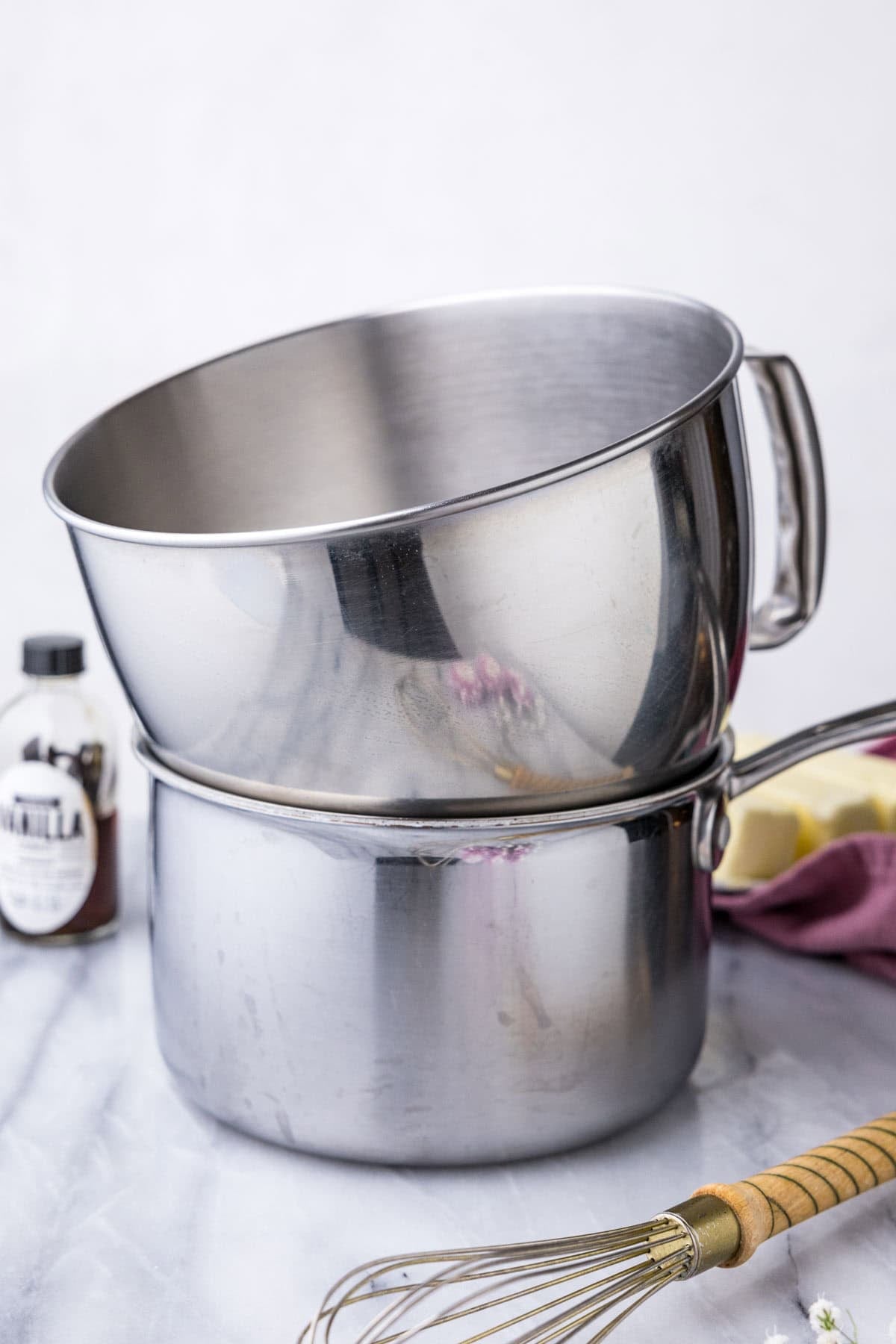
- Prepare a double boiler. I strongly recommend using a stand mixer for this recipe. Making this frosting by hand or even with an electric mixer is possible, but it will be a workout and will take quite a bit of time (and could be very taxing on your hand mixer motor). Choose a saucepan that allows your mixer bowl to hover above the water beneath it; they should not touch.
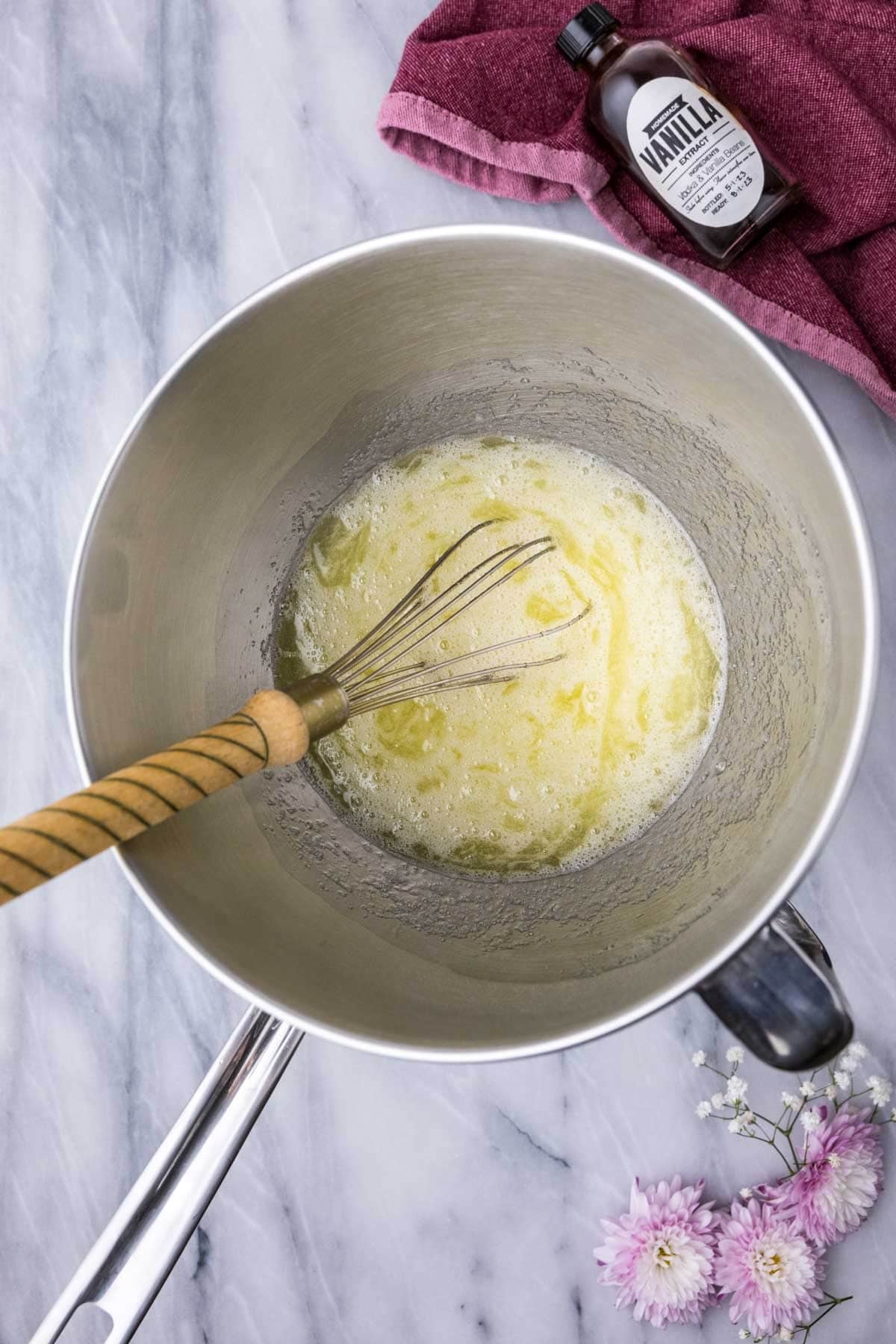
- Combine the meringue ingredients. Whisk together the egg whites, sugar, and salt in your clean, dry, and grease-free (important!) mixing bowl.
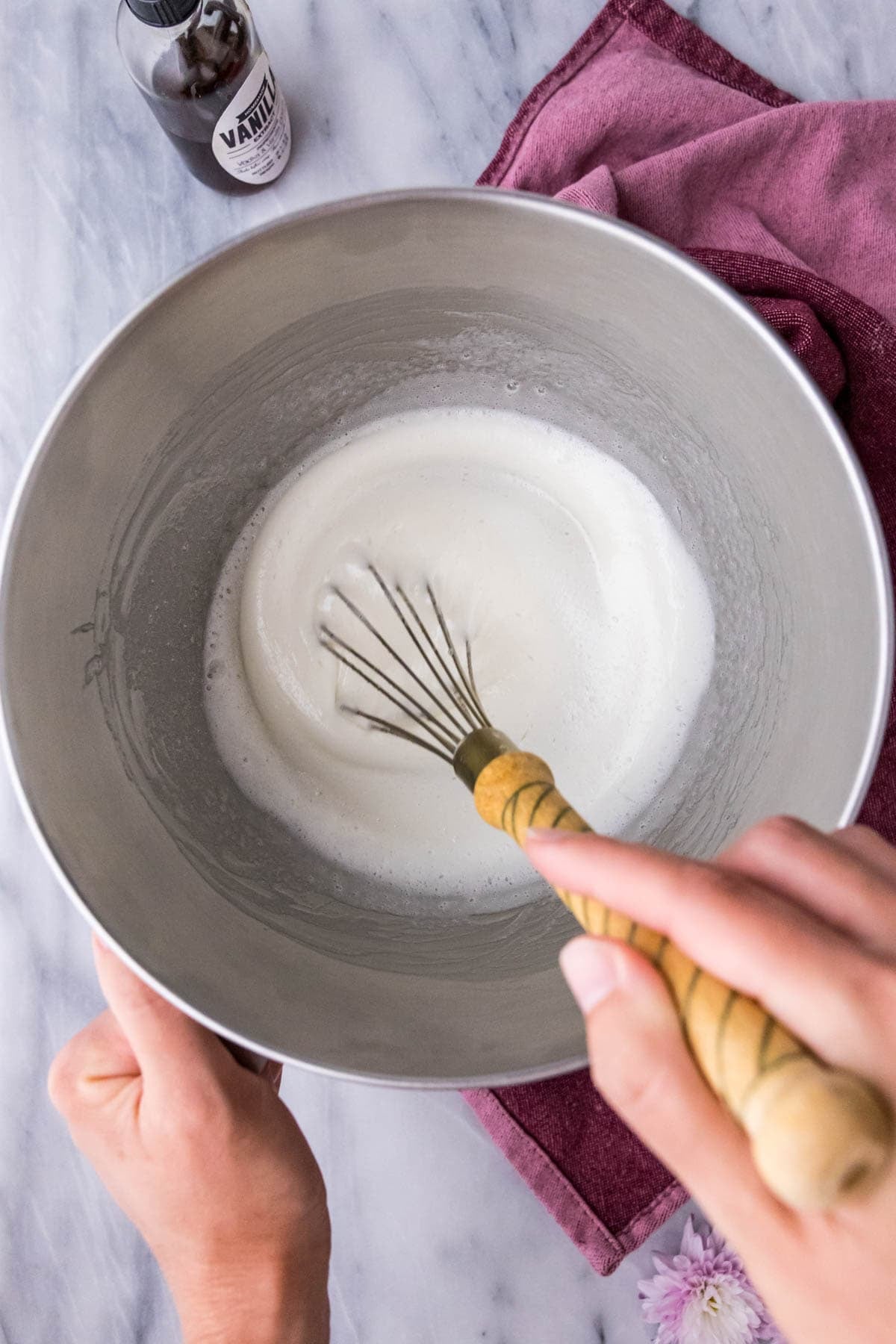
- Cook til sugar dissolves. Place your bowl over a double boiler and whisk constantly until the sugar dissolves and the mixture reaches 160F/71C (this ensures your eggs are cooked to a safe-to-consume temperature). To test if your sugar has full dissolved, rub a small bit between your fingers before proceeding to the next step. If you can feel any grit or grain at all, your sugar is not fully dissolved and you’ll have a gritty buttercream.
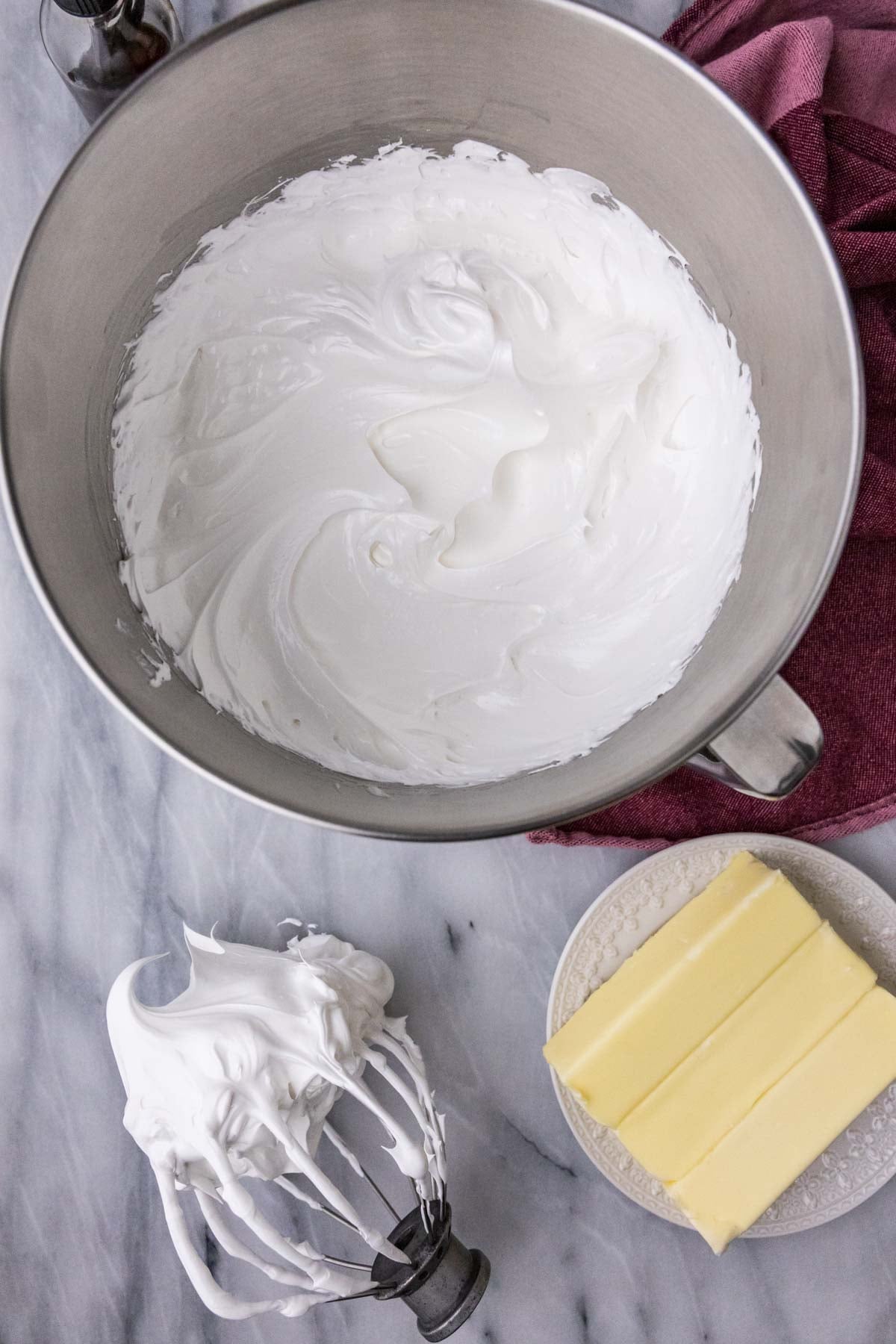
- Whip to stiff peaks. Place the bowl on your mixer and beat on medium-high speed until it reaches stiff peaks. If you lift the whisk straight out of your meringue, the peak that forms should hold its shape without melting back into itself or folding over. This will take at least 10 minutes or so.
Sam’s Tip
Keep your stovetop heat on the lower end. Heating the egg whites too fast or on too high of a temperature won’t allow the sugar to dissolve properly and could ultimately end up cooking your egg whites, leaving you with scrambled eggs in your frosting.
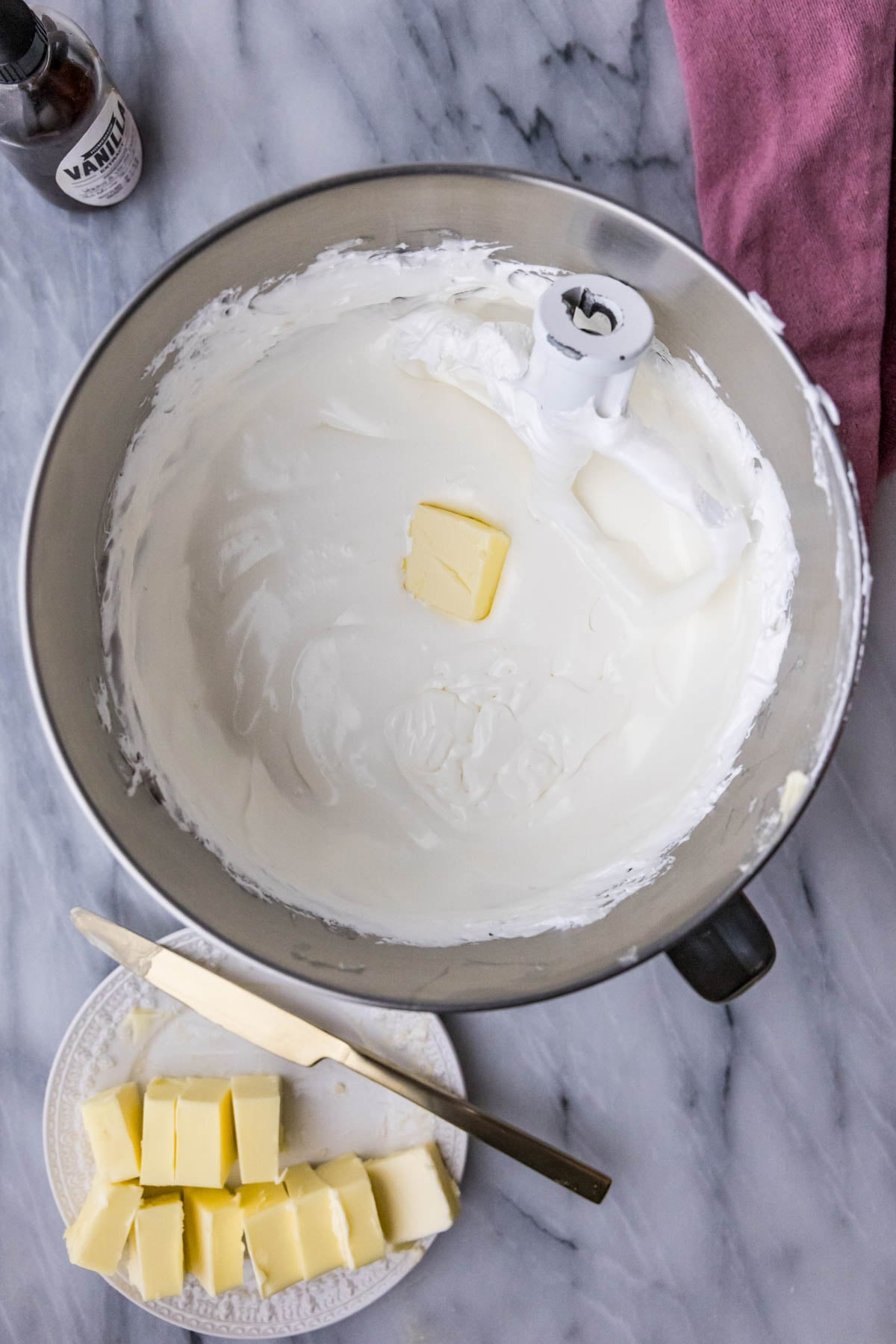
- Add the butter. Let the bowl cool down completely, then switch to a paddle attachment and beat in the butter one tablespoon at a time.
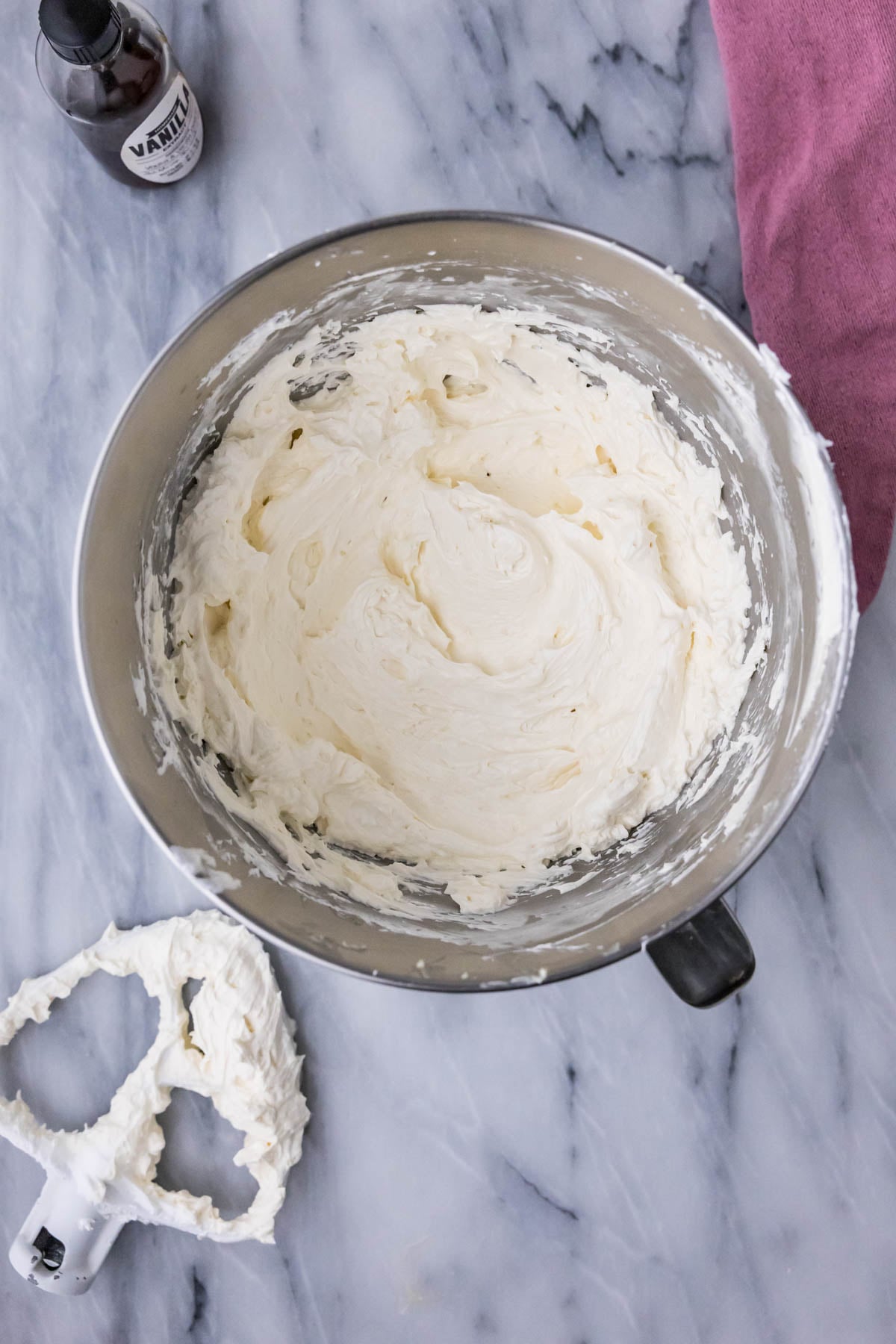
- Whip until smooth. Scrape down the sides and bottom of the bowl and continue beating on medium-high until the frosting is smooth and thick. Stir in any flavorings or coloring, then pipe or spread on your cake as desired!
Sam’s Tip
Once the meringue reaches stiff peaks, I like to give my mixer a break while the bowl cools completely (some people keep mixing until it cools, but I don’t want to wear out my mixer!). At this point I also like to switch over to my paddle attachment for a smoother whip. Don’t start adding your butter any further until your bowl is completely cool and not even a tiny bit warm to the touch!
How to Fix Curdled Buttercream
Sometimes during the process of adding the butter, your buttercream might break down and take on a curdled appearance. Don’t panic! So long as you’ve followed all of the previous steps correctly, everything is going to be just fine. Just keep mixing, just keep mixing, and by the time all of your butter is added, the buttercream should come back together. If it doesn’t, transfer your bowl to the refrigerator for 10 minutes and then try mixing again. Serious Eats has a great guide on rescuing Swiss Meringue Buttercream if you are convinced you’ve ruined it.
Frequently Asked Questions
If you’re storing this frosting, I recommend placing it in the refrigerator in an airtight container. You can leave a cake or cupcake frosted with this icing at room temperature (preferably in an airtight container!) for up to 2-3 days; beyond that, I recommend refrigerating.
Unfortunately, this frosting does not fare well in the heat. While the meringue does help to add some structure to the frosting, all of that butter is going to want to do what butter does in the heat: melt! While you can keep this frosting at room temperature and it will hold its shape wonderfully, it will start to melt or become very soft in hotter temperatures or if served outside on a warm day.
American buttercream is very sweet (almost too sweet for me, even!) and is made primarily of butter and powdered sugar. Swiss buttercream is less sweet and is made primarily of granulated sugar, egg whites, and butter. Unlike American buttercream, Swiss doesn’t crust or harden and (as you’ve seen above) the technique for making Swiss meringue is quite different.
Follow my recipe for chocolate Swiss meringue buttercream instead. You can also alternatively make a brown sugar version by following my brown sugar Swiss meringue buttercream recipe.
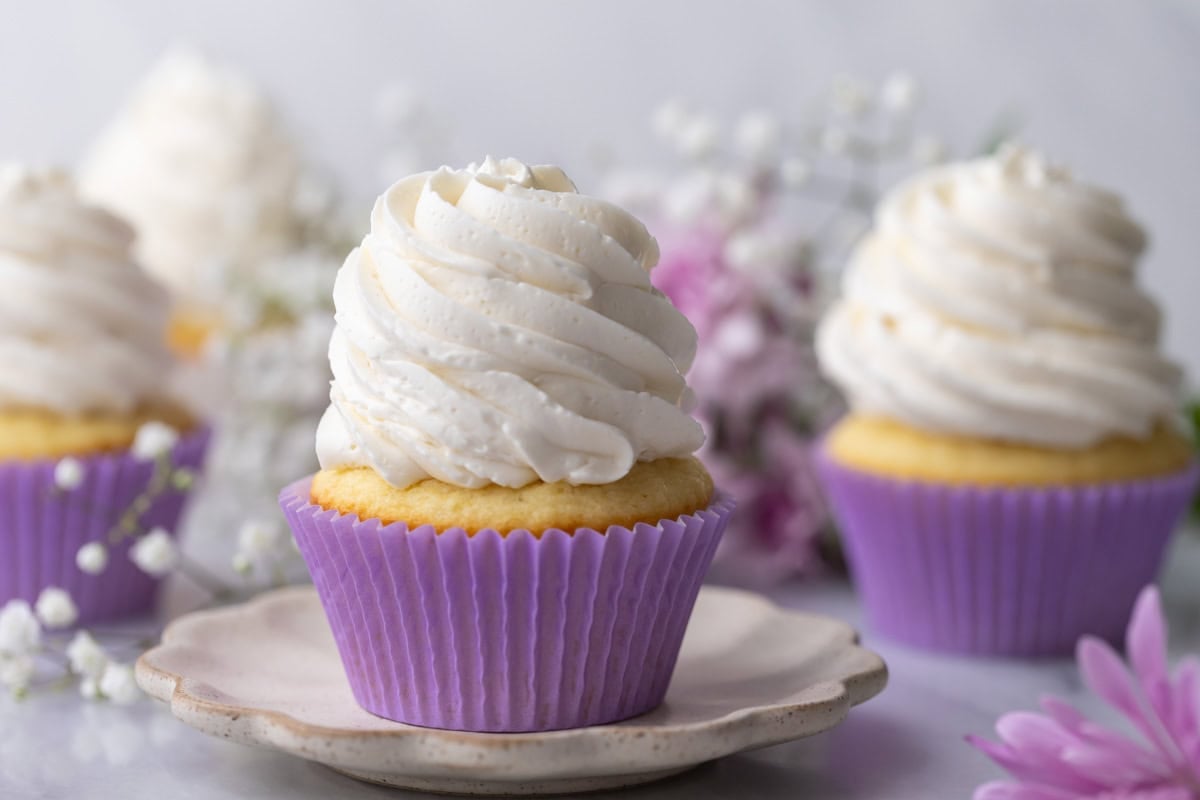
Pair Your Buttercream With

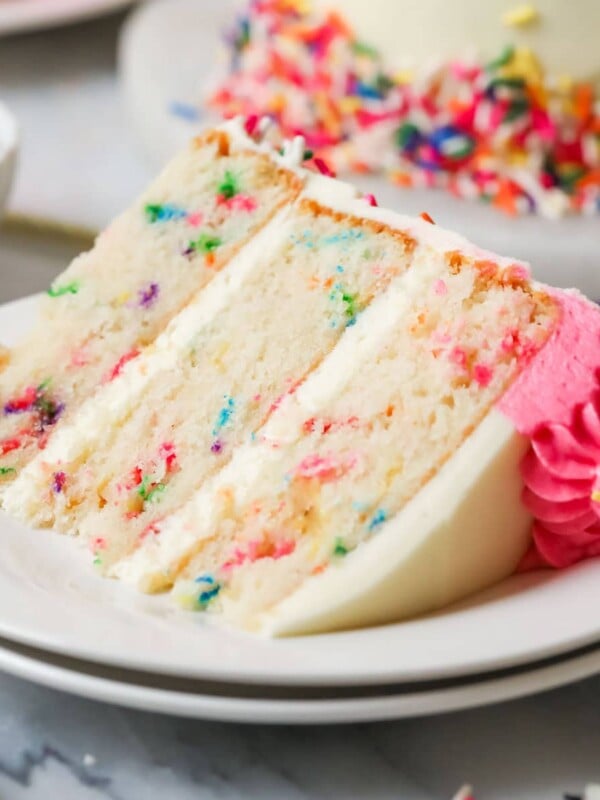
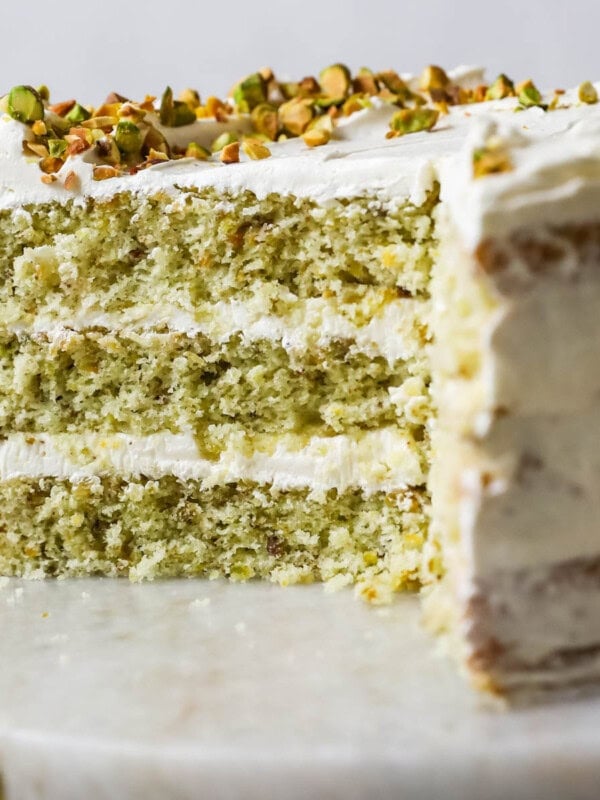
I love this frosting so much I even gave it a place in my brand new cookbook! I hope you love it just as much.
Enjoy!
Let’s bake together! Subscribe to my newsletter to be notified of all the newest recipes, and find my free recipe tutorials on YouTube 💜
Swiss Meringue Buttercream
Equipment
Ingredients
- 6 large (210 g) egg whites¹, make sure there is not even so much as a tiny bit of yolk mixed in with the egg whites or they won’t whip properly. (7.5 oz/210ml)²
- 1 ¾ cups (350 g) granulated sugar
- ¼ scant teaspoon salt, just ever so slightly less than ¼ teaspoon
- 1 ½ cups (339 g) unsalted butter, cut into Tablespoon-sized pieces. Butter should be room temperature but not melt-y/oily, still solid enough to cut, but softened
- 1 ½ teaspoons vanilla extract
Instructions
- You will need a double boiler or makeshift double boiler for this recipe. I use my KitchenAid stand mixer and a medium-sized saucepan that the bowl fits snugly into without touching the bottom of the pot.
- In clean, dry mixer bowl, combine egg whites, sugar, and salt and whisk until combined.6 large (210 g) egg whites¹, 1 ¾ cups (350 g) granulated sugar, ¼ scant teaspoon salt
- Heat about 1 ½ inches of water over medium-low heat in a medium-sized saucepan and bring to a simmer.
- Rest the bowl of your mixer in the pot over the simmering water (should not be touching the water).
- Whisk egg white/sugar/salt mixture constantly until the sugar is dissolved and mixture is no longer grainy (if you rub a small bit between your fingers it should feel smooth and not at all gritty) and the mixture reaches 160F (70C). This will take several minutes.
- Remove mixing bowl from heat and dry the bottom of your bowl. Fit bowl into your stand mixer.
- Using a whisk attachment, beat the egg whites on medium/medium-high speed until meringue is thick and glossy and you have achieved stiff peaks (see photo in post or see video for visual). This will take about 10 minutes or so.
- Once you have achieved stiff peaks, stop beating and allow bowl to cool down completely. The bowl must no longer be warm to the touch before proceeding.
- Once bowl is no longer warm to the touch (make sure you are feeling near the bottom of the bowl), switch out whisk attachment for paddle attachment. Turn mixer to medium speed and add butter one Tablespoon at a time. Don’t add the next tablespoon of butter until the previous one is incorporated into the meringue. If you notice that your buttercream starts to break down or look curdled, just keep mixing and it will come together. If it still doesn’t come together (it could take some time), place the mixer bowl in the fridge for about 10 minutes and then try mixing again.1 ½ cups (339 g) unsalted butter
- Once all butter has been beaten into the meringue, scrape down the sides of the bowl and stir again. Beat on medium/high until smooth and thick.
- Stir in vanilla extract or other flavoring and any food coloring, if using.1 ½ teaspoons vanilla extract
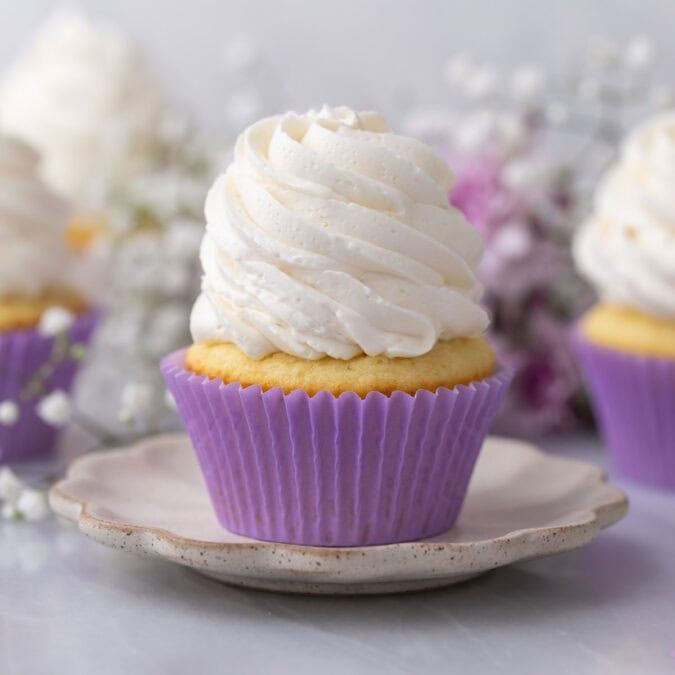
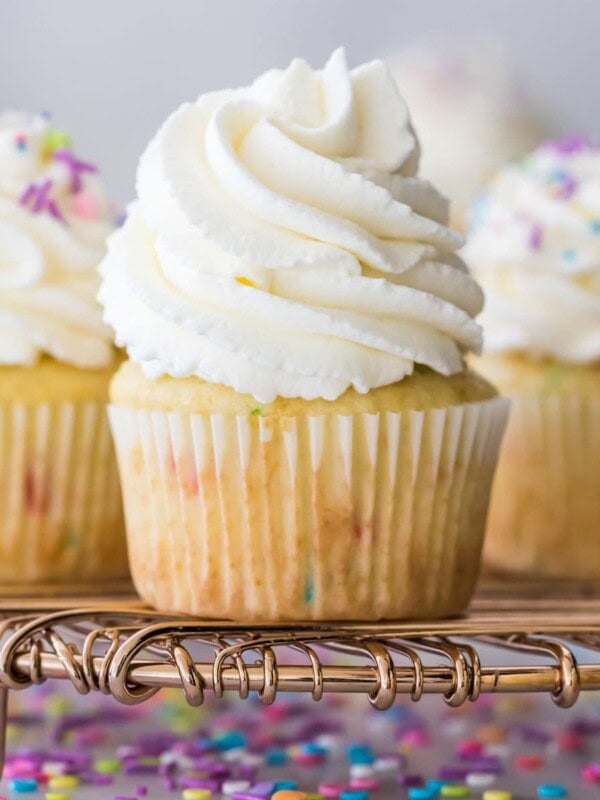
- Spread or pipe over cupcakes or cake or use under fondant! I used an Ateco 848 for the cupcakes shown in this post.
Notes
¹Egg Whites
I do not recommend using pasteurized egg whites (the kind that you buy from the store in a carton) for this recipe.²Measuring Cup
If using a liquid measuring cup, you would fill to directly between the ¾ and 1 cup lineMaking in Advance/Storing
Swiss Meringue Buttercream may be made several days in advance of using it. Store refrigerated in an airtight container and then allow frosting to come to room temperature and stir well before using. If the buttercream seems to have lost some of its volume/lightness, use an electric mixer to whip it until it returns to its original texture.Here are a few recipes to use up your leftover egg yolks!
Frosting variations
I also have recipes to make this as a chocolate Swiss meringue buttercream and a brown sugar Swiss meringue buttercream.Butter note
When I first shared this recipe in August of 2019, I made it with 2 cups of butter. The recipe works this way (and works well! I did it this way for years), but is more buttery and I have as of 2026 updated the recipe to only use 1 1/2 cups of butter, which I now prefer.Nutrition
Nutrition information is automatically calculated, so should only be used as an approximation.
Like this? Leave a comment below!
This recipe was originally published in August of 2019 but has since been updated to make the frosting slightly less buttery.









Why not use organic pasteurized egg whites from the store? What does it do?
Hi Patti! Most egg whites in a carton don’t whip to stiff peaks. A lot of them actually say so on the side of the container. So it’s best to avoid them. 🙂
Hi
Thanks for sharing and would love to give it a try. I am concerned as I have a glass mixing bowl. Would it be possible to do this? Or, should I do that in a stainless steel bowl then transfer it to the mixer bowl.
When would you add a colour?
Many thanks
Debbie Botha
Hi Debbie! I would be concerned about the glass bowl breaking. I am not sure how making it in the stainless bowl then transferring it would work. I would just be worried about the bowl breaking. If you do try it you can stir in any color at the end. 🙂
How many cupcakes will this recipe frost?
Hi Annabel! It will cover about 24 cupcakes. 🙂
I am making a wedding cake, can I one and a half this recipe so I have enough for the small cake on top and decorations or would you just double it? Also, is it better to just make 2 batches instead of doubling? Some things don’t double well. Thanks!
Hi Kerry! You can certainly just increase the recipe by 1.5. This recipe does fine doubling. 🙂
Would this recipe color well? I’d like to use it for my sons birthday cake.
Hi Sally! It colors beautifully, I recommend gel food coloring but any will work. Stir it in at the end until you have the desired color. Enjoy!
Do you have instructions for how to do this with a hand-held mixer? My stand mixer is broken. 😢
Hi Sarah! The instructions wouldn’t change for using a hand mixer, just be prepared for it to take a long time to whip it up. 🙂
Hi,
What could I substitute for the vanilla extract?
Do you have any other flavors of extract that you like? You could use another flavor. A bit of maple syrup could also be substituted.
I would love to make a chocolate swiss meringue buttercream. What would you suggest to use for chocolate flavor?
Hi Princess! I would melt 8-12 oz (depending on how chocolatey you like things) of semisweet chocolate, let it cool a bit, then fold that in at the very end. I hope that helps!
Apparently, this is a good idea combining meringue and buttercream. I wonder, whether it will do for Swiss roll frosting, though
Hi, Lena! I think that will work well for that! Keep me posted on the results! 🙂
Can this recipe be halved? 6 cups is too much for when I’m only making 12 cupcakes 😉
Hi, Lisa! Yes, you can halve the recipe. Enjoy! 🙂
This turned out so good and it is absolutely delicious and not too sweet! I made it to put on your Easy Vanilla Cupcakes but I made six large cupcakes instead of twelve. I have not tasted them yet because they are for my sister’s birthday tomorrow. I’m sure they are delicious also! I will be using this recipe again for sure!
Thank you so much for trying my recipe, Brenda! I hope that your sister has a wonderful birthday celebration and that everyone enjoys the cupcakes. 🙂
Hi, how many days in advance can this be made and stored in the fridge before use?
Also, is this recipe enough for a two tiered (8inch and 10inch) cake. It will be going under fondant.
Thanks!
Hi Elaine! I actually cover storage of this frosting in the post itself. It makes enough to cover 1 8 inch 2 layer cake.
The icing is too heavy and tastes like a mouthful of butter.
Hi Eric, I haven’t personally found Swiss meringue buttercream to be particularly heavy, it may have needed to beat for longer. It does have a buttery taste, this frosting might just not be right for your preferences. You might like to try my cream cheese frosting instead.
Do you have a recipe for a simple buttercrean frosting
I am thinking boy…..but either way, yay for babies!! Can’t wait to find out!
Thank you so much, Joanna! Stay tuned! 🙂
Hope it a girl! But then, boys are great too, so doesnt matter right?
Stay tuned, Lynne! 🙂