
Madeleines (the Best, Easiest Recipe, with Video!)
This post may contain affiliate links. As an Amazon Associate I earn from qualifying purchases. Please read my disclosure policy.
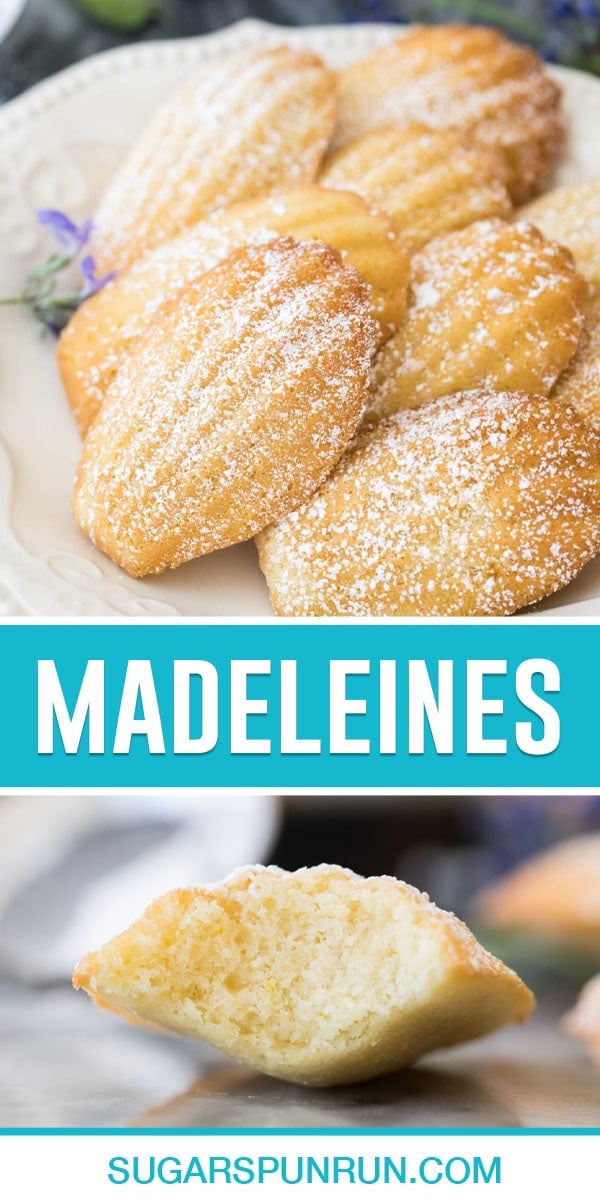
No resting, no tricky technique, just perfect, golden, light & airy Madeleines in under 30 minutes! I’m so proud to be sharing my recipe with you today, after weeks of testing I finally have a recipe for the best little butter cakes I’ve ever tasted and you won’t believe how easy they are! Includes a how-to video in the recipe card!
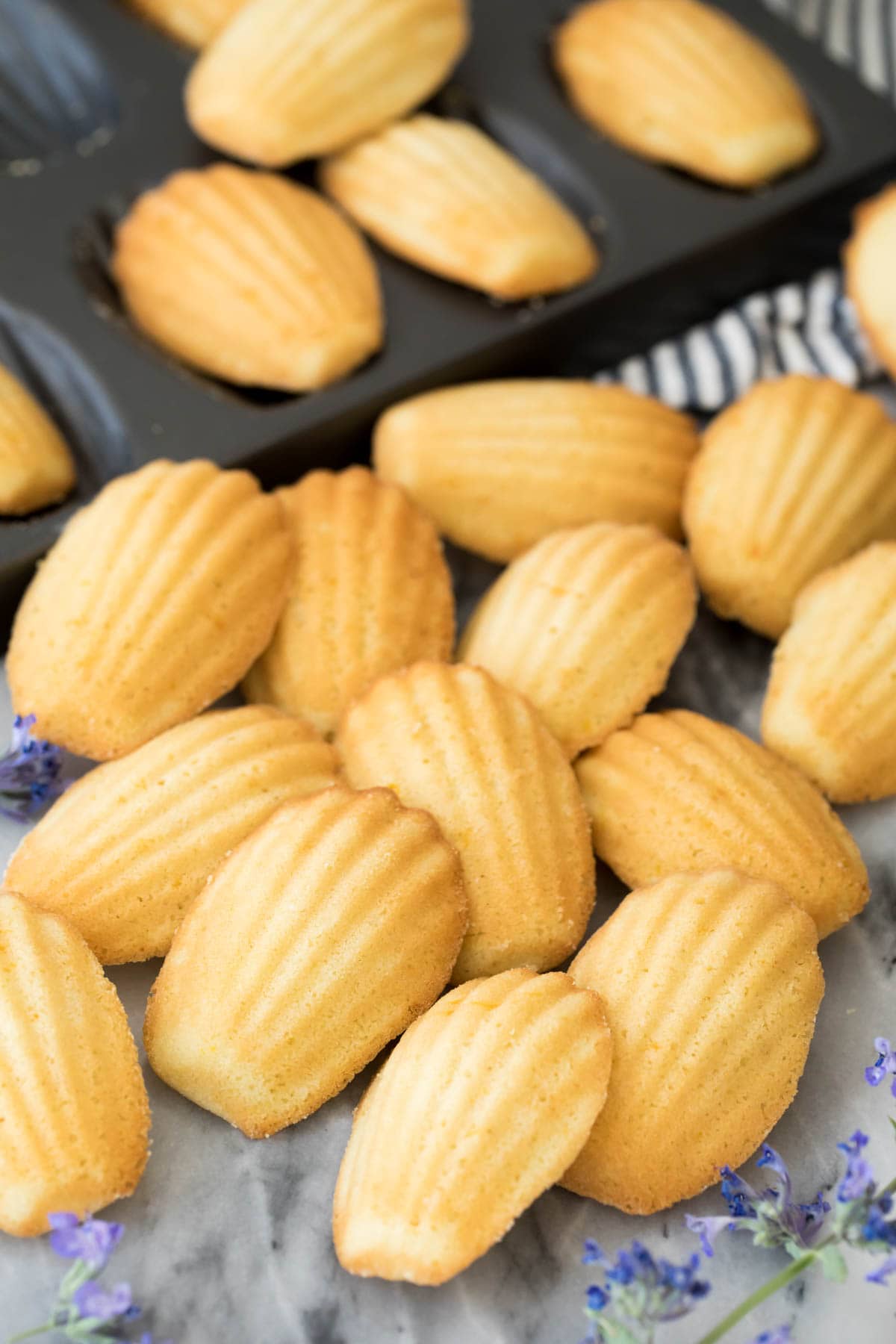
These delicate cookies are shockingly easy to make considering how hard this recipe was for me to crack! Also known as French butter cakes, madeleines are well-known, easily-recognizable, sophisticated little cakes. They have a reputation for being fussy, and what they’re really known for is their scalloped shell-shape and their characteristic bump. It took weeks upon weeks to finally get this recipe perfected, but it was definitely worth it.
If you’ve made madeleines before, you’ll notice that my recipe is fairly different from many traditional recipes. It also produces better results with simpler technique than traditional recipes. There’s no whipping our eggs to “ribbon” stage and there’s no long chilling period (or any chilling period at all). Just perfect madeleines that:
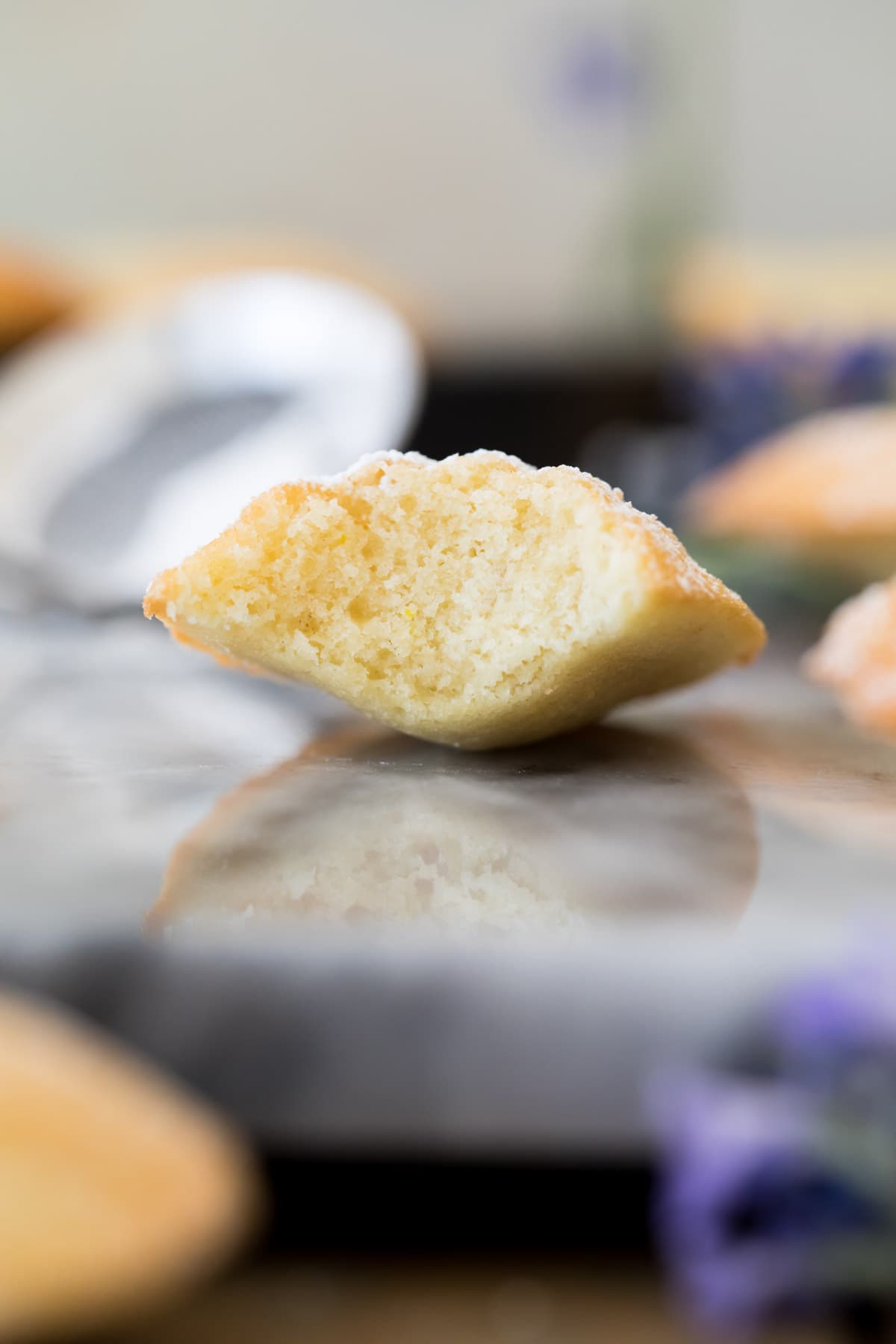
- Are light and airy with a melt-in-your-mouth interior
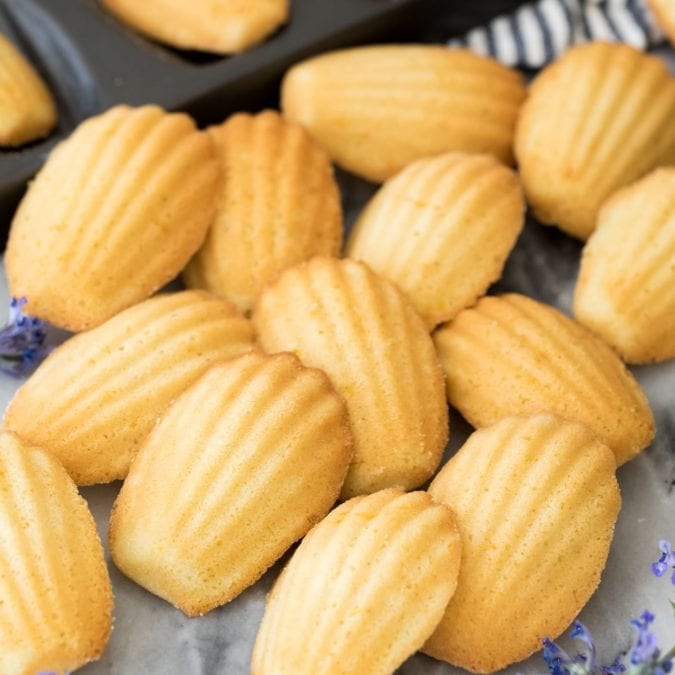
- Beautiful golden brown with just barely crisp exteriors.
- Perfectly shell-shaped on one side with the classic madeleine “hump” on the other
- Not at all fussy or difficult.
I’ve always been honest with you here. If fussy technique or extra time is needed for the best results, I’m going to encourage you to learn that technique or take that time. Despite my hatred of water baths, I teach you how to use one in my creme brûlée recipe, and I already have my fair share of fussier French recipes (cream puffs and petit fours, to name a few!) in which we’ve tackled different techniques. I was ready to spend paragraphs talking about how to ribbon and the importance of resting (I still talk about it a little below).
But after weeks of testing, it turns out it isn’t necessary after all.
Are They Cookies or Cakes?
Technically, madeleines (or petite madeleines) are small butter cakes. However, because of their shape and size they’re often referred to as cookies. Truthfully they’re mostly like a cross between the two desserts (and who could ask for a better hybrid?). They’re a bit more dense than your average cake recipe, but much, much lighter and fluffier than any cookie.
Whether you call them cookies or cakes, there are two absolutely key characteristics that all madeleines must have: A beautiful scalloped, shell-shaped exterior on one side and a pronounced hump on the other. Check and check ☑️ ☑️
If you’re curious, here’s a brief history on the origins of madeleines.
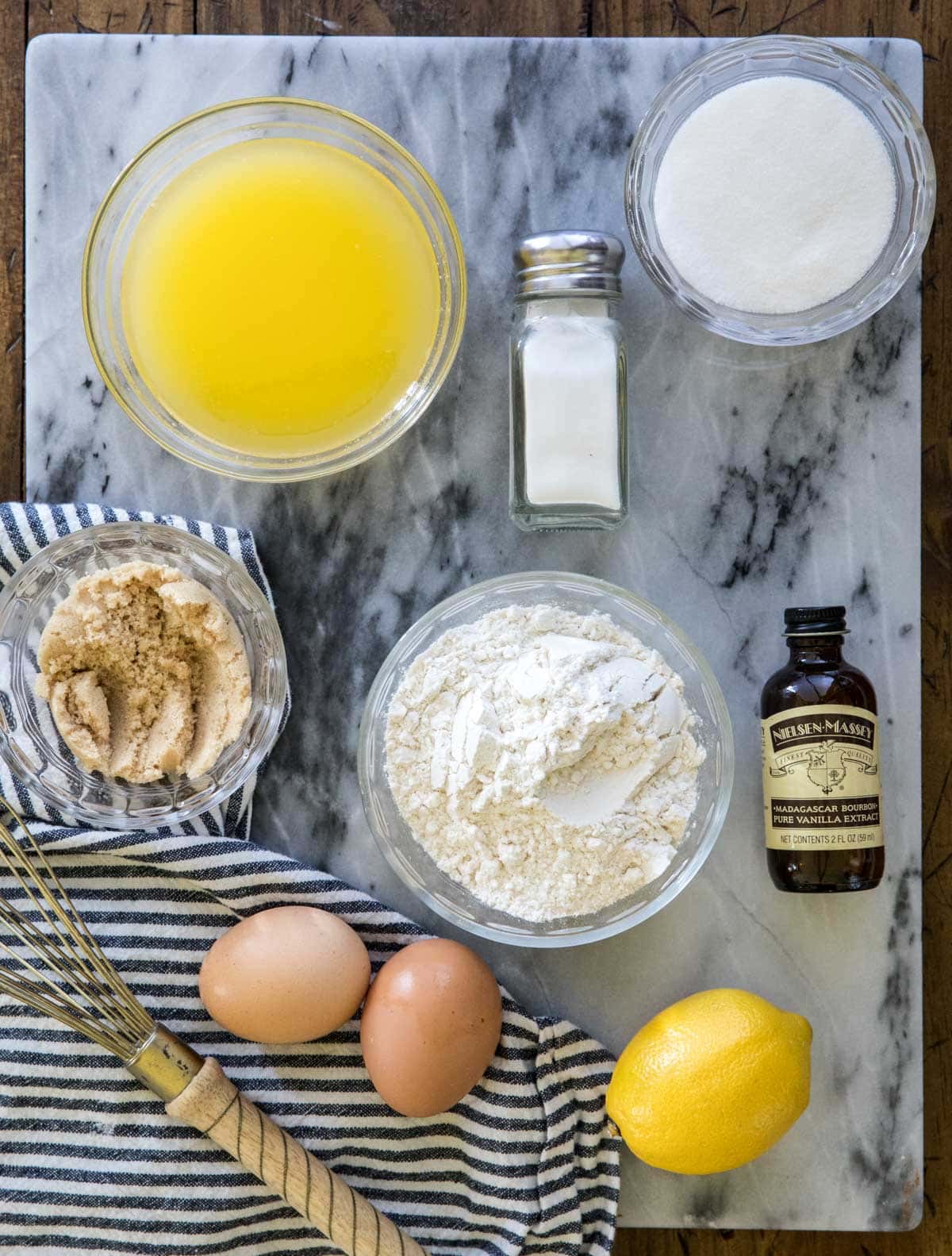
What You Need:
- Butter. My madeleine recipe uses more butter than other recipes you might have tried or seen. It’s not a mistake, this creates more flavorful, more buttery, more delicious madeleines than you’ve seriously ever tasted before. For real. Melt the butter before you begin so that it has time to cool before you add it to your batter.
- Eggs. You need just two eggs for this recipe. Large or extra large will work (and I’ve even used jumbo-sized with success).
- Sugar. I use a blend of granulated and brown sugar. Many madeleine recipes strictly stick to granulated sugar, but adding brown sugar gives the madeleines a richer flavor, a more distinct golden-brown coloring, and it also encourages a little bit of extra caramelization where the batter makes contact with the shell indent in the pan. This adds so much flavor and an extra (slight) crispness to the exterior of the madeleine. It’s just so good! I use slightly more sugar than some traditional recipes, but I don’t recommend reducing the amount. It makes them delicious straight out of the oven, no dusting of powdered sugar or chocolate dip required.
- Vanilla Extract and Salt. For flavor.
- Flour. My recipe uses all-purpose (“plain”) flour. You’ll sift it into your batter (to remove any lumps in the flour) and gently fold in with a spatula. Madeleine batter is fairly thin, like cake batter.
- Citrus Zest (optional). Lemon or orange zest is a common addition, and if I have a fresh citrus fruit lying around I always add some (make sure to avoid the pith!). If you don’t, though, you can skip it and they’ll still be delicious.
Please note that baking powder is not included on this list. Many madeleine recipes use baking powder to help encourage the madeleine hump/belly to form, but it is not necessary here.
Please also note that this is just an overview of the ingredients used. For the full recipe with amounts, please scroll down to the recipe card.
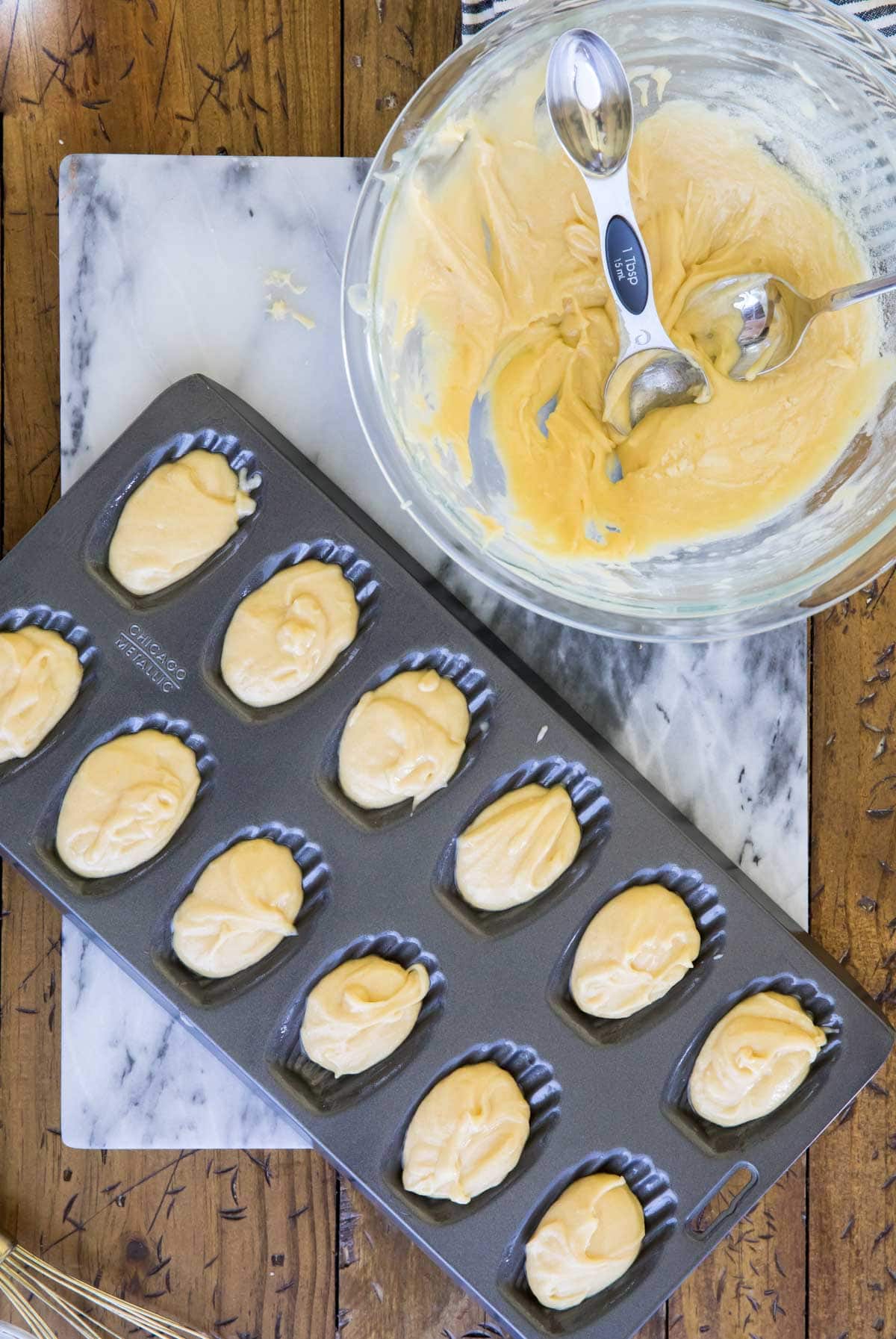
Another Key Ingredient: The Madeleine Pan
Another key “ingredient” is the pan! You absolutely need a scalloped pan like the one seen above in order to make madeleines. It’s the only way to get that characteristic shape. This is the pan that I use.
I use a non-stick pan, but it’s still important to prep the pan before using to make sure that the madeleines don’t stick. Non-stick spray works, but my preference is to mix together melted butter and a pinch of flour and coat the pan with that. It gives the scalloped exterior shell of the madeleine a better, butterier flavor.
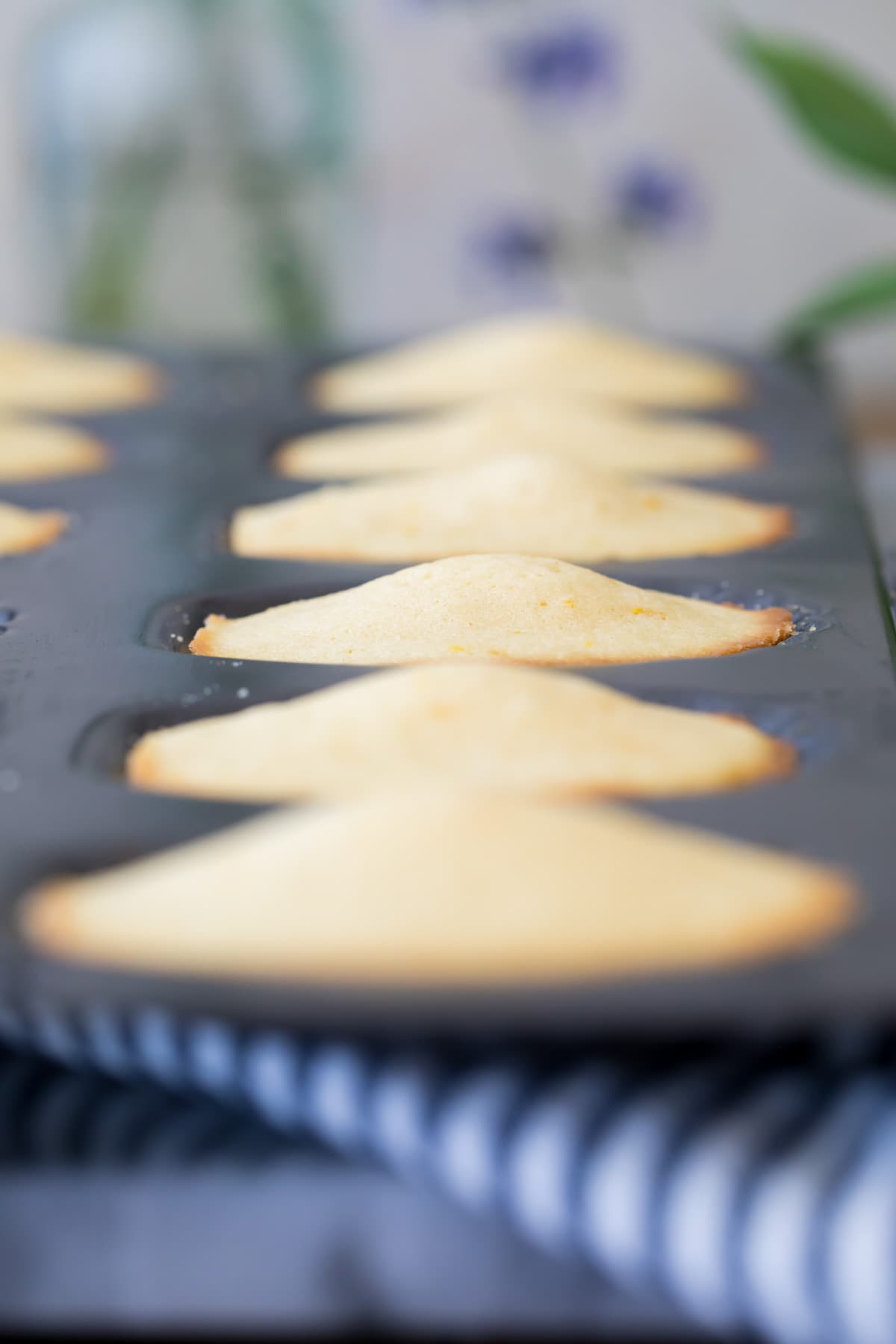
Ribboning and Resting (And Why I do Neither)
Most madeleine recipes call for the batter to be both ribboned and rested before it is baked. My recipe calls for neither, though I tested many, many recipes where I tried both techniques before landing here.
Ribboning (in this instance) is the process of whipping the eggs vigorously (usually with an electric mixer) until the batter is thickened and falls “like a ribbon” from the beater. This incorporates a lot of air into the batter and is typical of a genoise (or, “sponge cake”, which madeleines technically are). My recipe does require you to vigorously whisk the eggs/sugar/salt by hand for a few seconds, but it’s not necessary to go all the way to ribbon stage. With our higher ratio of butter and sugar here, we still end up with a light, delicately cakey interior without needing an electric mixer.
Resting simply means chilling in this situation. Resting helps the batter to thicken and in many recipes it’s essential in order for the hallmark bump or hump of the madeleine to form. The idea is that the chilled batter expands quickly in a hot oven, causing the hump.
Resting is critical with many recipes (even with my crepes I call for at least a half an hour of chilling to help the gluten relax). With some of the madeleine recipes I developed and tested, resting was critical or the madeleines ended up flat (or they spread with crackled edges out of the pan). But with this version, the madeleines still end up with a perfect, buttery-soft interior and that trademark bump, with or without resting.
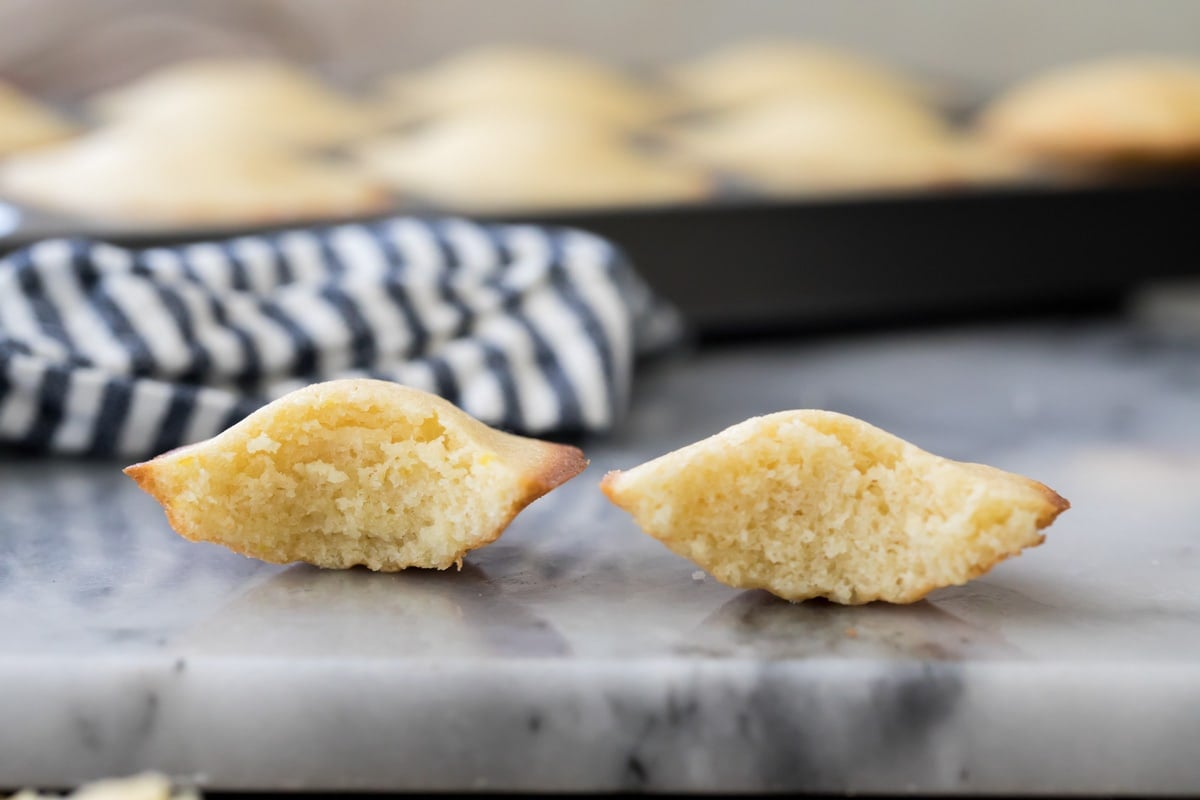
Your batter will thicken while the madeleines rest. If you have a single small pan like I do and need to wait for one batch to bake before using up the rest of the batter, you’ll notice it is much more stiff when you go to bake round two. This is fine and there’s no significant difference in the madeleines made with the thinner or thicker batter. That being said, if you want to make the batter a day or two in advance, you can store it tightly covered in the refrigerator until you are ready to bake.
Toppings
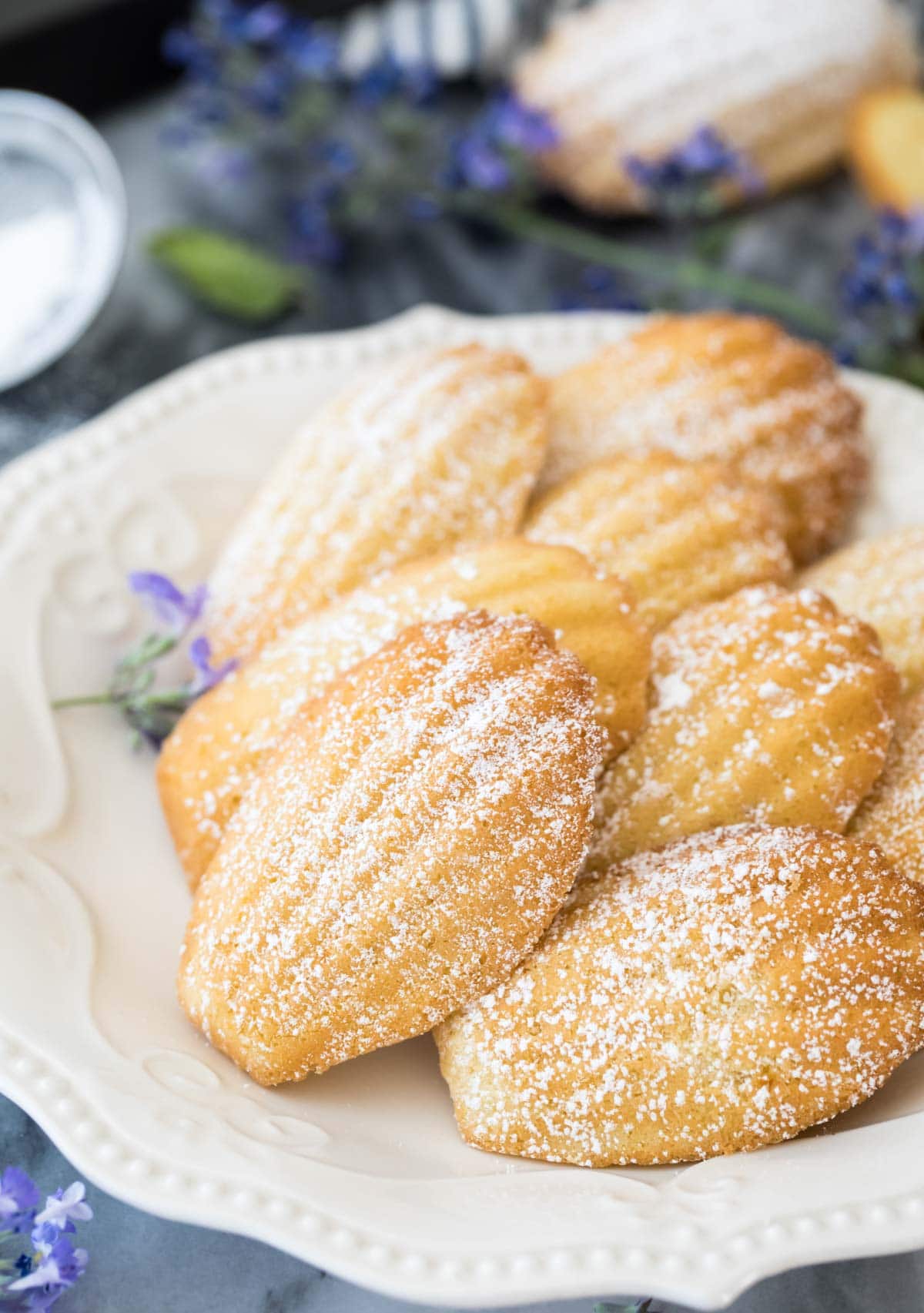
Many madeleine-makers top theirs off with a dusting of powdered sugar just before serving. This adds a nice extra sweetness to the cakes, but while I added some sugar for aesthetics in the photo below my recipe is perfectly sweetened so that no additional sugar is necessary.
A chocolate coating (made of melting chocolate bars, melting wafers, or chocolate chips and then dipping the cakes) is another popular choice, but again it’s not necessary here. Never thought I’d say chocolate isn’t a necessity but somehow here we are.
More Recipes You Might Like:
Storing
Madeleines are truly best served fresh, shortly after they are made (even better if they’re still warm!). However, these will keep for up to three days in an airtight container at room temperature. They may also be frozen for at least a month if allowed to cool completely and then frozen in an airtight container. Again though, they’re better fresh!
Enjoy! I really can’t wait to hear how you like these, so please leave me a comment or tag me on Instagram when you try them!
Madeleines (the Best, Easiest Recipe, with Video!)
Equipment
Ingredients
For Coating the Pan:
- 1 Tablespoon unsalted butter
- 1 ½ teaspoons all-purpose flour
For Madeleines:
- 10 Tablespoons (141 g) unsalted butter, cut into pieces
- 2 large eggs, room temperature
- ½ cup (100 g) granulated sugar
- 3 Tablespoons light brown sugar, firmly packed
- 2 teaspoons vanilla extract
- ⅛ teaspoon salt
- 1 ¼ cup (155 g) all-purpose flour
- 2 teaspoons lemon or orange zest, optional
Instructions
- Preheat oven to 375F (190C) and whisk together 1 Tablespoon melted butter and 1 ½ teaspoons flour. Use a pastry brush to lightly but thoroughly grease every cavity of your madeleine pan. Set aside.1 Tablespoon unsalted butter, 1 ½ teaspoons all-purpose flour
- In a small heatproof bowl, melt remaining 10 Tablespoons of butter. Set aside to cool.10 Tablespoons (141 g) unsalted butter
- In a large bowl, combine eggs, sugars, vanilla extract, and salt. Whisk vigorously until thoroughly combined (about 30 seconds).2 large eggs, ½ cup (100 g) granulated sugar, 3 Tablespoons light brown sugar, 2 teaspoons vanilla extract, ⅛ teaspoon salt
- Sift flour into the egg mixture, about ⅓ of the flour at a time, gently stirring into egg mixture after each addition.1 ¼ cup (155 g) all-purpose flour
- Drizzle cooled melted butter around the edge of the batter and add zest, if using. Gently fold into batter using a spatula until ingredients are thoroughly combined (but do not over-mix).2 teaspoons lemon or orange zest
- Drop batter by heaping Tablespoon into prepared pan.
- Transfer to center rack of 375F (190C) preheated oven and bake for 9 minutes or madeleines are light golden brown and spring back when lightly touched. Remove to a cooling rack to cool immediately.
- If your madeleine pan did not hold all of the batter, allow the pan to cool before re-brushing with butter/flour mixture and refilling with batter and baking your next batch.
- If desired, sprinkle madeleines with additional powdered sugar or dip in melted chocolate before serving.
Notes
Storing
Madeleines are best served fresh, but will keep in an airtight container at room temperature for 3 days.Nutrition
Nutrition information is automatically calculated, so should only be used as an approximation.
Like this? Leave a comment below!













amazing
These came out perfect. I love how quick they are to make with your recipe. 🎀 So good. We all loved the sweetness and consistency. Thank you!
Hi! I will be trying this recipe later today. Question: do madeleine pans come in smaller sizes, for a smaller cake?
Thanks!
Hi Joanna! I have not seen a smaller madeleine pan, but I suppose there is a chance they do exist.
where is your VIDEO.,??
5-6-24
Hi Sarah, it’s right there in the recipe card with the rest of the recipe. If you have ad-blockers turned on it may not display. I also share my videos on my YouTube channel if you’d like to find it there.
Thank you! this recipe is so great; I just made a batch and it was shockingly easy and successful!
If I want to make chocolate madeleines (chocolate cake, not dipped), how much cocoa and/or chocolate would you add to this recipe?
Hi Janet! I have not experimented with making them chocolate so I can’t say for sure how to do it. 🙁
This has become my go-to Madeleine recipe. I experimented with making them chocolate today and they turned out great! After weighing out the flour, I removed 2 tablespoons of the flour and added in 2 tablespoons of cocoa powder. I also added in about a teaspoon of instant espresso powder in with the egg and sugar mixture. No other modifications. Very yummy!!
Thank you, Sam, for making such a great recipe for us all to follow along with 🙂
I’m so glad you enjoyed them so much, Camille! Thank you for the feedback making them chocolate! 🙂
I doubled the ingredients and followed the rest of the instructions exactly. Edges get very brown and no hump forms and the inside is undercooked. If I leave them in longer, the edges get even more browned and crispy. Any idea why? Used the center rack. They taste good but look nothing like madeleines and I’m not sure which part went wrong, unless somehow doubling the ingredients is bad?
I’m so sorry to hear that, James! Is it possible there may have been a temperature issue with your oven? Doubling the recipe shouldn’t cause any issues. 🙁
Hey James,
Did you use a silicone tray because i did the first time and it needed one third more cooking time. I also added a 1/4 teaspoon baking powder which gave me some rise.
These were easy and delicious!! I used orange zest and dipped them in chocolate. They were a big hit! Thank you! xo
do I have to use Madeline pan? can I use mini muffin pan?
Hi Jill! A mini muffin tin will work, but bake time will vary. 🙂
5 stars for ease! Mine look awesome and they all have bellies too. They are cooling at the moment. I will let you know how they taste. We have a winner! I baked them a minute or 2 longer and a little dry. Also, I added orange zest. Sending the recipe to my cousin now!
This is the first recipe of yours that I don’t like so I figure I’ve done something wrong. The madeleines looked great and had a nice texture. They had the bump, definition, and a hint of golden brown. The problem was they were tasteless.I know I added salt and pure vanilla extract. I dipped in chocolate which didn’t help as much as I had hoped.
Did you add citrus zest? I used the zest from 1 small lemon and about 1/4 of an orange and they came out very tasty; maybe add 1Tb of vanilla as opposed to the amount listed.
Good suggestions. Thank you.
My first time making Madeleines and I used your recipe. Everyone thought they were amazing! I no longer need to search for a different recipe…I hit a home run on my 1st try, lol. (And I’m not sharing the recipe either!)
Has anyone tried this with a silicone pan with success? Wondering if I should go traditional and buy metallic or try the silicone option to pop out (hopefully) easily.
Hi Sarah! I have had 2 people report using silicone molds. The results were mixed. I think it could work. I’ve never had an issue with the madeleines popping out as long as my pan is greased well enough. 🙂
First time trying to make these, and this recipe was simple and straight forward. Turned out great. Thank you
I teach middle school and students used this recipe for one of their cooking labs; it was a hit! I love that you also have a video to go along with it. It really made it so easy for students to know each step before stepping into the kitchens! Great recipe!
These turned out perfect! Made one classic version, then a raspberry one (added some blended dried raspberries and reduced the flour) and a browned butter one, all turned out delicious! One thing that could potentially work better – use clarified butter + flour for coating the pan, especially if using the silicon ones!
Just made these, just as written, no additions except I had only salted butter…
These were light little pillows of heaven👍 My hubby will love them to have with morning coffee! Thank you much, Sue
Just made these as recipe instructed. They taste wonderful, but didn’t spread all the way throughout the mold… thoughts?
I’m glad you still enjoyed them, Kate! They may have just needed a little more batter in the molds. 🙂
This happened to me too but maybe adding a litle more batter and then work it to spread the batter. I did exactly this to a few of them because I thought I could get 24 (I have 2 molds for 12 cakes each).
Tried exactly as mentioned and it’s a hit 💯
Beautiful cookies/cakes, and they smell divine! Have you tried making these gluten free?
Hi Grace! We haven’t tried this recipe with gluten free flour, but we have had other commenters report success using a 1:1 gluten free flour. Let us know how they turn out if you do! 🙂
Mine spread into one big runny mess, should I have chilled?
Hi Kendra! Silly question, but did you use a madeleine pan? I think you’d have to really overfill the cavities for them to spread all over the place. 🙁
Hi! Yes I did, I think I must have overfilled them…and maybe my melted butter was still too warm. I’ll try again 🙂
Hey Sam! The article mentions resting, but it doesn’t seem to be included in the final recipe directions. Additionally how would you feel about a drop of lemon oil or extract in the wet ingredients in lieu of zest?
Hi Salik! There is no resting required here. I have a section talking about why I don’t rest the batter. Lemon oil or extract could work. I haven’t ever used lemon oil but for the lemon extract you would probably want to use 1/4 – 1/2 teaspoon. 🙂