
The Best Pound Cake Recipe
This post may contain affiliate links. As an Amazon Associate I earn from qualifying purchases. Please read my disclosure policy.
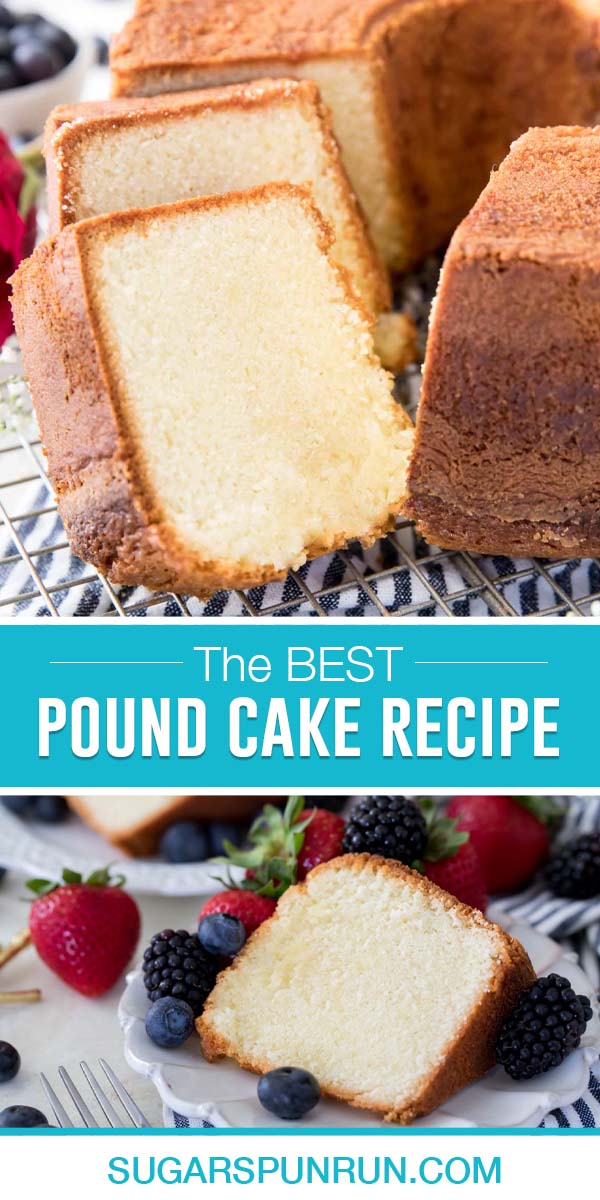
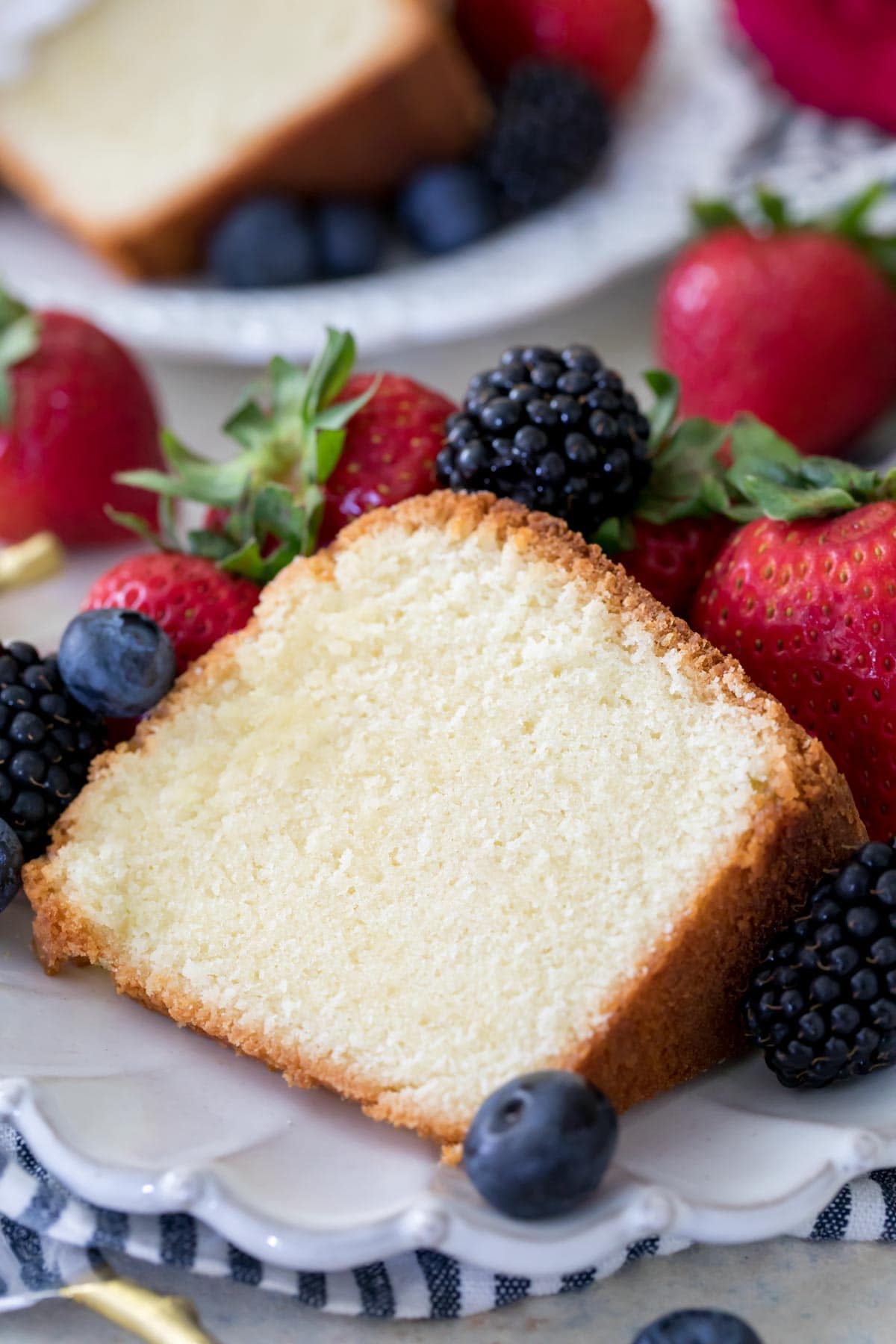
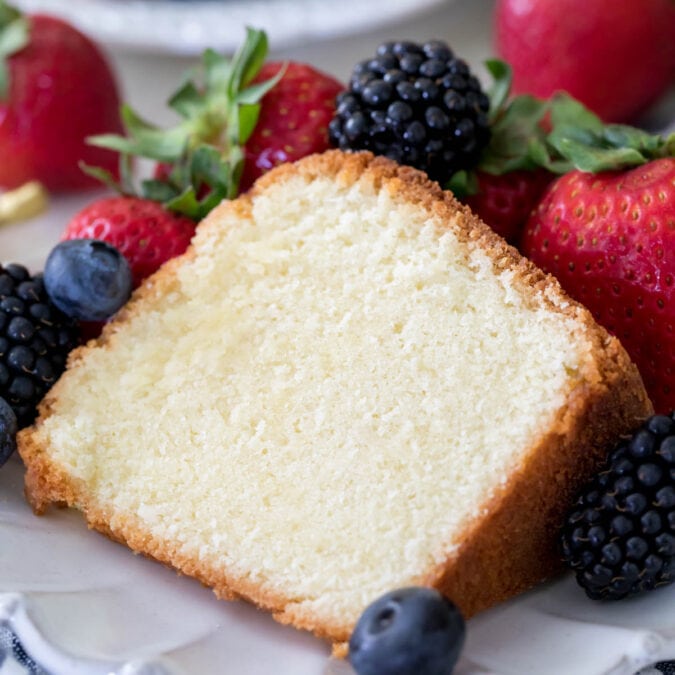
A true classic, my pound cake recipe is simple (only six ingredients) and satisfying! This cake is heavy and dense (as it ought to be!) while simultaneously being soft, buttery, and absolutely melt-in-your-mouth! It’s great served alone or pairs beautifully with whipped cream and fresh fruit.Recipe includes a video tutorial!
I’m not sure where pound cake rates in terms of your favorite cake recipes, but I’ll admit it had never been a top contender for in my household. Humble and frosting-less, sure I would have a slice, but nobody in my house ever really got excited about pound cake, often overlooking it for light and fluffy angel food cake or prettily iced layer cakes like my chantilly cake.
If your experience with pound cake recipes of the past is anything like mine, you’re in for a real treat today. I set about developing this recipe with a mission, determined to perfect a pound cake that was simple and not overly complicated, one that didn’t stray too far from the traditional version (no fancy or unusual ingredients) but at the same time put all of its predecessors to shame.
Why you’ll love this pound cake recipe!
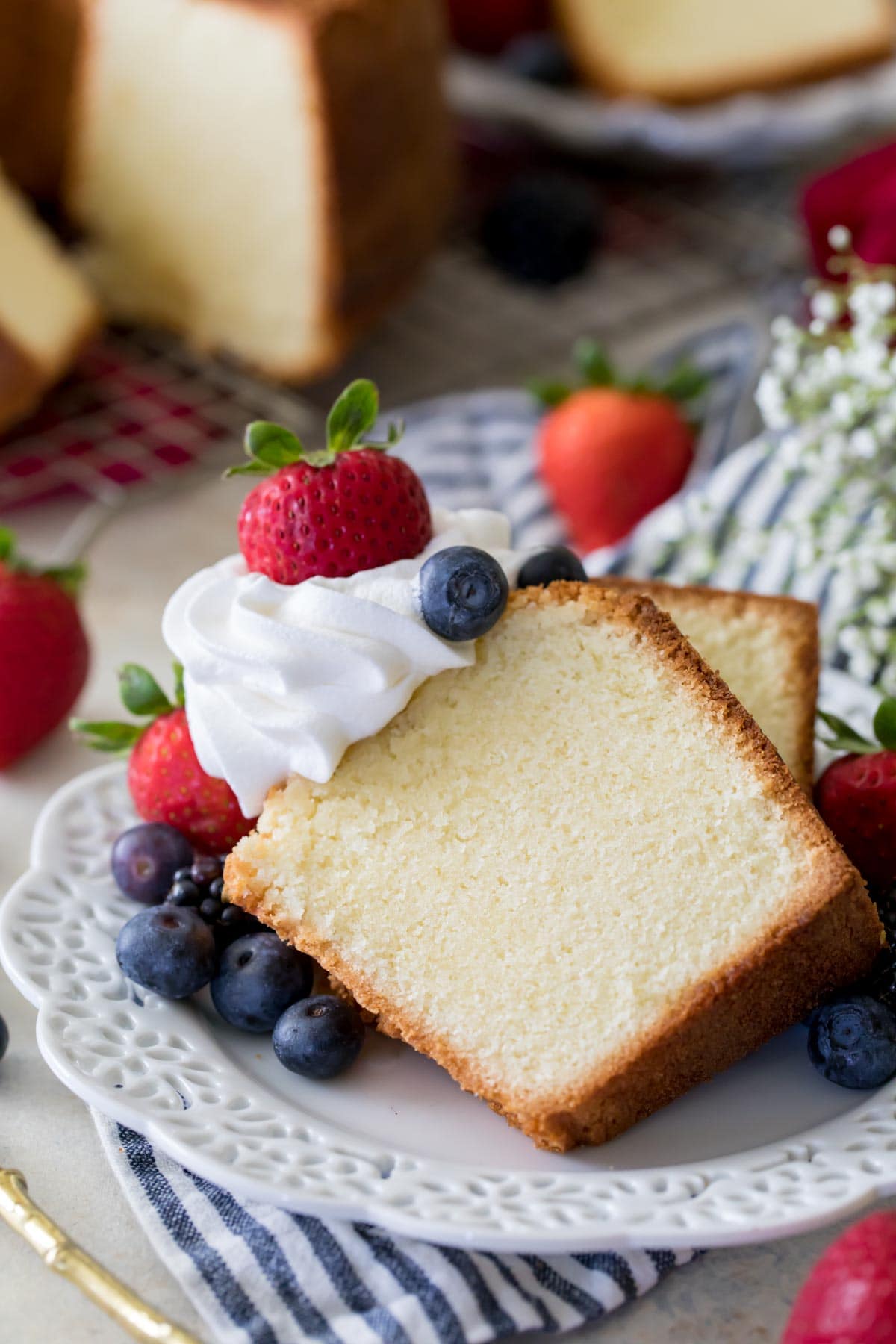
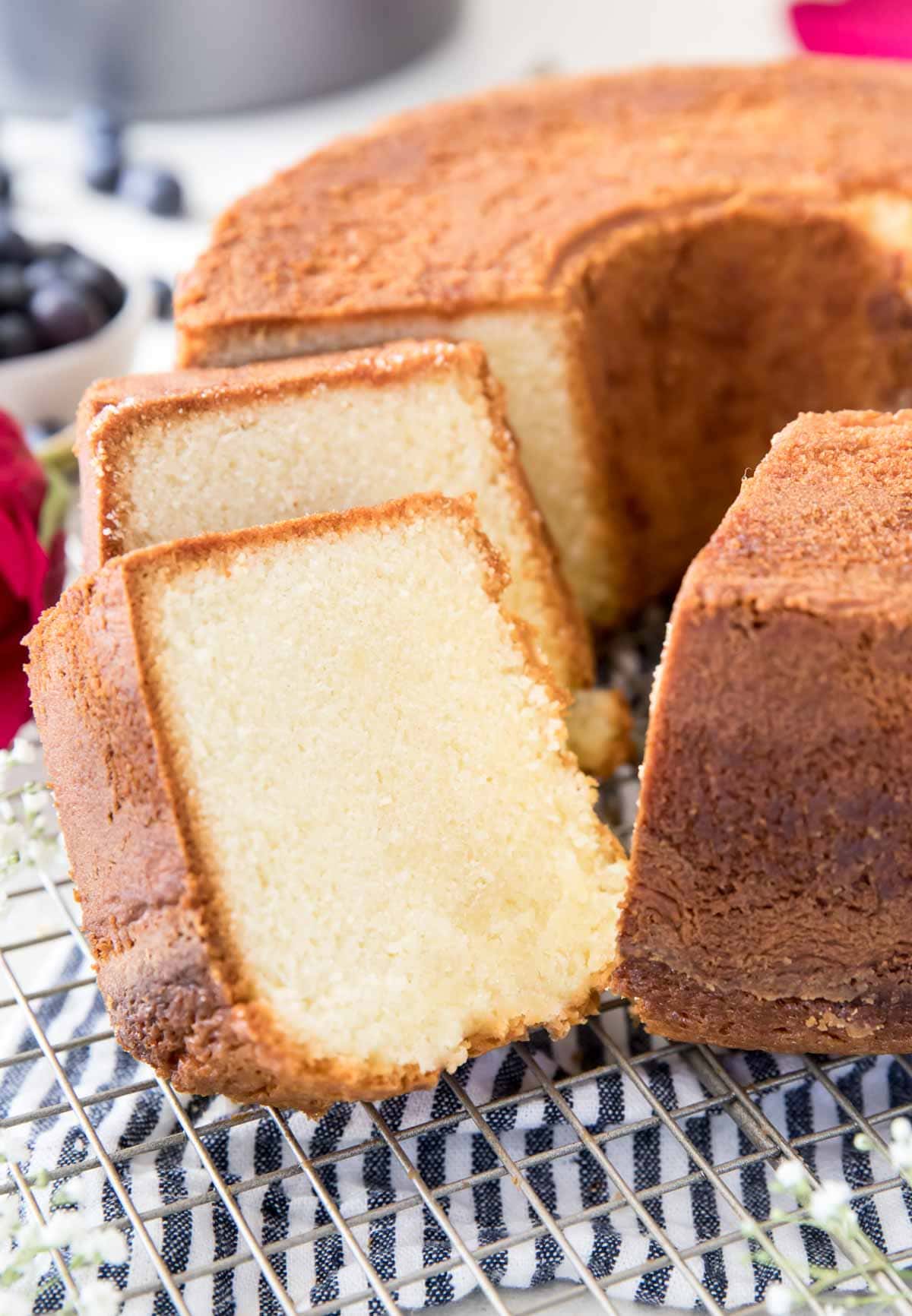
- The perfect crumb. Thanks to incorporating plenty of extra egg yolks (they make such a difference). It’s heavy (as pound cakes should be!) with a dense, velvety crumb that’s never dry or crumbly.
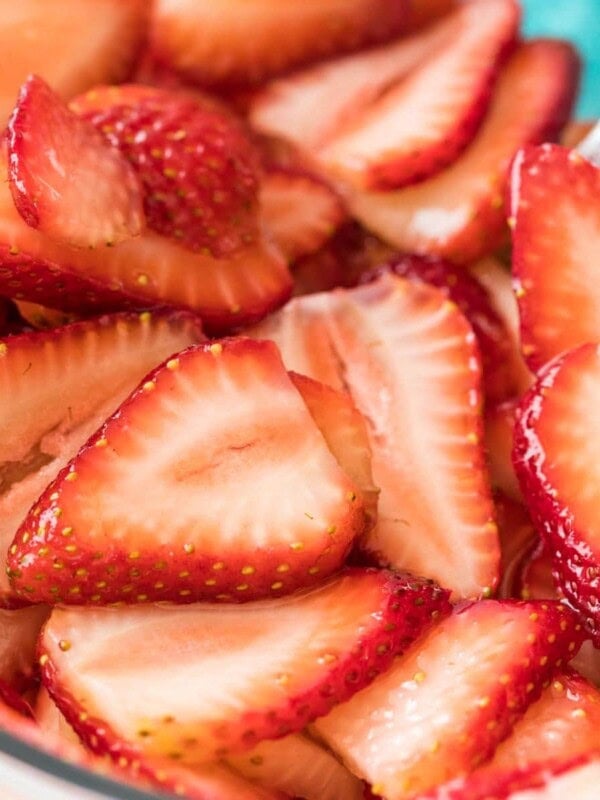
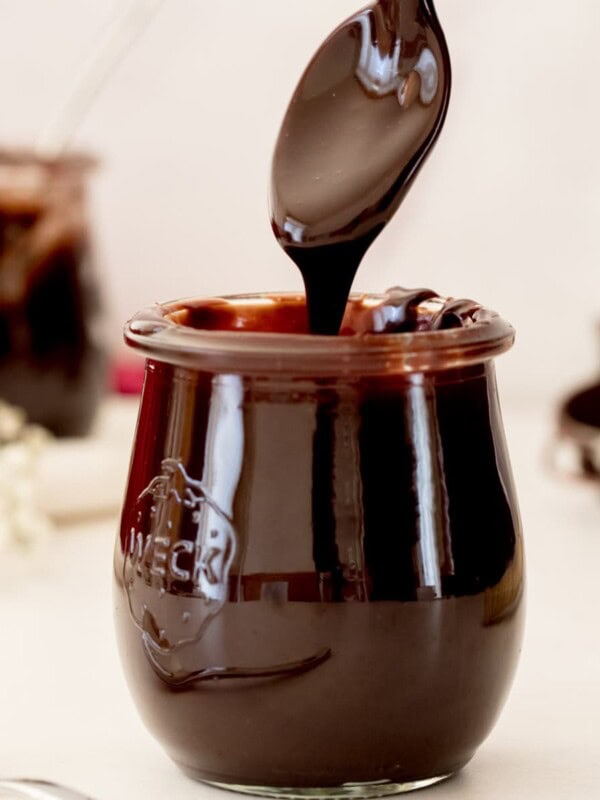
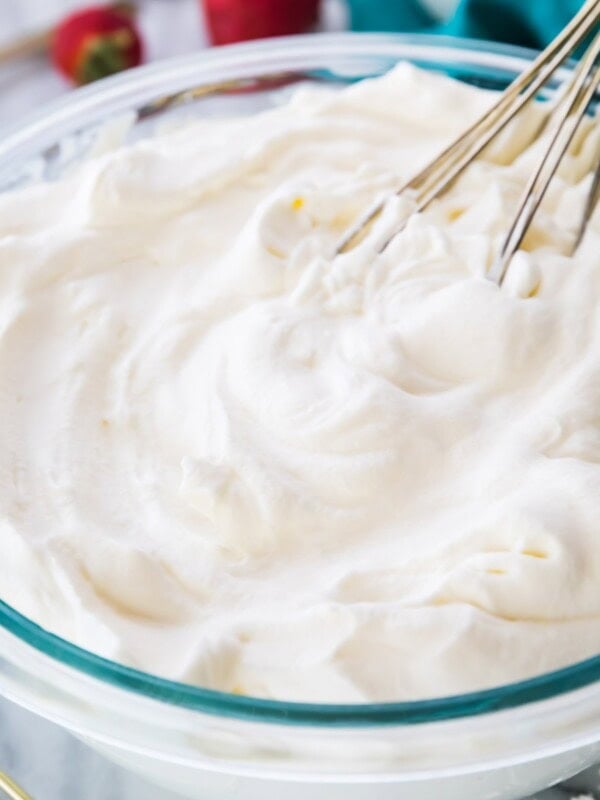
- Great on its own, but even better dressed up. Serve with homemade whipped cream and fresh fruit or strawberry sauce, a drizzle of chocolate ganache, or a dollop of lemon curd.
- Highly rated. I first shared this recipe eight years ago, and its garnered hundreds of 5-star ratings since then.
What You Need (and What You DON’T)
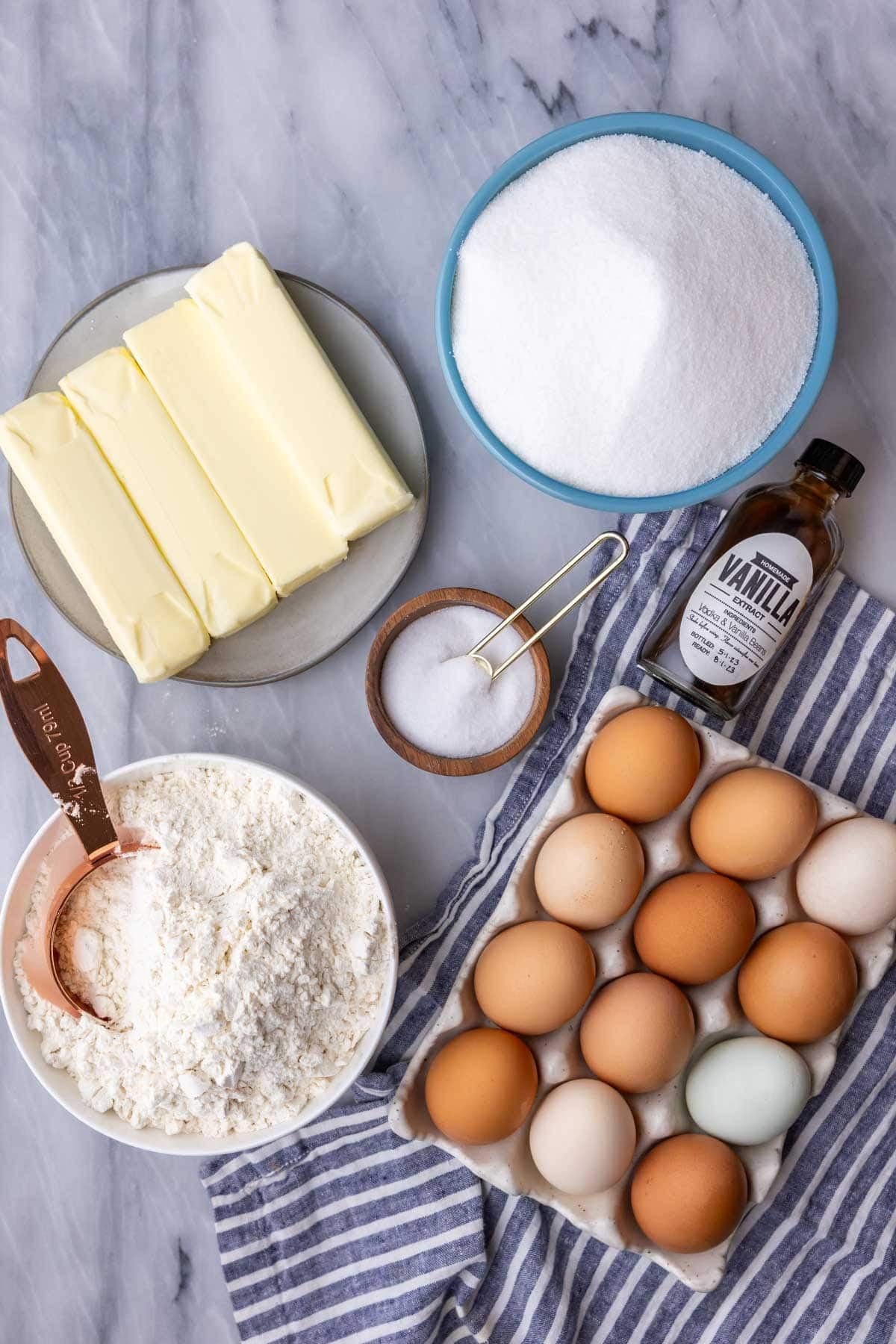
Pound cake has traditionally been made with a pound each of butter, sugar, eggs, and flour. When developing my recipe, I wanted to take into account its origins while fine-tuning things for the best possible flavor (adding vanilla was non-negotiable). The result is a soft, buttery crumb that’s perfectly dense without being at all dry or crumbly.
- Butter. Unsalted butter works best for this cake. It should be softened, but not so soft that it’s greasy, melty, or oily.
- Sugar. We stick with tradition and use regular granulated sugar only in this cake. Make sure to whip your butter and sugar until fully incorporated and fluffy before you move to the next step.
- Eggs. You will need six whole eggs plus six additional egg yolks. It might seem like a lot, and it is, but trust me! The extra yolks help to keep the cake crumb moist with almost custardy undertones/flavors. We omit extra whites because they would make the cake crumb too light (remember, this is a dense cake!) and could even make it dry or cause the cake to overflow the pan. This cake is perfect for using up extra yolks from another recipe! Save your extra egg whites to make meringue, pavlova, or Eton mess!
- Vanilla. You’ll add a whole tablespoon of vanilla to this cake batter. This may seem like a lot, but I promise it’s just the right amount! PS. If you have a batch of homemade vanilla extract sitting in your cabinet, this is the time to bring it out!
- Salt. For flavor, I add a little salt.
- Flour. I specificaly developed this recipe to be perfectly soft and tender using plain ol’ all-purpose flour, but include notes in the recipe in case you’d like to substitute cake flour. Make sure you know how to measure your flour properly, or may end up with a dry cake. One more thing that I cannot stress highly enough: do not, under any circumstances, use self-rising flour. Your cake will almost certainly overflow.
You may notice that my pound cake recipe does not use baking powder. This is intentional! Pound cake ought to have a dense crumb, and baking powder serves to lighten a cake’s crumb and help it rise. The eggs in our recipe work all of the rising-magic that we need, and not only would adding baking powder make the cake crumb too light (best-case-scenario), you’re also bound to find it’s overflowed all over your oven when the baking time has elapsed.
SAM’S NOTE FOR LEMON POUND CAKE: I’ve received lots of requests for how to make a lemon version of this pound cake recipe. While you could just swap out the vanilla extract for lemon, it’s not going to taste as bright and sunny as you’re used to. I have a separate lemon pound cake recipe that packs lots of lemon flavor and is draped in a stunning white glaze. I highly recommend you try it!
As always, this is just an overview of the ingredients I used and why. For the full recipe please scroll down to the bottom of the post!
How to Make Pound Cake
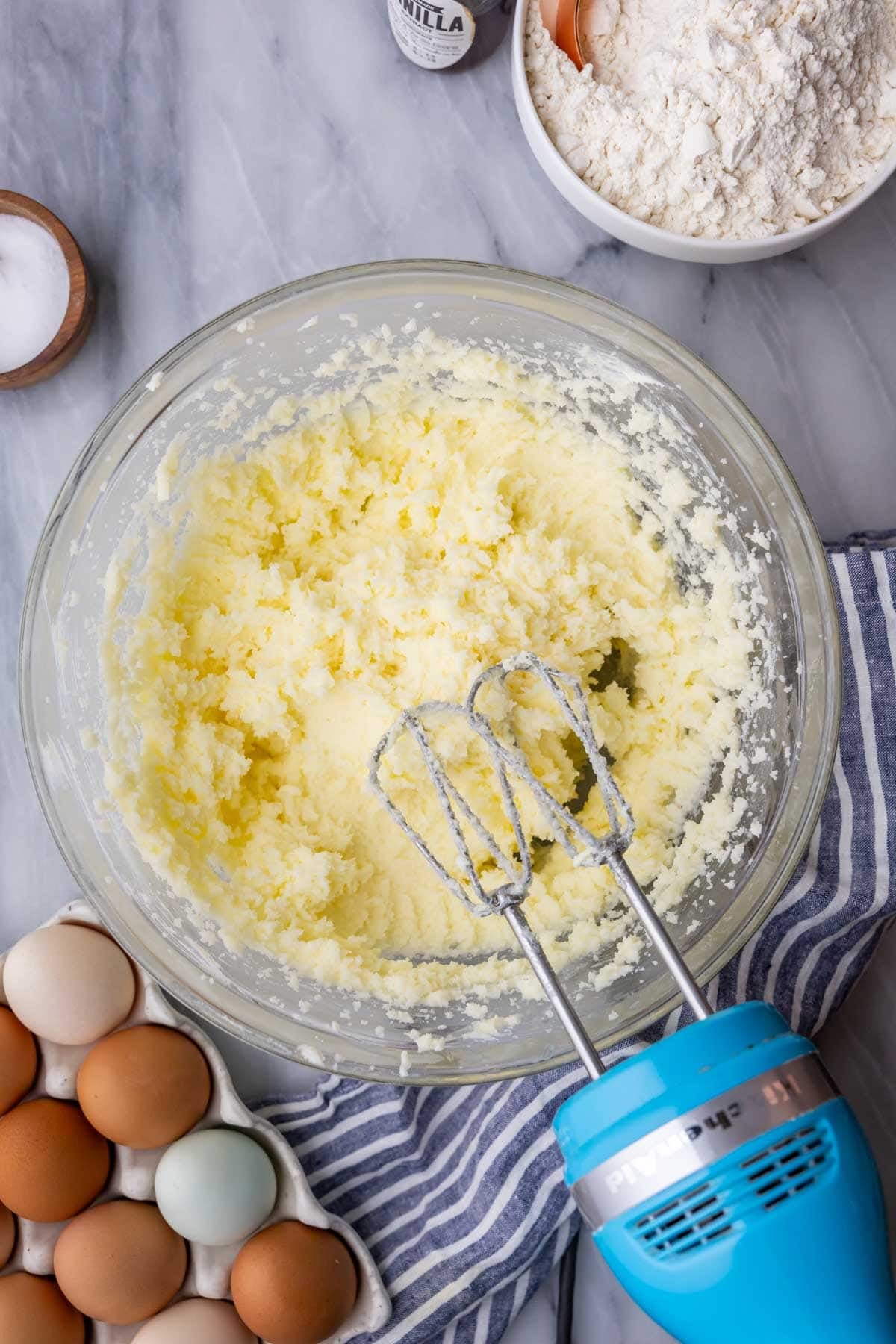
- Beat the butter until its smooth and creamy, then add the sugar and beat until light and fluffy.
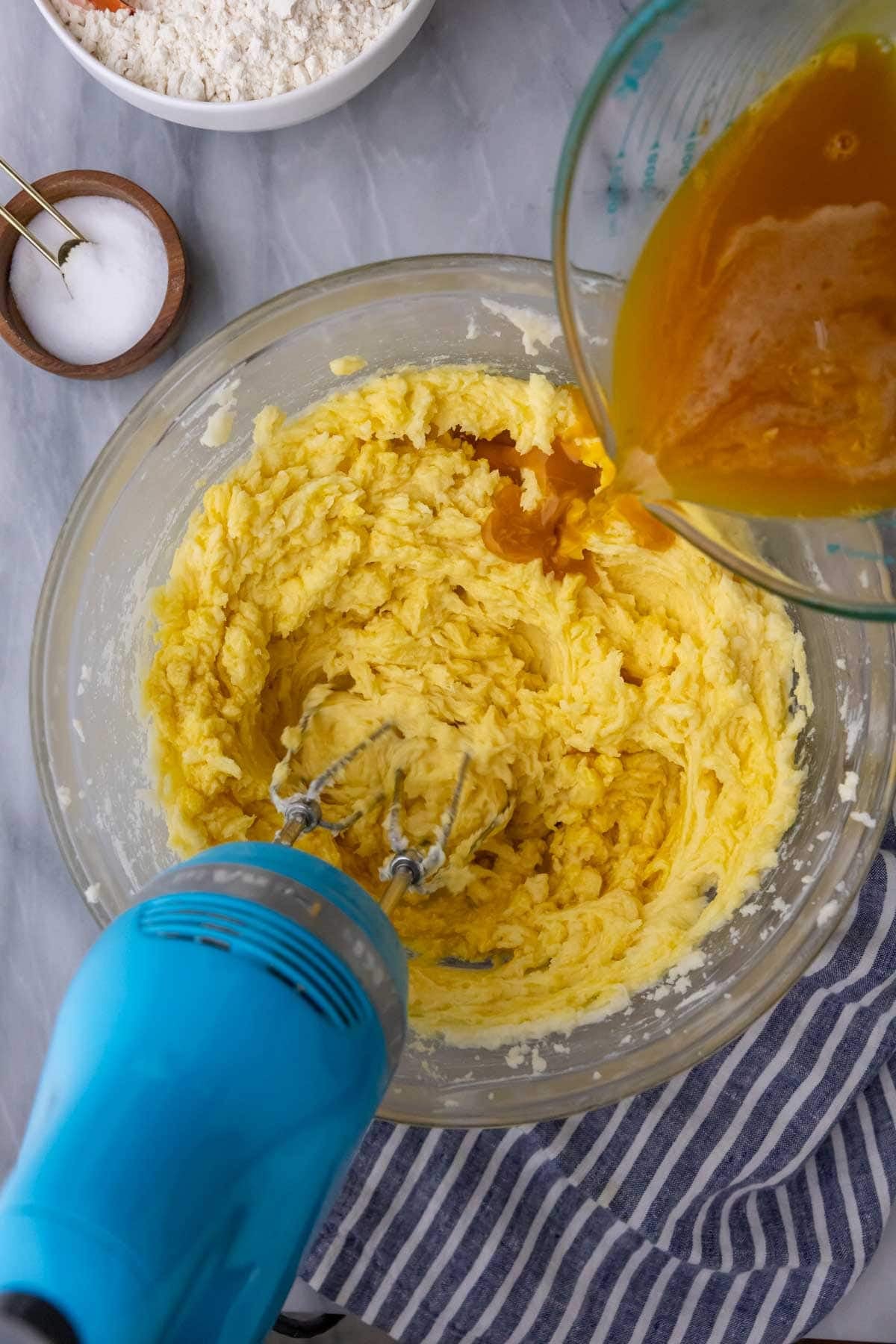
- In a separate bowl (or a large measuring cup works great), whisk together the eggs, egg yolks, vanilla, and salt. With your mixer on low, slowly drizzle in the egg mixture to incorporate. Pause and scrape the sides and bottom of the bowl, then increase speed and beat for another 1-2 minutes.
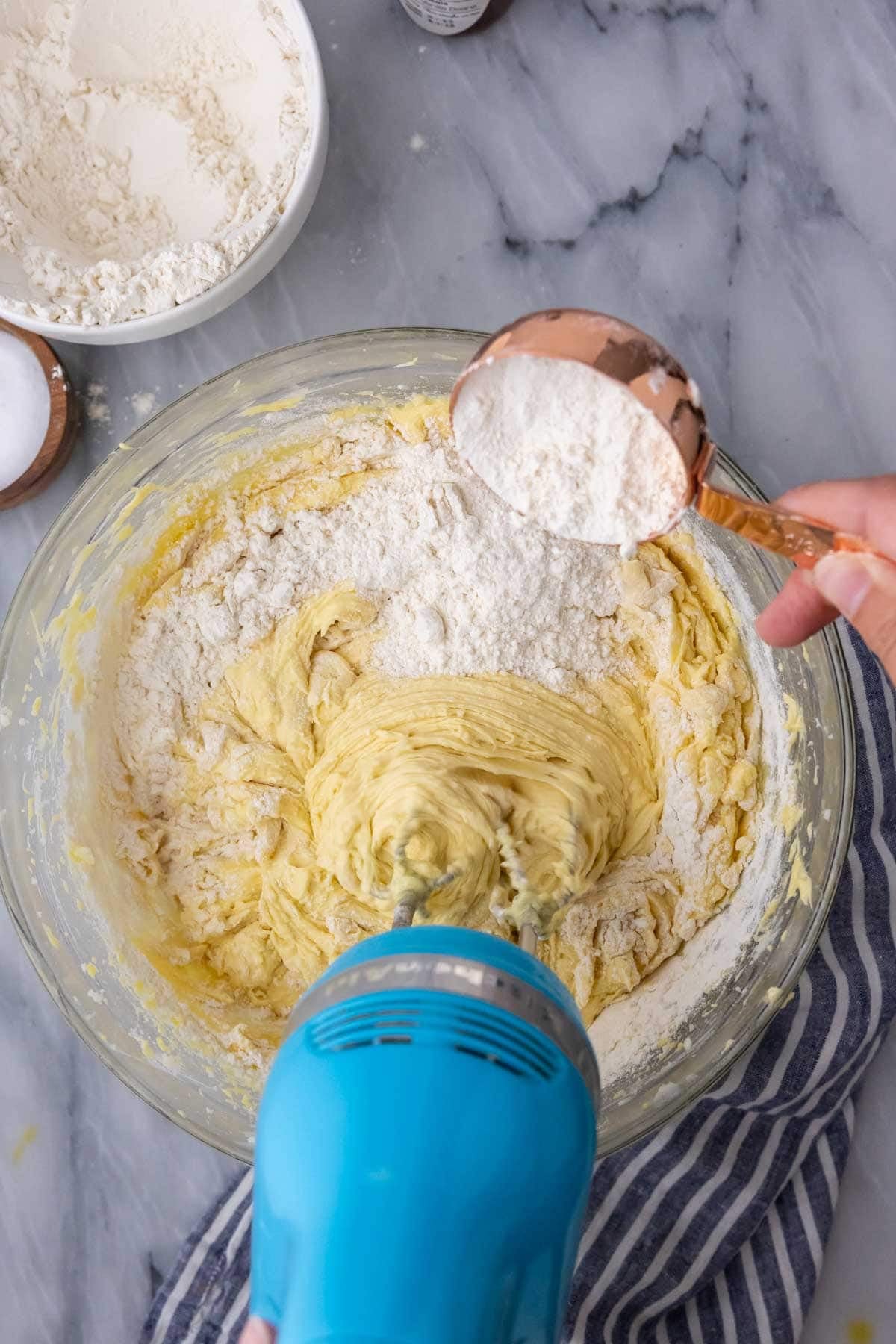
- Gradually add the flour, pausing periodically to scrape the sides and bottom of your bowl with a spatula.
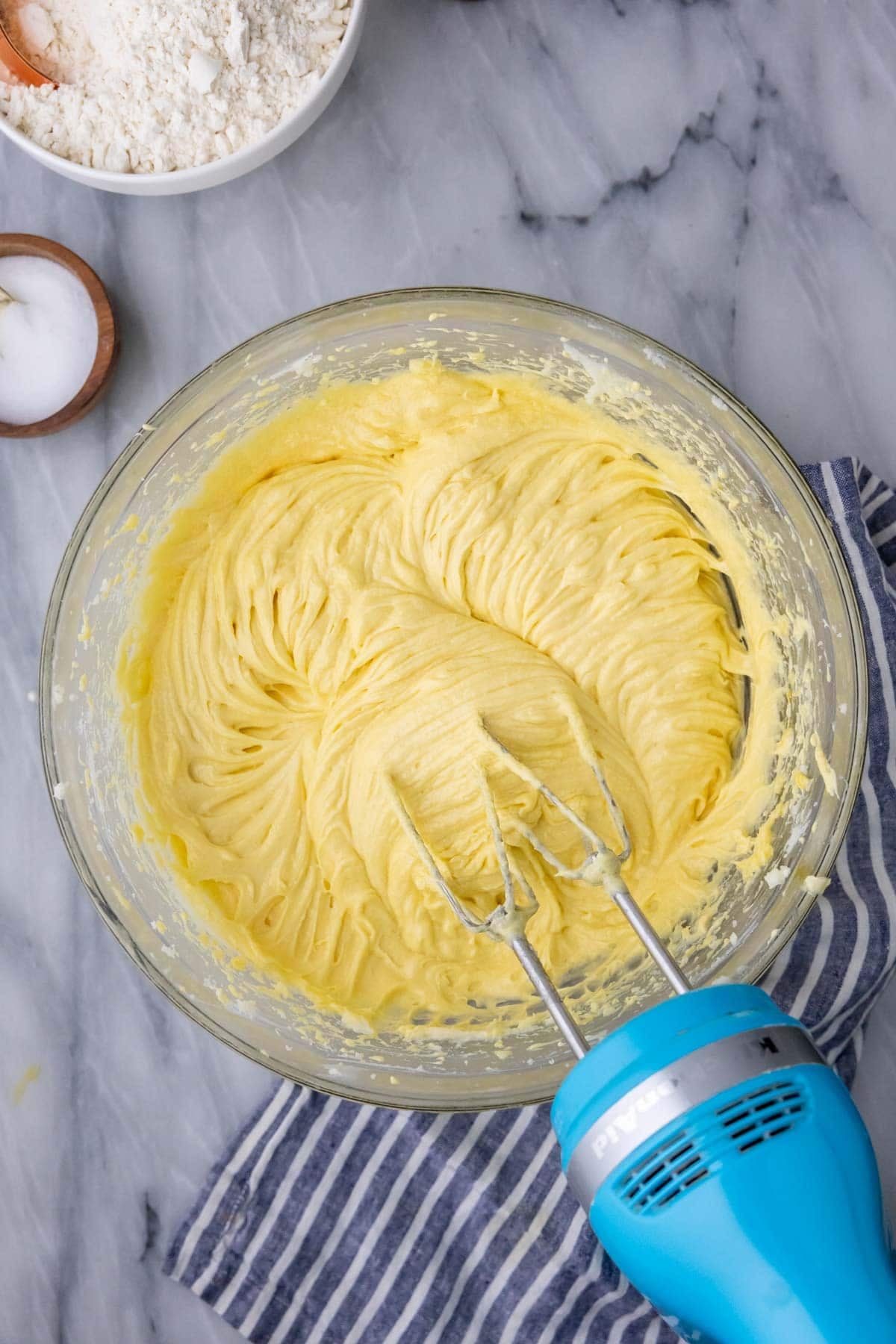
- Once all the flour has been added, beat well for another minute longer until you have a completely smooth, uniform, and silky batter.
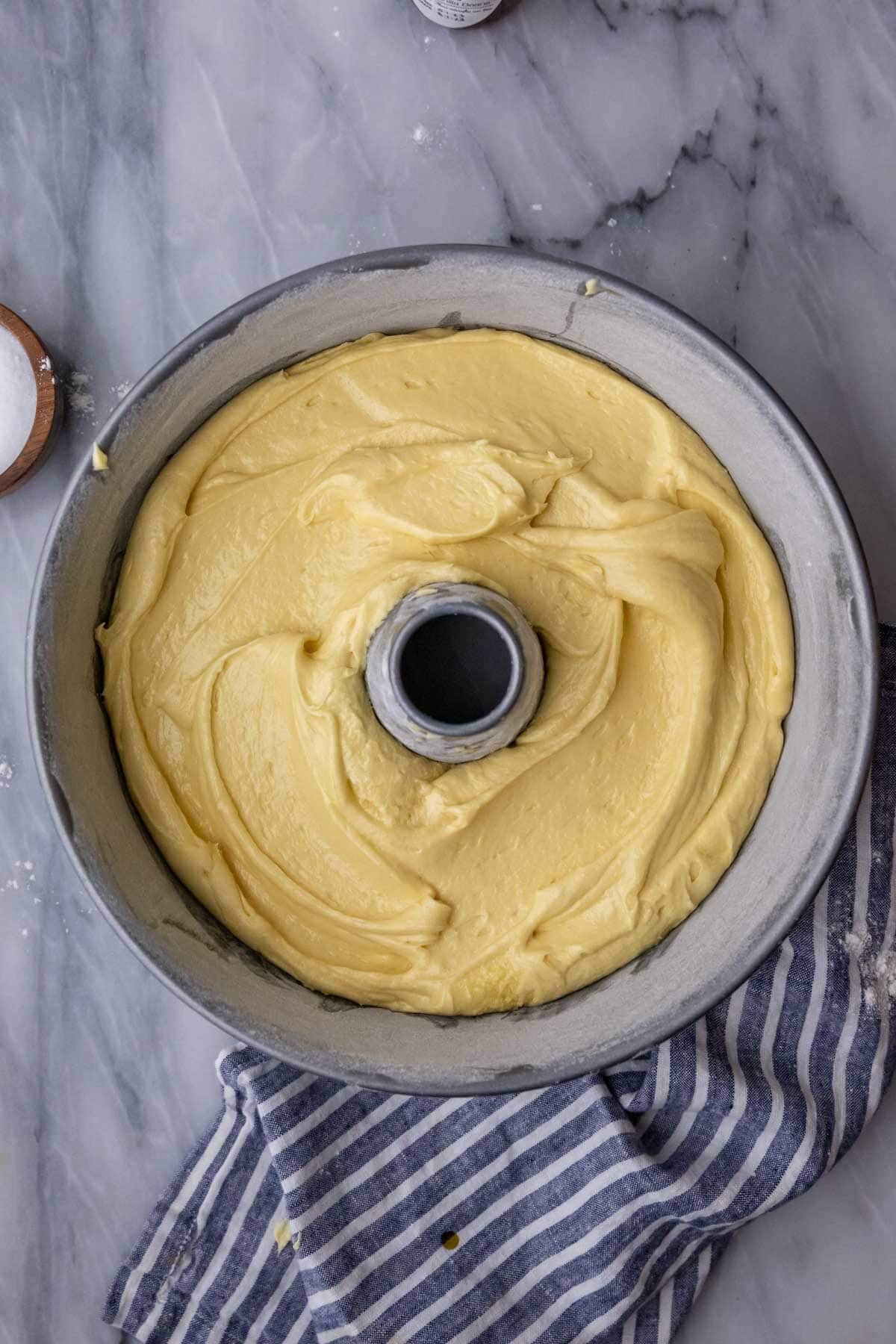
- Pour batter into a well greased and floured tube pan or bundt pan. You can grease the pan with butter or shortening, but make sure it is thoroughly greased/floured and tap out the excess flour before adding the batter.
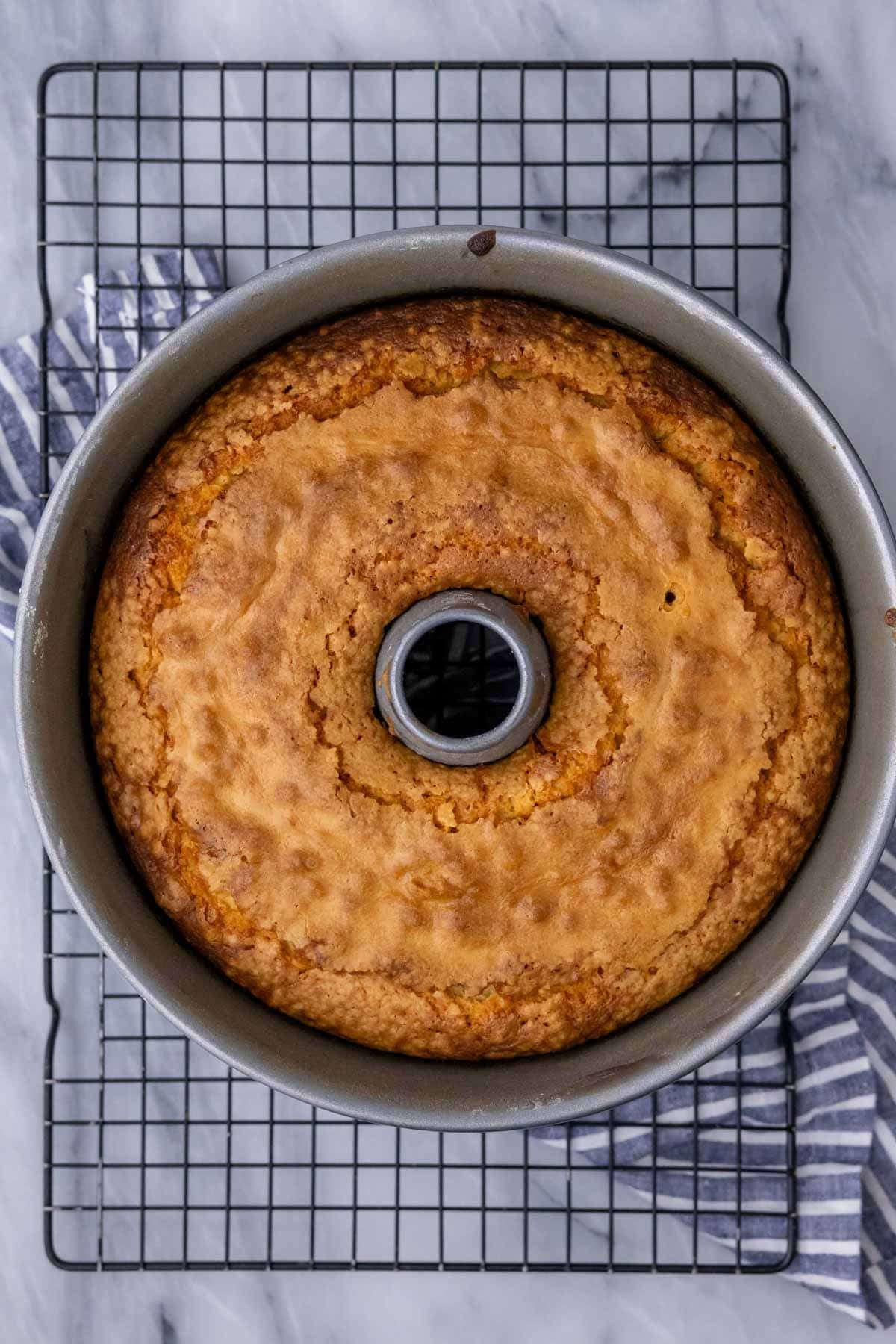
- Bake the cake until a skewer inserted in the center comes out clean or with a few moist crumbs. Cool the cake for 20 minutes in the pan, then run a knife around the sides and center and carefully invert onto a cooling rack and allow to cool completely before cutting in (it could look underdone in the center if cut into warm).
SAM’S TIP: To test if your cake is finished, the best method is to use a long wooden skewer (like the kind used for shish-kebabs). This cake is so tall that a regular toothpick just won’t cut it. Insert the skewer into your cake and check it for moist crumbs. If you have wet batter on your skewer, your cake needs to bake longer, but if there are a few moist crumbs then it’s time to pull that cake out of the oven! Since the top of the cake tends to form a firm crust, you may need to make a slightly larger hole at the top with the skewer so it doesn’t scrape off the batter, making it difficult for you to tell what the crumb actually looks like.
Frequently Asked Questions
While this recipe was very deliberately developed to be moist, the most important thing when baking your pound cake is to make sure that you do NOT over-bake it. I recommend making sure your oven is not running hot (I keep two oven thermometers in my oven at all times just to make sure my oven display is telling me the truth) and then checking your cake earlier rather than later. Because of its thick batter and the sheer volume of batter, it’s going to take quite a while in the oven, probably an hour and ten to an hour and fifteen minutes. I check my cake at one hour and then return it to the oven in about 5-minute increments until it’s finished baking.
This cake was originally made with a pound each of butter, sugar, eggs, and flour, and so the name pound cake was born. Crazy stuff, huh? 😉 My recipe doesn’t stick strictly to the original formula, I think you’ll like it even better.
This pound cake should not overflow if prepared as written and baked in the proper-sized pan (indicated in the recipe card). I have found that some people have had their cakes overflow, and in each instance this has happened because they had substituted self rising flour, used a pan that was too small, used 12 whole eggs, or added baking powder to the recipe. Please do not make any of these alterations.
Enjoy!
Top your pound cake with…

Let’s bake together! Subscribe to my newsletter to be notified of all the newest recipes, and find my free recipe tutorials on YouTube 💜
The Perfect Pound Cake Recipe
Equipment
- 10" tube pan or 12-cup bundt pan (must hold 12 cups batter)
Ingredients
- 2 cups (455 g) unsalted butter, softened
- 3 ½ cups (700 g) granulated sugar
- 6 large whole eggs¹
- 6 large egg yolks¹, (these 6 egg yolks are in addition to the 6 whole eggs listed above)
- 1 Tablespoon vanilla extract
- 1 teaspoon salt
- 3 ½ cups (438 g) all-purpose (plain) flour²
Instructions
- Preheat your oven to 350F (175C) and generously grease (with shortening) and flour a 10 inch tube pan or 12 cup bundt pan (pan must be able to hold 12 cups). Shake out excess flour and set aside.
- Place your butter in a large bowl (this recipe makes a lot of batter! I recommend using a stand mixer if you have one) and use an electric mixer to beat the butter until it is creamy and smooth.2 cups (455 g) unsalted butter
- Scrape down the sides of the bowl and add the sugar. Beat until the ingredients are well combined and light and fluffy (about 1-2 minutes).3 ½ cups (700 g) granulated sugar
- In a separate, medium-sized bowl, combine your eggs, additional egg yolks, vanilla extract, and salt.6 large whole eggs¹, 6 large egg yolks¹, 1 Tablespoon vanilla extract, 1 teaspoon salt
- Use a fork to lightly beat the eggs and yolks until all egg yolks are broken up and salt and vanilla are incorporated.
- With mixer on low speed, slowly pour egg mixture into your batter, allowing it to gradually become incorporated (don’t pour all the egg mixture in at once, if you can’t manage a steady stream then add the egg mixture in about 6 parts, allowing each part to become well incorporated before adding more). Once all of the egg mixture is incorporated, pause to scrape down the sides and bottom of the bowl, then increase speed to medium-high and beat for another 1-2 minutes.
- Reduce mixer speed to low and gradually, about ¼ cup at a time, add flour to the batter until all has been added.3 ½ cups (438 g) all-purpose (plain) flour²
- Scrape down the sides and bottom of bowl and stir again on medium speed until well-combined and beat for another minute.
- Spread batter evenly into prepared tube pan, use a spatula to smooth the surface of the batter.
- Transfer to 350F (175C) oven and bake in the center rack of your oven for an hour and ten to an hour and fifteen minutes or until a wooden skewer inserted in the center of the thickest part of the cake comes out clean or ideally with a few moist crumbs (do NOT over-bake this cake or it will be dry)
- Allow cake to cool for at least 20 minutes then run a knife around the sides of the tube pan and the center.
- Carefully invert pound cake onto a cooling rack and allow to cool completely before serving.
Notes
¹Eggs
A lot of people have had questions about how many eggs to use. You need a total of 12 eggs for this recipe BUT you are only going to be using 6 whole eggs and then another 6 egg yolks. Meaning you will be discarding 6 egg whites (or save them to make meringue cookies or my white cake).²Cake Flour
If you’d like, you can substitute cake flour. If measuring your flour by weight (which you really should be!) you can do a straight 1:1 substitute for cake flour. If measuring by cups you will need 3 3/4 cup + 2 Tablespoons of cake flour. This cake will turn out just as well; slightly softer, a smidge less dense, but still delicious. Just like with using all-purpose flour, you DO NOT need to add baking powder to this recipe if you use cake flour. Also worth noting: DO NOT UNDER ANY CIRCUMSTANCES USE SELF-RISING FLOUR.Nutrition
Nutrition information is automatically calculated, so should only be used as an approximation.
Like this? Leave a comment below!
This pound cake recipe was first published in 2018. I’ve since updated it to include new photos, notes, and tips. The recipe remains the same.









I have fresh peaches on hand and would like to know if I can add them to this recipe?!
Thank you
Hi Ellen! They would probably make a nice topping for the cake. 🙂
The recipe has no baking powder. Is this correct? Thanks
Correct. It is not needed here. 🙂
i’m going to make this tomorrow – can i cut the recipe in half to make one loaf of it?
Hi Daisy! I have had many people report making this in 2 loaf pans so cutting it in half to use in one pan should work just fine. 🙂
This pound cake was fabulous!! My husband’s birthday is TODAY and when I asked at 3pm if he had decided on a dessert, he said “strawberry shortcake with cake that is dense like banana bread 😳” so I searched quickly for a new pound cake recipe since I’ve made several over the years and they just aren’t right (crumb too loose, falling apart, etc.) and this recipe was perfect!!! When I make it again (which is certainly will 😊), I’ll use a stick blender with the eggs to mix them well. Love the measurements in grams!! Thank you for making his birthday perfect!!
I am so glad everyone enjoyed it so much, Melissa! 🙂
Hello! ItS going to be my first time to do this recipe. My doubt is that here in Mexico There’ only one size of eggs, which are medium. Should I add more or do te pound cake as directed in the recipe! Thanks!
Hi Sara! I think you would be safe to add an extra egg here. 🙂
Should I just halve the recipe if I want to bake in a standard loaf pan?
Hi Alia! That should work fine. I have had others report making it in two loaf pans so you should still have enough batter if you cut it in half. 🙂
Hi Sam
Thanks for the recipe. Would you please explain about butter? Should we use Stork cake margarine or real butter eg Anchor unsalted butter. Can we use caster sugar?
Thanks
Hi Zakria! I would definitely use real butter. Caster sugar would work in place of the granulated sugar. Enjoy! 🙂
I plan to cut the recipe in half and use two loaf pans. If anyone has any advice let me know. Thank s.
Hi, Heather! This recipe makes enough batter to fill (2) 9″ loaf pans. Others who have tried this reported that each loaf took approximately one hour to bake. I hope that you enjoy the recipe. 🙂
Can I use salted butter?If so should I just omit the salt?
Hi, Debbie! Yes, you can use salted butter, you will just want to omit the additional salt listed. I hope that you enjoy it! 🙂
Hi! I tried this recipe! But there were LOTS of bubbles on the top. How can this be prevented??
Hi Mary! Was this before or after you baked it? I haven’t ever encountered this issue.
Hi Sam,
Since there is so much batter I currently have the first batch baking in the oven… the question is I have the remaining in a second prepared pan so how long can I keep the batter at room temperature or in refrigerator before baking?
Hi Samreen! Sorry for the delayed response. I would probably leave it at room temperature until the first finished baking and then bake the second. You wouldn’t want to keep it out too long. 🙂
This recipe received RAVE REVIEWS from a family that LOVES pound cake!! I will share one alternative … If you like a crusty top like us, then do not pre-heat the oven. I put the cake in a cool oven, set the temp for 350-degrees. After 1 hour and 25 minutes, the cake was perfect 😄
I am so glad everyone enjoyed the cake so much! 🙂
Hi Sam,
I was sooo excited to try this recipe, but for some reason it didn’t turn out fluffy like yours. It seemed to have too much butter. The outer part was very crispy sort of like a cookie. I had the correct measurements as per recipe.
Would you happen to know what could have happened? Where did I go wrong?
Hi Ana! The outer part often is crispy, it kind of makes a little crust which is really good. The pound cake shouldn’t be fluffy. It is a very dense cake. I’m not sure about the butter. It is a pretty buttery cake. I’m sorry I can’t help any more. Hopefully it turns out better next time. 🙂
1st time baking any pound cake and this turned out amazing! Perfect recipe, hands down!
I am so glad you enjoyed it so much, Kim! 🙂
Is it possible to bake this cake in 9 inch round pans. I am using the cake for a cheesecake torte.
Hi Sylvia! It should work in 9 inch round pans. Don’t fill the pans more than 2/3 of the way full. This recipe will probably fill about 3 pans and I’m not sure what the bake time would be. Enjoy! 🙂