
Amish Cinnamon Rolls
This post may contain affiliate links. As an Amazon Associate I earn from qualifying purchases. Please read my disclosure policy.

My take on Amish cinnamon rolls yields pillowy soft, unbelievably melt-in-your-mouth cinnamon rolls that rival any you’ll find a a farmer’s market. The secret? A simple pantry staple that makes all the difference. Recipe includes a how-to video!

The BEST Amish Cinnamon Rolls
I’ll be honest, this recipe was never supposed to make it onto the blog. I started working on my “secret ingredient” cinnamon rolls several years ago, and since I already have a classic cinnamon roll recipe, overnight cinnamon rolls, a no-yeast cinnamon roll and… well, quite a few more, I hadn’t intended on adding another version to the website, and I’d planned on making it a cookbook exclusive.
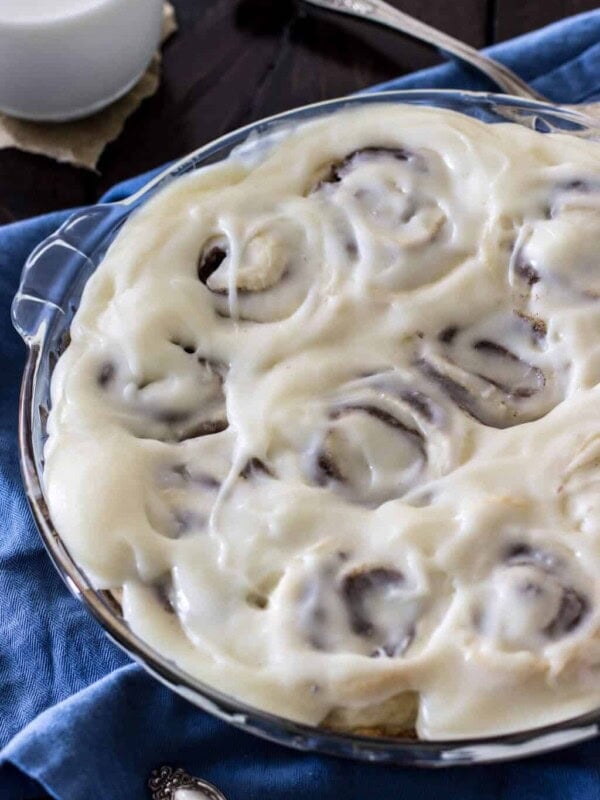
Well, obviously, that didn’t happen. Once I finally cracked the recipe for these Amish cinnamon rolls, they were honestly too good not to share immediately. They’re soft and tender, insanely pillowy, covered with the most luscious cream cheese frosting, and made in traditional Amish style, meaning we’re adding mashed potatoes (yes, mashed potatoes, trust me!) to the dough.
Why This Recipe WORKS
- Amish-market perfecton, but at home. Just like the rolls from an Amish farmer’s market or bakery they’re big, buttery, ultra-soft, and topped with just the right amount of icing (a lot!).
- Secret ingredient: mashed potatoes (yes, really!). This is an old fashioned trick that’s used in many bread doughs like my potato buns or sweet potato dinner rolls. The starches in the potato hold onto moisture and yield a softer, more tender crumb that stays soft for days (not that these will last that long…).
- Softened butter = better rise and texture: While melted butter works, it can also make the dough a bit heavier. Softened butter, added gradually, makes the dough more tender and encourages a higher rise (for fluffier rolls).
- Make-ahead and freezer friendly! These rolls can be prepped the night before and baked in the morning; I include instructions for this in the recipe notes. They also freeze well!
Table of Contents
Ingredients
Let’s chat about a few of the key players before we dive in.
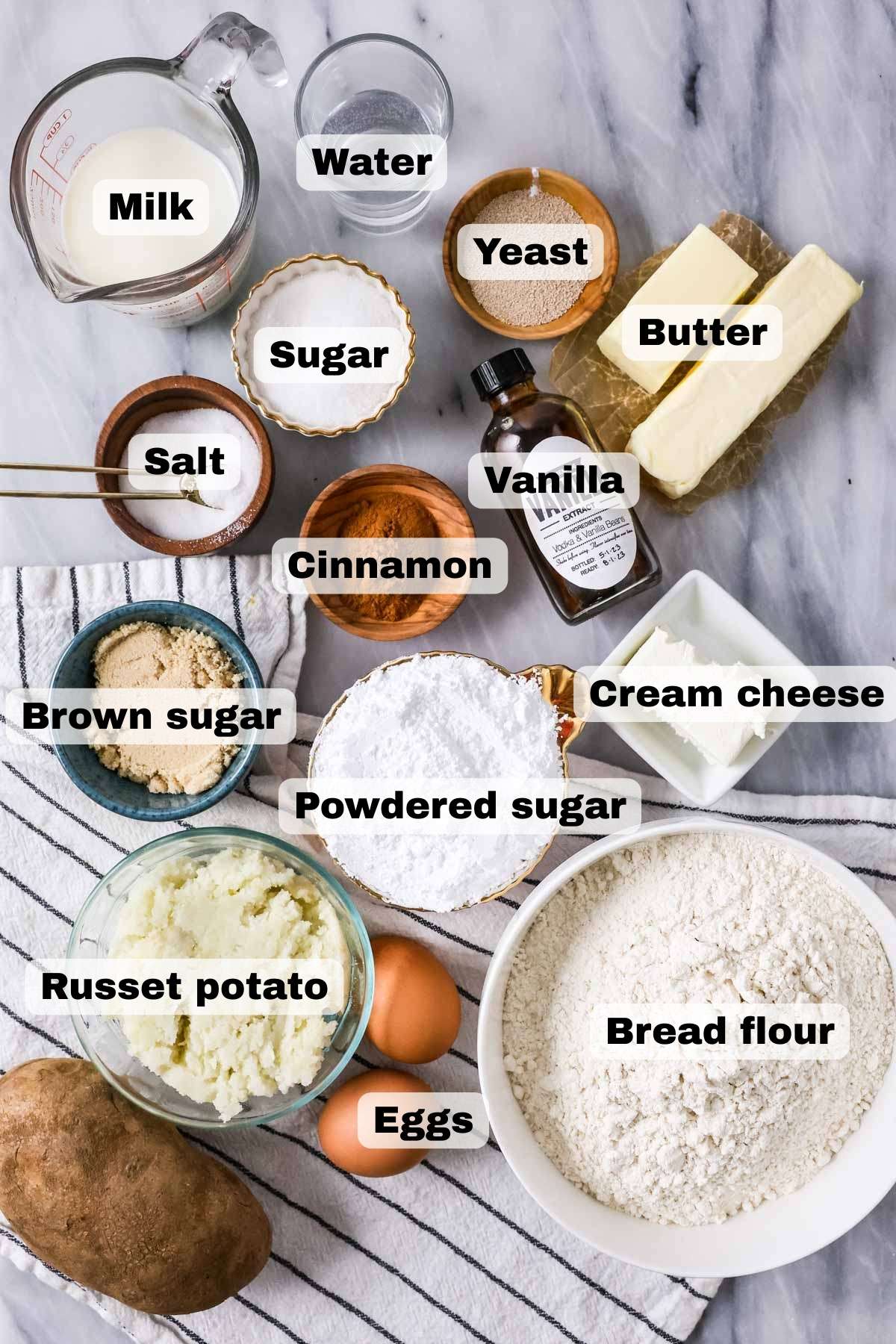
- Bread flour. A higher protein bread flour really is best for the ideal (think chewy) cinnamon roll texture, but all-purpose works in a pinch. You need at least four cups, but have more on hand as the amount you will need to add will vary depending on your kitchen.
- Active dry yeast. Make sure your yeast is alive and active (it needs to develop a foamy cap once it’s mixed with the warm liquid); if it’s not, the recipe won’t work! You could try to make this recipe with instant yeast, but I have found it doesn’t make too much of a difference time-wise.
- Mashed potato. Don’t use leftover mashed potatoes that were made with butter, cream, etc. You want plain, unseasoned potato, and it’s best if it’s room temperature or even slightly warm. I typically use a russet potato that I’ve microwaved (simple, detailed instructions in the recipe notes below).
- Brown sugar & cinnamon. Regular granulated sugar enriches and sweetens the dough, but for the filling I like light brown sugar. If you only have dark brown, that will work too. Or, make your own light brown sugar using the instructions in my post on how to make brown sugar.
- Cream cheese. Stick with full-fat, block style cream cheese for the best results. Using low-fat or spreadable could result in a frosting that’s too runny.
As always, this is just an overview of the ingredients I used and why. For the full recipe please scroll down to the bottom of the post!
SAM’S TIP: While I usually use melted butter in my homemade cinnamon rolls, I’ve found that softened butter can actually make a really positive difference. While melted butter works (and well), the gradual addition helps with the gluten development and makes for a crumb with higher lift, ensuring more moist, fluffy, and soft results. We’ll form the dough first, add most of the flour, and get all that flour hydrated before adding the butter a tablespoon at a time.
How to Make Amish Cinnamon Rolls
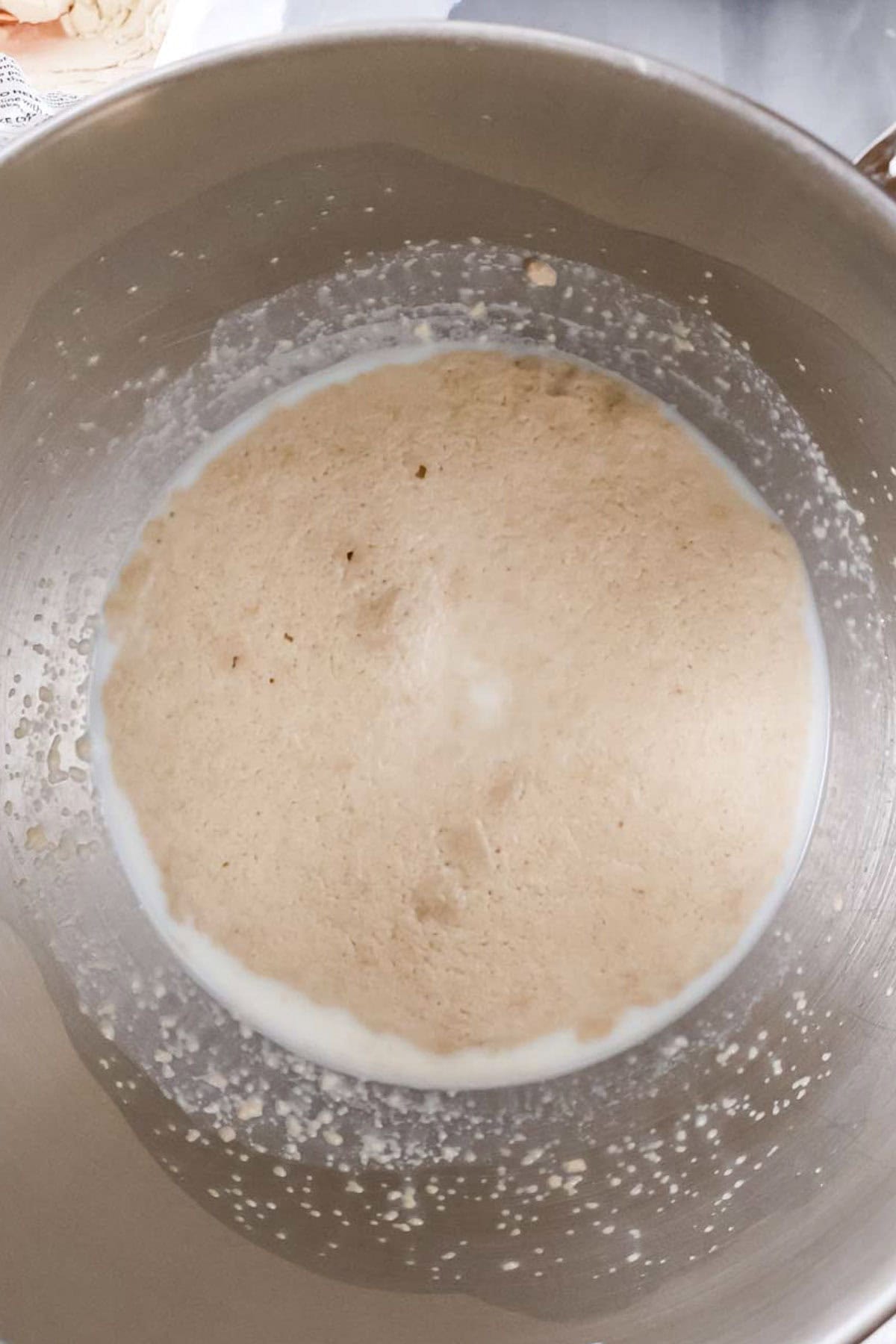
- Step 1: Activate the yeast. The milk and water need to be warm, but not too hot, aim for 115F (stir before temping!). Add the yeast and a pinch of sugar, stir everything together, and let it sit until you have a nice foamy cap on the liquid. This should take 5-10 minutes, if you’ve waited longer and there’s no activation, your yeast may just be bad (or maybe you made the mistake I once did and added a pinch of salt instead of sugar — whoops!). Regardless, if you don’t get the foam you’ll have to start over.
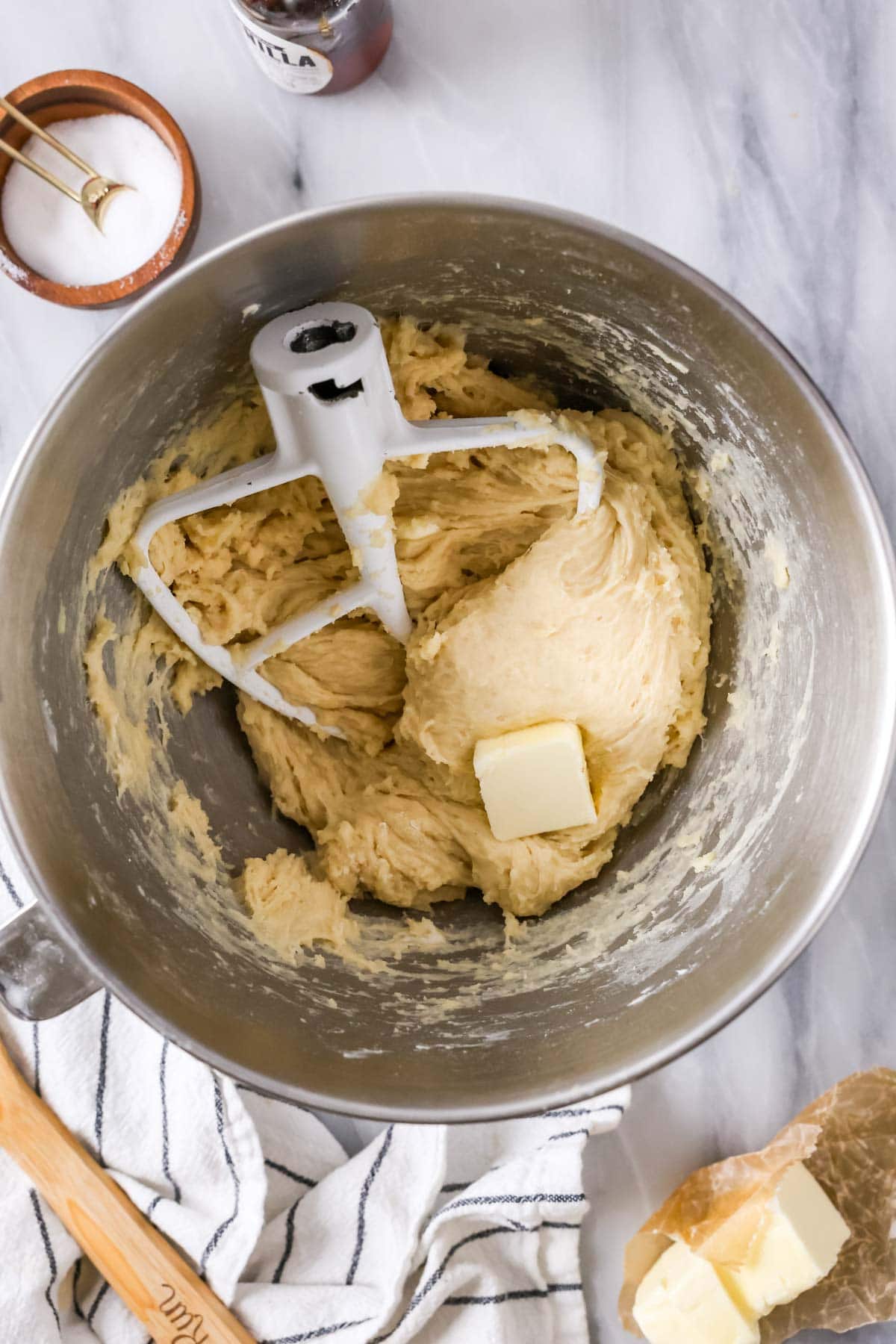
- Step 2: Make the dough. Add the remaining sugar as well as the mashed potato, eggs, salt, and just 3 cups of the flour. Add softened butter a tablespoon at a time (helps encourage proper gluten development and the softest, pillowiest results), then gradually add additional flour until the dough clings to itself.
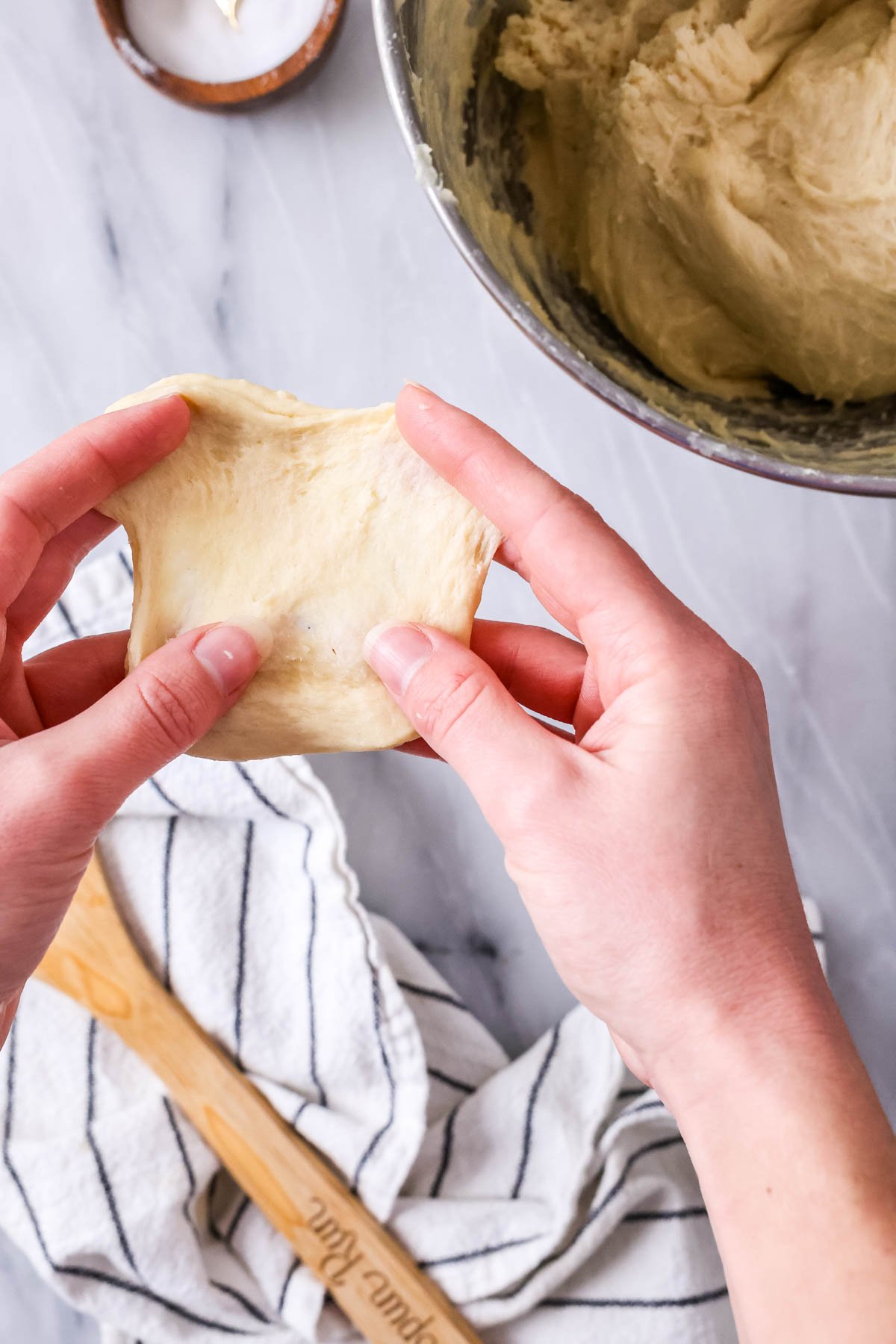
- Step 3: Knead well. Exactly how long this takes will vary, but it’s typically 5-10 minutes and you’re looking for a smooth, elastic dough; I like to run this one past the the windowpane test. Basically, if you pinch off a large piece you can gently stretch it to be thin enough that you can see light through it if you hold it up to a light source. And speaking of kneading… I prefer a mixer because you don’t need to add as much flour (the dough can get a bit sticky when kneading by hand, requiring more flour to be added), so the rolls usually end up softer and more pillowy if you use a stand mixer. But, let’s be real, the Amish aren’t using stand mixers so you can certainly make these without one. 😉
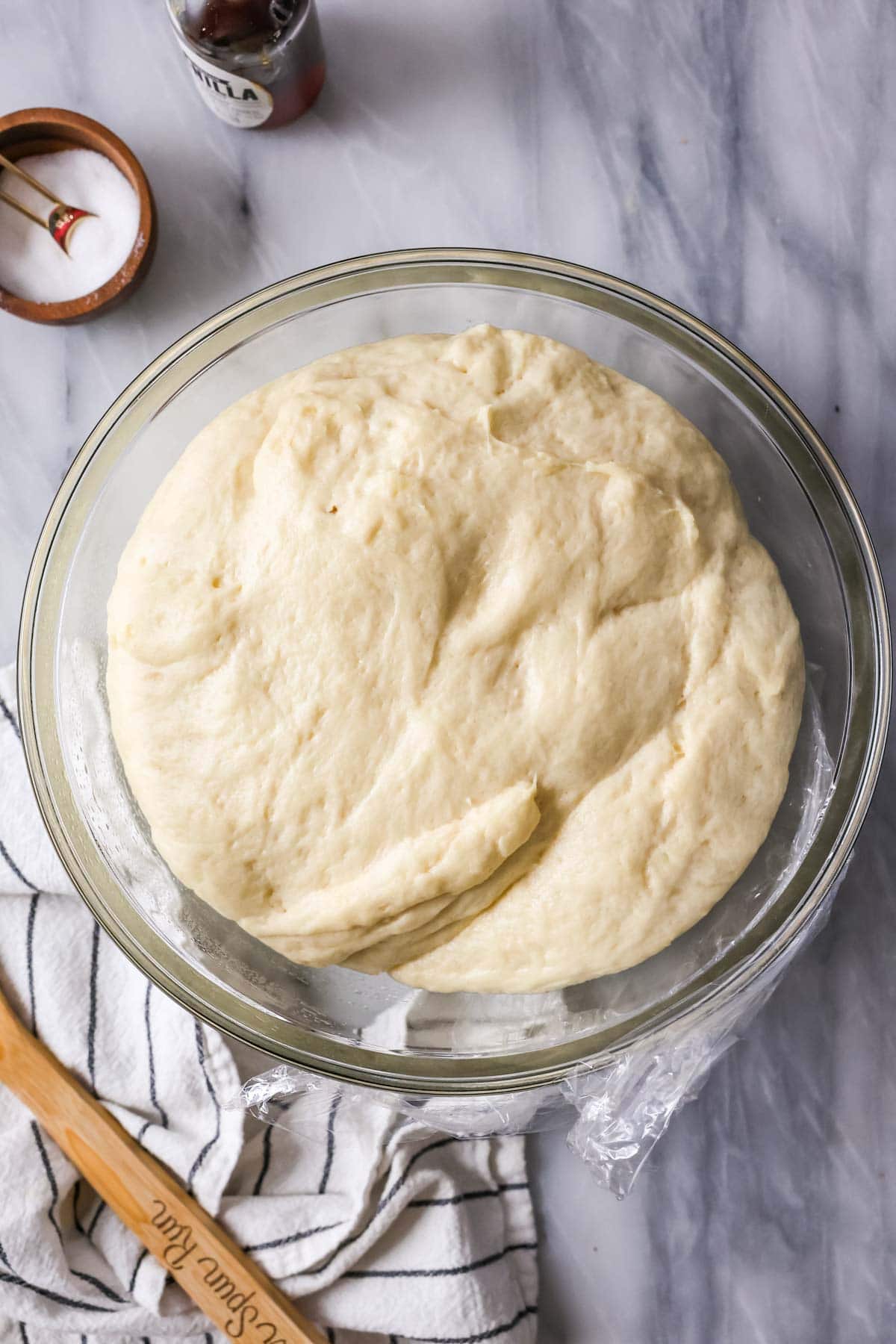
- Step 4: First rise. Transfer the dough to a lightly greased (I just use olive oil, but any cooking oil works) bowl. Cover with plastic wrap and let it sit in a warm spot until doubled in size. This is usually a 1-2 hour wait for me.
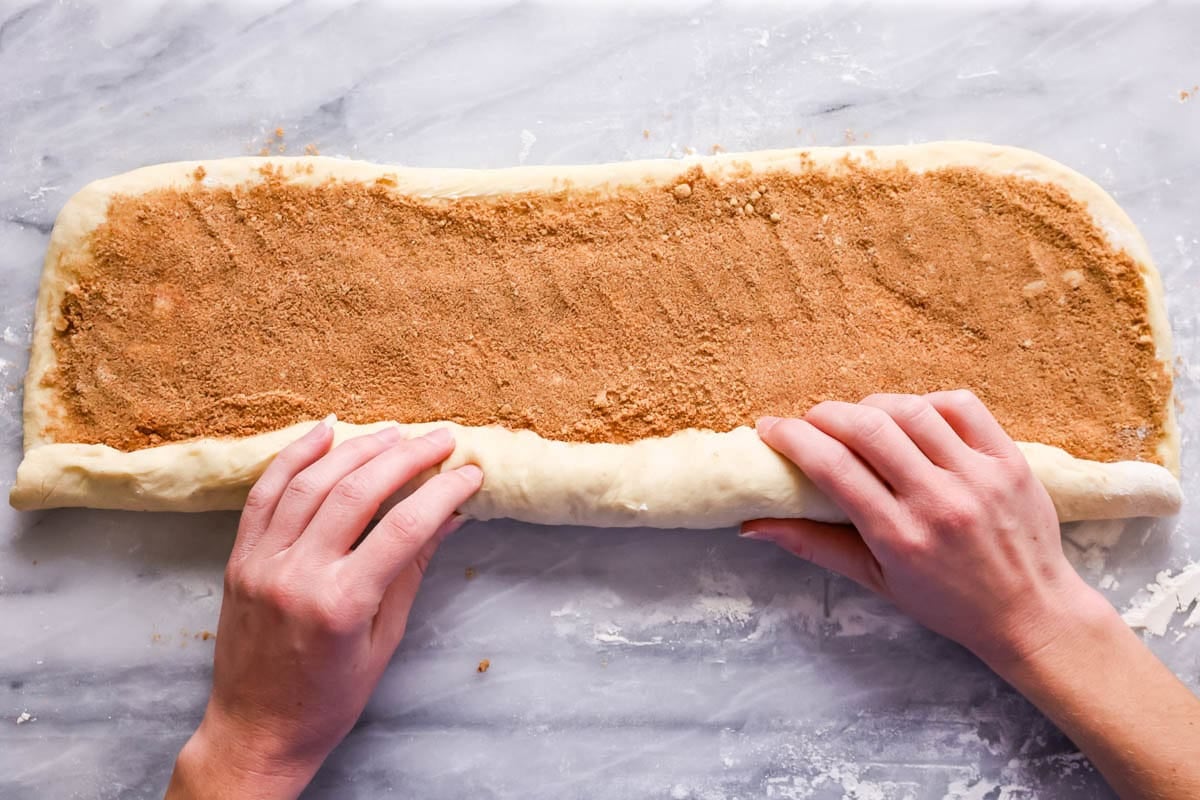
- Step 5: Add the filling. Deflate the dough (one of the most satisfying moments of this whole process), then roll it out into a rectangle. Spread softened butter evenly over the dough, leaving a small border unbuttered. Sprinkle the filling, then roll the dough into a tight log, pinching the ends together to make a seam (otherwise they come undone, totally intentionally illustrated in some of these photos).
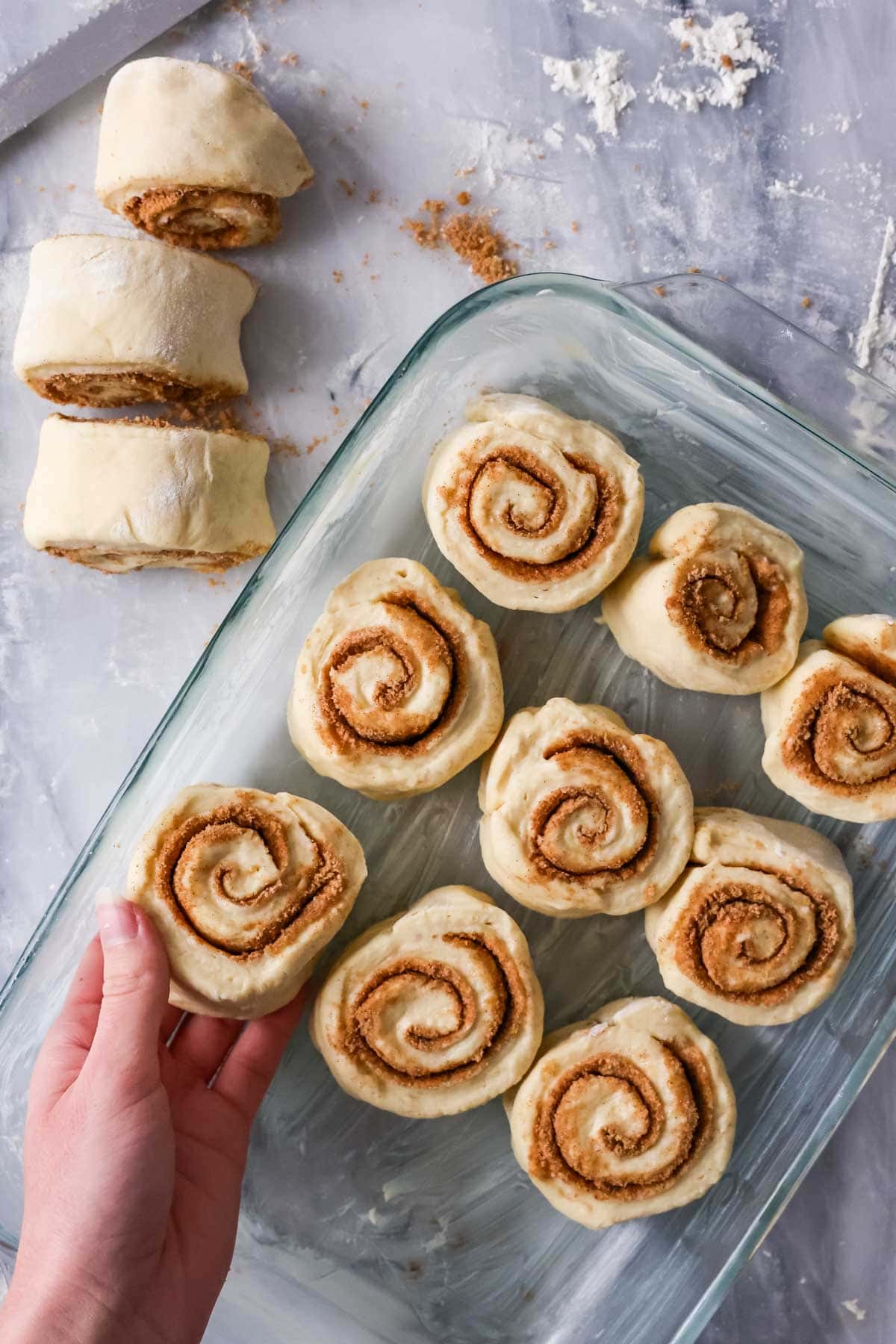
- Step 6: Cut into rolls. Some people use dental floss, some use a sharp knife, I like a serrated bread knife to gently and evenly saw through the dough without squishing it. Slice the dough into 12 even pieces, then arrange them into a generously buttered 9×13″ pan (I prefer glass or ceramic, metal will bake for less time).
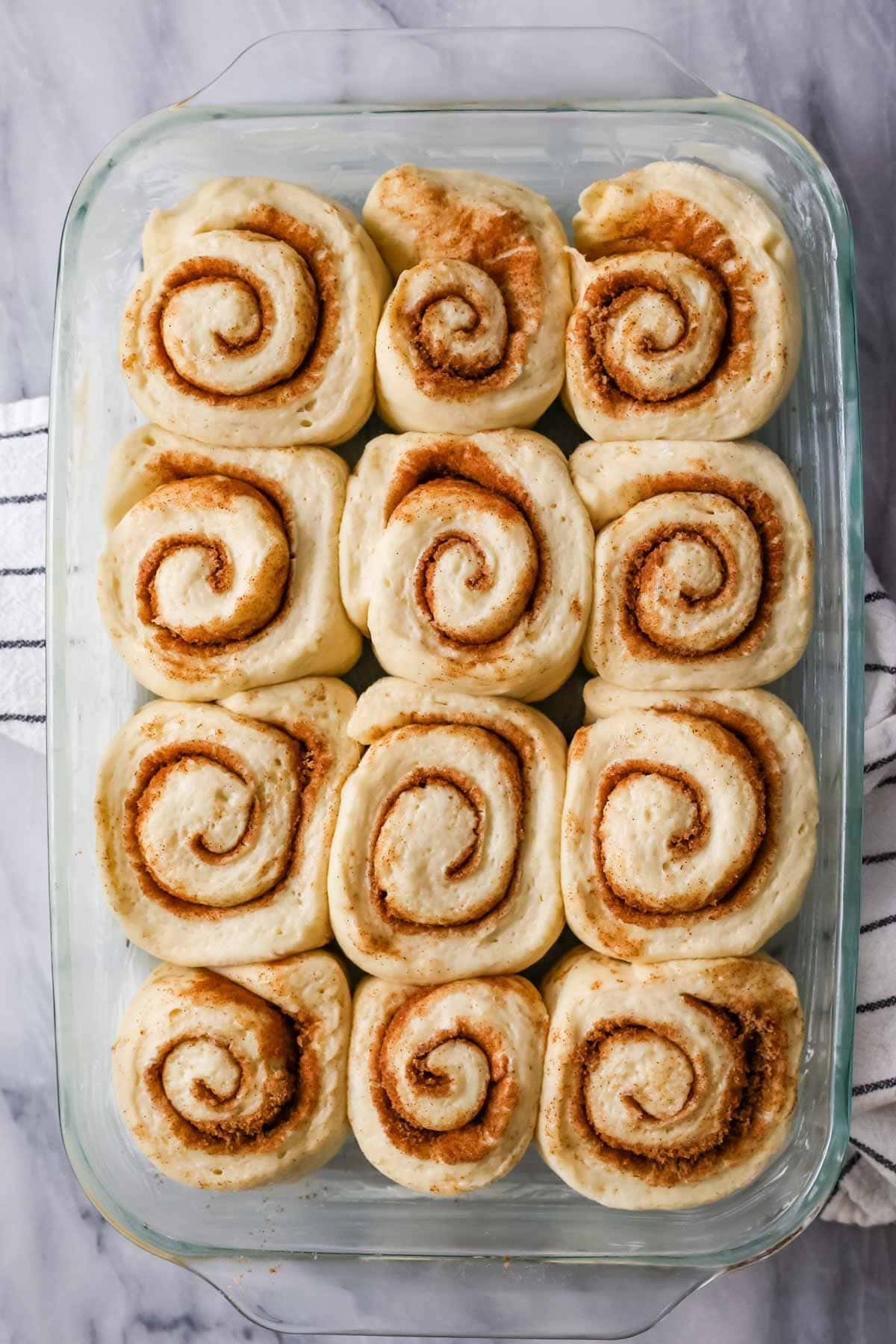
- Step 7: Second rise. Cover and let the rolls rise again until puffy and most of the gaps between them have been filled. In my kitchen this is typically pretty fast, about half an hour, so have your oven preheating in the meantime.
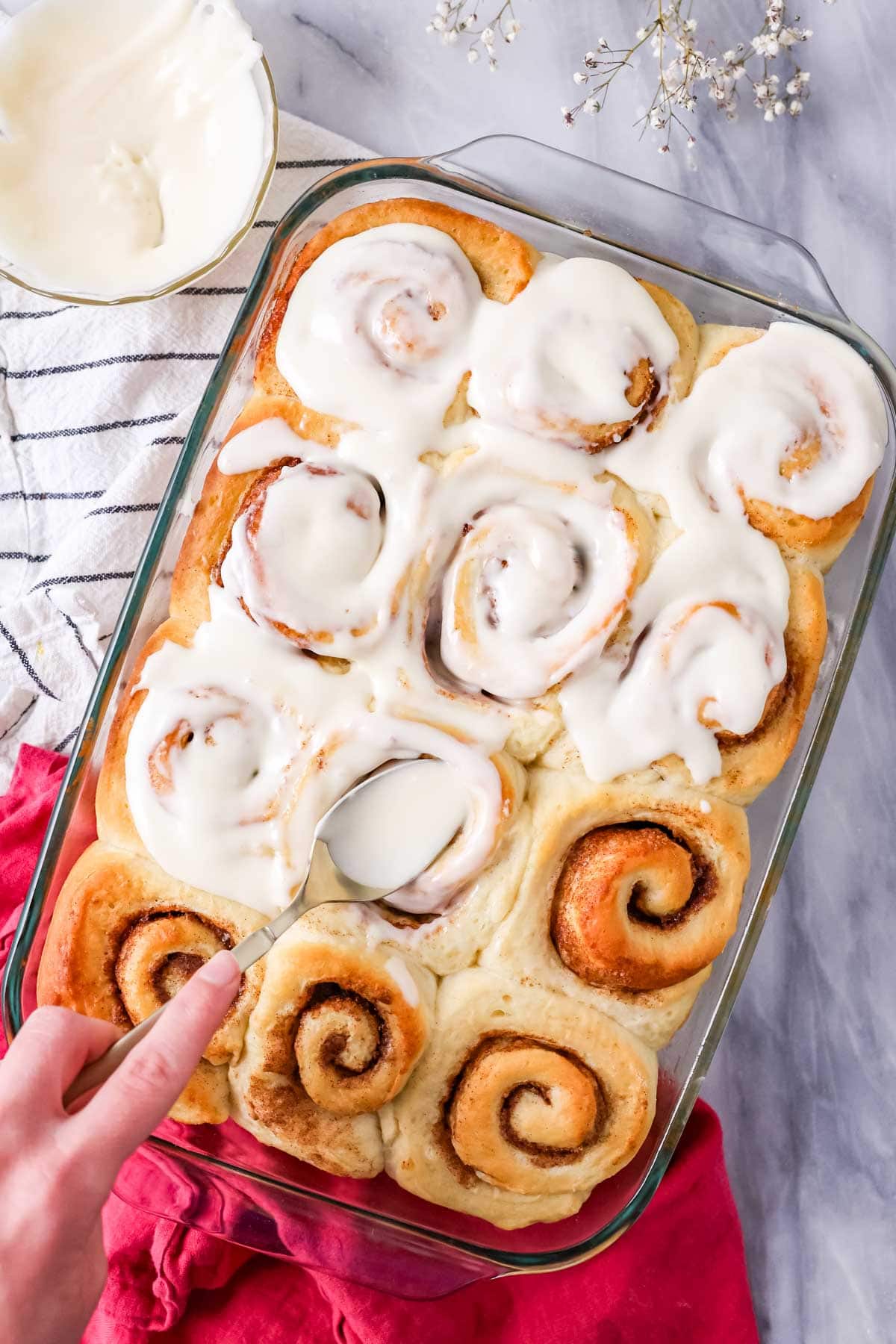
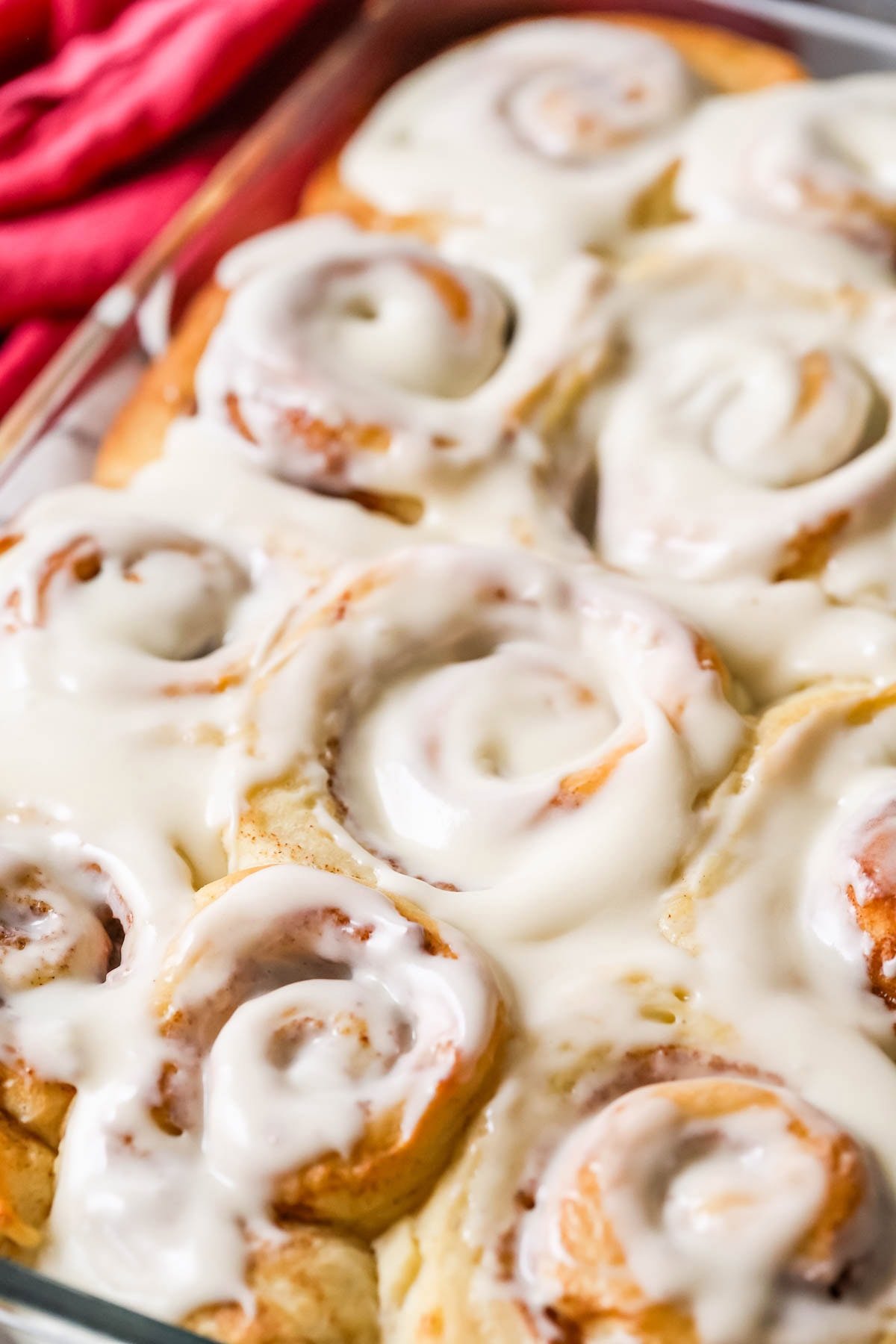
- Step 8: Bake & frost. Uncover the rolls and bake until the tops are just starting to turn light golden brown, about 30 minutes. You can frost the pretty much right away if you’d like, the icing will be more thin and glossy this way, or for a thicker icing let them cool. If you don’t like cream cheese frosting, try my cream cheese-less classic cinnamon roll icing, instead.
SAM’S TIP: To be sure that they are baked all the way through, I like to use a thermometer to check the internal temperature of my rolls (look for 180-185F).
Frequently Asked Questions
Not only are they huge, Amish cinnamon rolls have a uniquely tender and moist texture unlike any other. They get this texture from mashed potatoes–more on this below!
Mashed potatoes! Sounds weird, but the potatoes are what makes all the difference here. Potato starch holds moisture better, making the dough more pillowy, tender, moist (not gummy!) and smooth. The rolls are also taller as a result, making them look as incredible as they taste!
Absolutely! You could use the topping from my sticky buns, or try one of my cake frostings (you’ll need much less, either quarter or halve the recipe!) like my caramel frosting, coffee frosting, or peanut butter frosting. If you don’t care for cream cheese, you could also try my classic cinnamon roll icing (no cream cheese!).

More Penn-Dutch Recipes
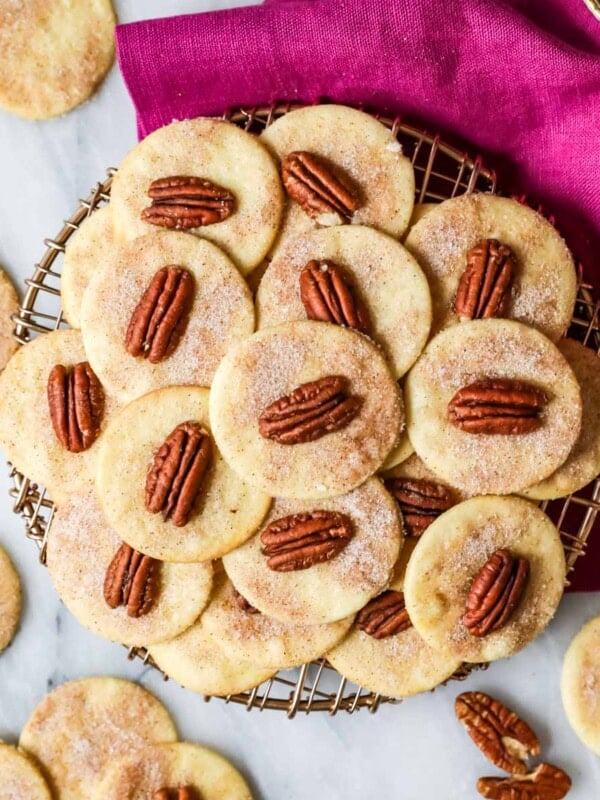
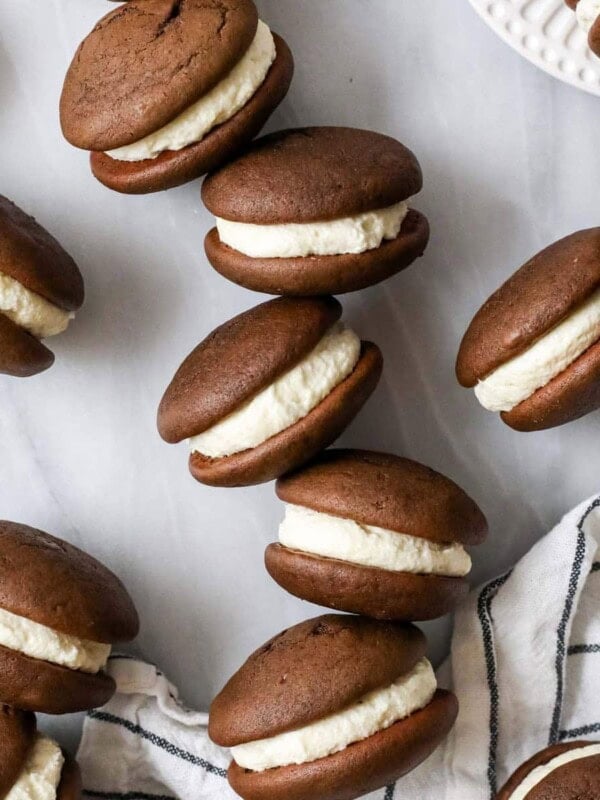
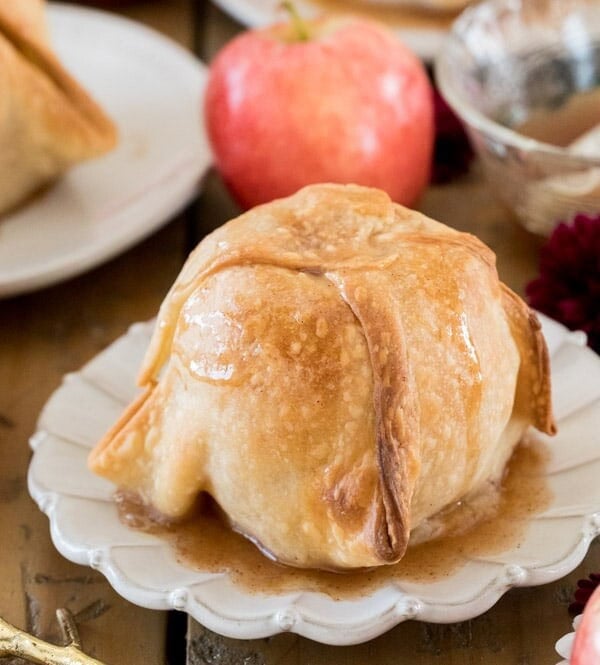
If you’re a cinnamon roll lover, I hope you give this recipe a try and let me know how you like it! 💕
Enjoy!
Let’s bake together! Subscribe to my newsletter to be notified of all the newest recipes, and find my free recipe tutorials on YouTube 💜

Amish Cinnamon Rolls
Equipment
- 13×9” (33x23cm) baking dish
Ingredients
Cinnamon Rolls
For activating the yeast
- ½ cup (120 ml) whole milk
- ¼ cup (60 ml) water
- 2 ½ teaspoons active dry yeast
- 1 teaspoon granulated sugar
For the rest of the dough
- ⅓ cup (67 g) granulated sugar
- 1 cup (210 g) mashed russet potato, (unseasoned/unsalted, room temperature or slightly warm – see note!)
- 2 large eggs, room temperature preferred
- 1 ½ teaspoons table salt
- 6 Tablespoons (85 g) unsalted butter, softened and cut into Tablespoon-sized pieces
- 4 cups (500 g) bread flour + additional as needed
Filling
- ½ cup (100 g) light brown sugar, firmly packed
- 1 Tablespoon ground cinnamon
- ¼ teaspoon table salt
- 4 Tablespoons (56 g) unsalted butter, softened
Icing (see note)
- 2 oz (56 g) cream cheese, softened
- 2 Tablespoons (28 g) unsalted butter, softened
- 1 cup (125 g) powdered sugar
- ½ teaspoon vanilla extract
- 1 Tablespoon milk
Instructions
- Activate the yeast. Combine milk and water in a small microwave-safe bowl and warm to 115F (46C) (stir before checking the temperature).½ cup (120 ml) whole milk, ¼ cup (60 ml) water
- Pour warmed liquid into a large mixing bowl, or the bowl of your stand mixer fitted with a paddle attachment, and sprinkle yeast and 1 teaspoon of sugar into the warmed milk mixture. Stir to combine, and let it sit for 5-10 minutes, until yeast is foamy (if yeast doesn’t foam, the liquid may have been too hot or the yeast may be expired, you will need to start over).2 ½ teaspoons active dry yeast, 1 teaspoon granulated sugar
- Make the dough. Add the sugar, mashed potato, eggs, salt, and about 3 cups (375g) of the flour. Stir until combined.⅓ cup (67 g) granulated sugar, 1 cup (210 g) mashed russet potato, 2 large eggs, 1 ½ teaspoons table salt
- Add the butter. Add butter, 1 Tablespoon at a time, stirring after each addition and not adding the next until the first is fully incorporated.6 Tablespoons (85 g) unsalted butter
- Switch to the dough hook attachment if using a stand mixer and gradually add the remaining flour. Stir until dough starts to pull away from the bowl while mixing (note that you may not need all the flour, or you may need more than indicated. Dough should be soft and slightly tacky, but not sticky)
- Knead the dough: If using your stand mixer: Knead with a dough hook attachment until dough is smooth and elastic (about 5 minutes).If kneading by hand: Transfer dough to a clean lightly floured surface and knead until dough is smooth and elastic, adding more flour if necessary (this will take about 10 minutes).
- First rise: Lightly grease a large bowl, transfer dough to bowl and turn all over to coat with oil. Cover bowl with plastic wrap and place in a warm, draft-free place to rise until doubled in size (about 1-2 hours, will vary depending on the warmth of your kitchen). While the dough is rising, you can prepare your filling.
- Prepare the filling: In a small mixing bowl, whisk together sugar, cinnamon, and salt. Set aside.½ cup (100 g) light brown sugar, 1 Tablespoon ground cinnamon, ¼ teaspoon table salt
- Butter should be soft enough to easily spread, if it’s not you can briefly microwave it to make it softer. Set aside.4 Tablespoons (56 g) unsalted butter
- Lightly grease the sides and bottom of a 13×9” (33×23) baking dish, set aside.
- Assemble the rolls: Punch down your dough to deflate and transfer to a clean, lightly floured surface. Roll out to a 20×8” (50x20cm) rectangle.
- Spread the softened butter evenly over the surface, leaving a ½” (1.5cm) perimeter. Sprinkle the filling evenly over the surface, gently pressing into the butter.
- Roll into a log: Start with a longer end and roll the dough tightly into a log, then use your fingers to pinch a seam at the end (helps prevent unraveling). Use a sharp knife to cut the log into 12 even slices, then transfer the slices to prepared 13×9” (33x23cm) baking dish into four even rows of three, spacing rolls evenly.
- Second rise: Cover dish with plastic wrap and allow to rise in a warm, draft-free place until puffed, about 30 minutes. While rolls are rising, preheat oven to 350F (175C).
- Bake. Once rolls have puffed, transfer to 350F (175C) preheated oven and bake for 27-30 minutes, until top begins to turn a very light golden brown and the internal temperature of a center, second-row cinnamon roll reaches 180-185F (84C).
- Make the icing: Combine cream cheese and butter in a medium-sized bowl and stir until smooth and creamy, then gradually stir in the powdered sugar until completely combined. Stir in vanilla extract and milk until creamy and fully combined.2 oz (56 g) cream cheese, 2 Tablespoons (28 g) unsalted butter, 1 cup (125 g) powdered sugar, ½ teaspoon vanilla extract, 1 Tablespoon milk
- Allow cinnamon rolls to cool for at least several minutes in their pan before spreading icing over each roll (I add the frosting while they’re still warm, but it will be thicker if you allow the rolls to cool completely first). Enjoy!
Notes
Mashed potato
Mashed potatoes should be plain (no milk, salt, etc), unseasoned, and room temperature or slightly warm (not cold, it’s hard to incorporate them that way). I recommend baking a russet potato or two (I “bake” mine in the microwave – scrub, dry, pierce all over with a fork and microwave for 5 minutes, flip, and bake another 3-7 as needed until soft/tender all the way through when pierced with a fork), then scraping out the inside and mashing. Measure the potatoes after mashing.Icing
If you don’t care for cream cheese, try my classic vanilla cinnamon roll icing instead.Storing
Best enjoyed warm, so slightly reheat leftover rolls before serving (I heat mine in the microwave, 10-15 seconds). Otherwise, store in an airtight container at room temperature for up to 2 days or in the refrigerator for up to 5 days.Making in advance
Assemble the rolls in the baking dish (after the first rise and assembly), cover tightly with plastic wrap, and refrigerate overnight and up to 18 hours. The next day, remove from the fridge and allow to sit at room temperature for 30-45 minutes, until slightly puffed (preheat your oven to 350F/175C during this time), then bake as indicated To freeze: Assemble the rolls, cover tightly, and freeze in the baking dish for up to 1 month. Thaw overnight in the refrigerator then allow to rise at room temperature until puffed before baking as indicated. Baked rolls may also be frozen (iced or not) for up to 2 months, thaw and warm before serving.Nutrition
Nutrition information is automatically calculated, so should only be used as an approximation.
Like this? Leave a comment below!











Can this recipe be cut in half
Hi Vince! I haven’t personally done it, but I think it could work. You’ll need a smaller pan and your bake time may vary. Enjoy! 🙂
Oh.My.Goodness!
I made these today and they’re divine!!!
I even messed up and rolled them from the short side of the rectangle and they didn’t seem to mind.
I’ve never tried a recipe of yours that wasn’t excellent but this one is now my all-time favorite. Neighbors and husband agree.
I can’t help experimenting so next time I’m going to add some chopped pecans in with the icing.
I love how you format your recipes too.
Thanks again!!
Thank you so much for trying my recipe, Glynis! I am so glad you enjoyed them so much! 🙂
These are extraordinary! My quest for the perfect cinnamon roll has ended and just want to thank you SO much for this recipe. I did use russet, instant mashed potatoes which worked out perfectly and so much easier. I’ve had some double-strength vanilla that I’ve been wanting to use and it made the icing out of this world! Thank you again, Sam, you never disappoint!
Thank you so much for trying my recipe, Jen! I’m so glad you enjoyed it! I truly appreciate your support. 🙂
Thank you for posting that you used instant potatoes because I was thinking it would be so much easier!
Hi, Jen…how exactly did you use the instant potatoes? Did you just add a certain amount of flakes only or add water to them or what? Thanks in advance❣️
Hi Glynis, I used Potato Flakes (Bob’s Red Mill) and followed the package instructions for a serving size of two. I measured out the 210 grams, or 1 cup, needed for this recipe and just had a tad leftover. I did skip adding salt to the potatoes, but did add 1 Tbsp., of butter per the package instructions, because butter makes everything better! I hope this helps and happy baking!
Would it be possible to replace 1 cup of the AP flour with 1 cup of whole wheat flour?
Hi Laurie! Whole wheat flour is a much “thirstier” flour so you would likely need alterations to the recipe. I haven’t personally done it so I can’t say for sure how to do it.
Sam, I tried the roll recipe,swapping in 1 cup of whole wheat flour. I added 3 tablespoons of warm milk, 1 tablespoon at a time. The rolls turned out perfectly!This recipe is a keeper!
Thank you so much for the feedback! I’m glad to hear they were a hit! 🙂
Rolls came out so soft wonderful flavor.
Thank you so much for trying my recipe, Carrie! I’m so glad you enjoyed them! 🙂
Best recipe I have ever made. Soft and fluffy. Just perfect!
Thank you so much for trying my recipe, Carrie! I’m so glad you enjoyed them so much! 🙂
Greetings from central Pennsylvania!
Since some of the BEST baked goods around here come from the Amish bakers, I had to try this recipe. OMG SAM, go to the dictionary and look up PILLOWY SOFT and you will find a picture of these rolls. The flavor is spot on and there a lot of happy faces here to help us make through until spring. Thanks for all your labors of love and keep on baking.
Thank you so much for trying my recipe, Bobby! I’m so glad you enjoyed them so much! 🙂
Hello! Can I use the same amount of prepared instant potatoes instead of mashed potato?
Hi Danica! To be honest I haven’t experimented with it so I can’t say for sure how it would work. If you do try it, please let me know how it goes. 🙂