
The BEST Pie Crust Recipe
This post may contain affiliate links. As an Amazon Associate I earn from qualifying purchases. Please read my disclosure policy.
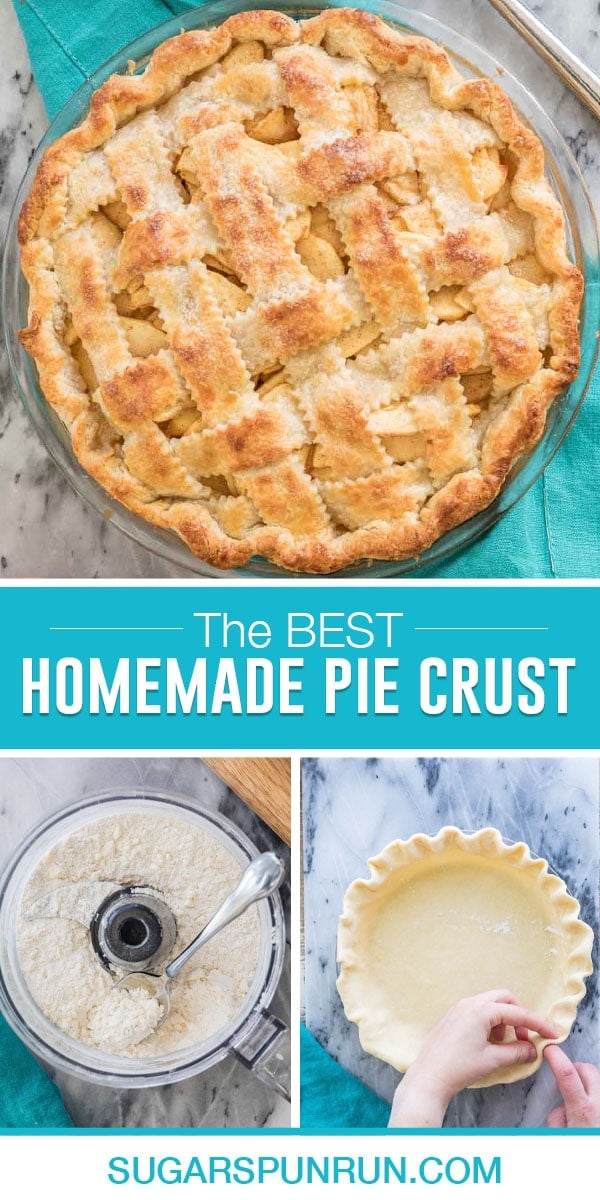
My easy, homemade pie crust recipe is buttery, flaky, exceptionally flavorful, and surprisingly easy to make! A secret ingredient (sour cream!) gives the crust incredible depth of flavor and makes the dough easier to work with than other recipes. Just 5 ingredients, no fussing with ice water, and reliable (and delicious) results every time. Recipe includes step-by-step photos and a how-to video tutorial!
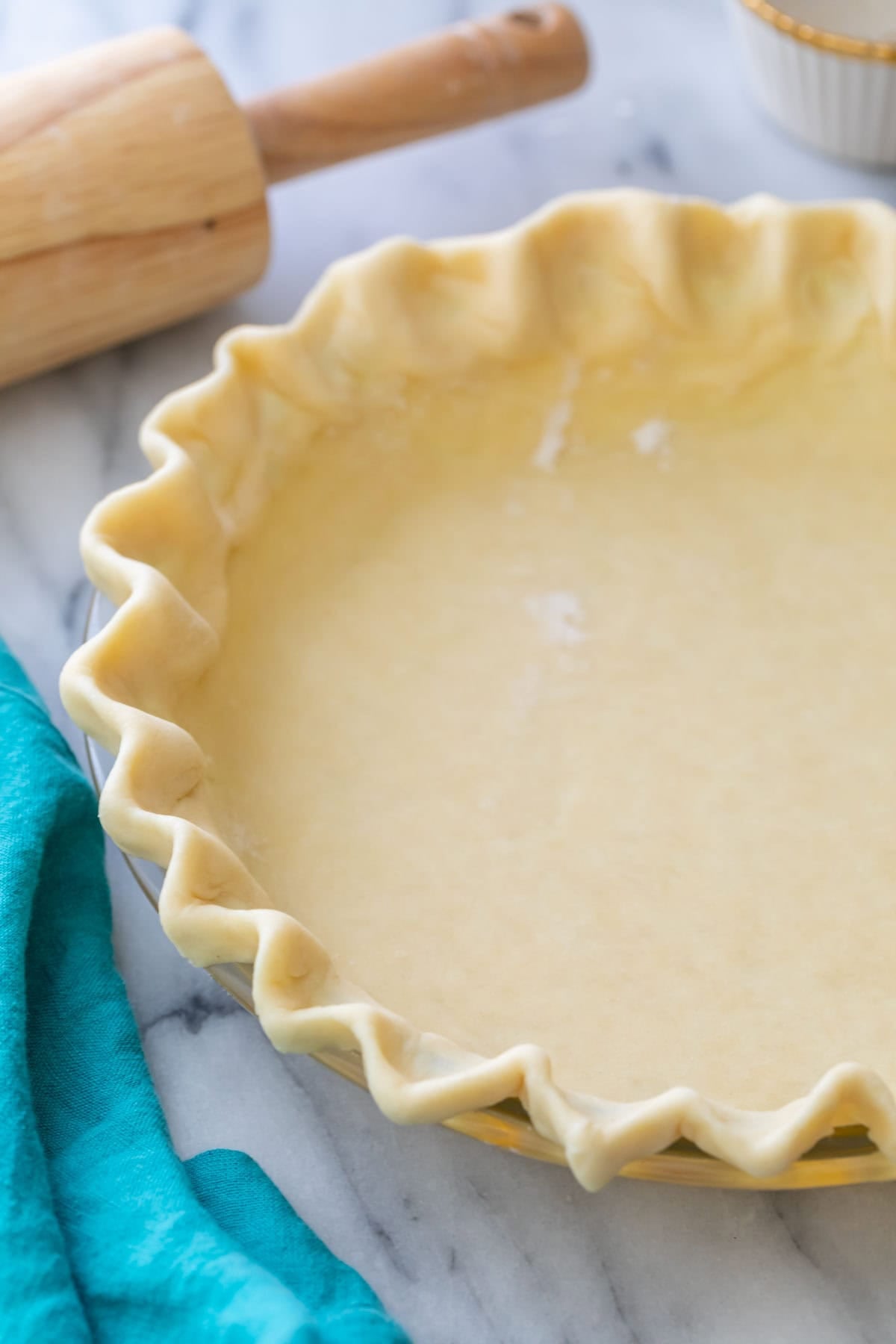
The Only Pie Dough Recipe You Need
This is my go-to pie crust recipe, and has been for most of my life. My mom first discovered the original version in a magazine over 20 years ago (!) and we’ve been tweaking and perfecting it ever since.
It’s hands-down the easiest pie crust I’ve ever made, and the flavor is absolutely incredible (honestly, it’s good enough to eat on its own… and it makes the best pie crust cookies!). A “secret”, unexpected ingredient makes the dough easy to work with and yelds rich, buttery flavor. I can’t wait for you to try it in your own kitchen!
What to Know About This Recipe
- Incredible flavor. Butter gives the crust rich flavor, while sour cream (my secret ingredient!) adds extra depth that makes it delicious enough to eat on its own. It elevates absolutely any pie filling.
- Perfectly flaky texture. Keeping the butter cold and using a food processor (if you have one) creates irresistible flaky layers as the crust bakes.
- Easier than your standard pie dough. Sour cream provides moisture without the guesswork of adding ice water (or vodka) a splash at a time. A food processor makes the process even easier.
- Versatile and sturdy. This recipe makes enough dough for a 9- or 10-inch pie crust without fussing with a paper-thin sheet of pie dough. It can easily be doubled if you need a double crust. Use it for savory recipes like chicken pot pie, or keep it sweet with hand pies, apple dumplings, and so much more.
Ingredients
You don’t need anything fancy or complicated to make my easy pie crust recipe! We’re using five common ingredients you probably already have.
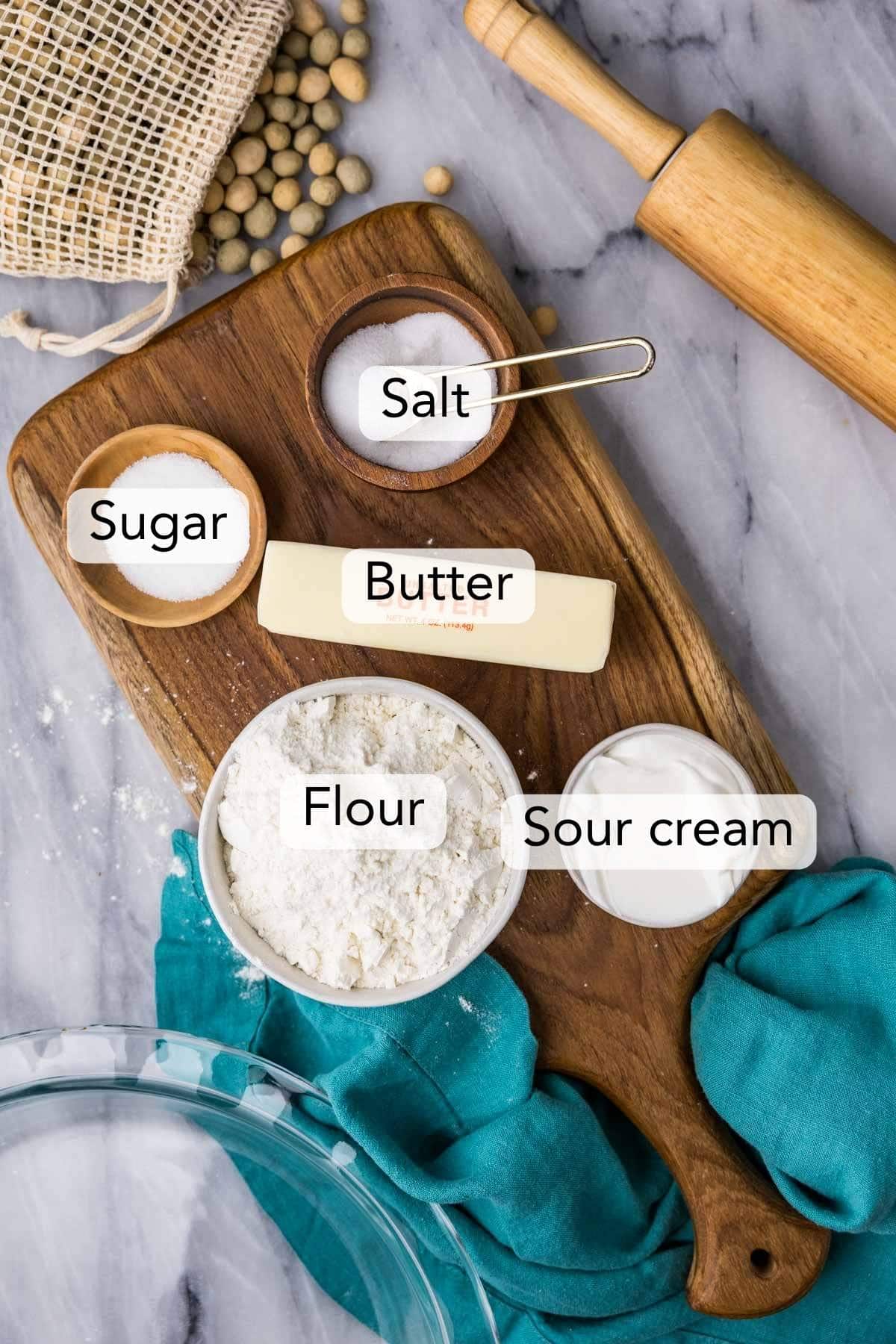
- COLD sour cream. Yep, sour cream! (Cold) sour cream is the secret ingredient in my pie dough recipe (and in my sour cream pound cake, among others!). It gives the pie dough amazing depth of flavor that is not overwhelming or obvious (you’d never know it’s sour cream), but adds an extra special subtle touch to the finished product. Besides the flavor, I also love it because it makes this recipe so easy–no fussing with ice water! If you don’t have sour cream, full-fat Greek yogurt will also work in a pinch, though I don’t think it adds as much of a deep, rich flavor.
- COLD butter. For the best flavor (and beautiful, flaky layers) use very cold unsalted butter. For an even more flavorful crust, splurge for European-style butter!
- Flour. All-purpose flour is best. Be sure to measure it properly (ideally with a kitchen scale) since too much flour can make the dough dry and difficult to work with.
- Sugar. A small bit of sugar in this recipe can technically be eliminated, but it adds a subtle flavor that I love. I still add it even when I’m using this pie dough recipe for savory pies.
- Salt. Essential for enhancing the flavor of the crust. If you opt for salted butter instead of unsalted, you can omit the salt entirely (or leave it in for a slightly saltier crust).
Remember, this is just an overview of the ingredients I used and why. For the full recipe please scroll down to the bottom of the post!
Sam’s Tip
Make sure your ingredients are COLD! This is so important for flaky results! The butter in particular should be ice cold (I place mine in the freezer for up to 30 minutes before beginning). Cold butter = flaky, tender pie crust. Warm butter could even leak out of the dough, and the dough will be much more difficult to manage.
How to Make Pie Crust (Step-by-Step)
This recipe makes a single pie crust; however, if you need a double crust, you can easily fit a double batch in a standard food processor.
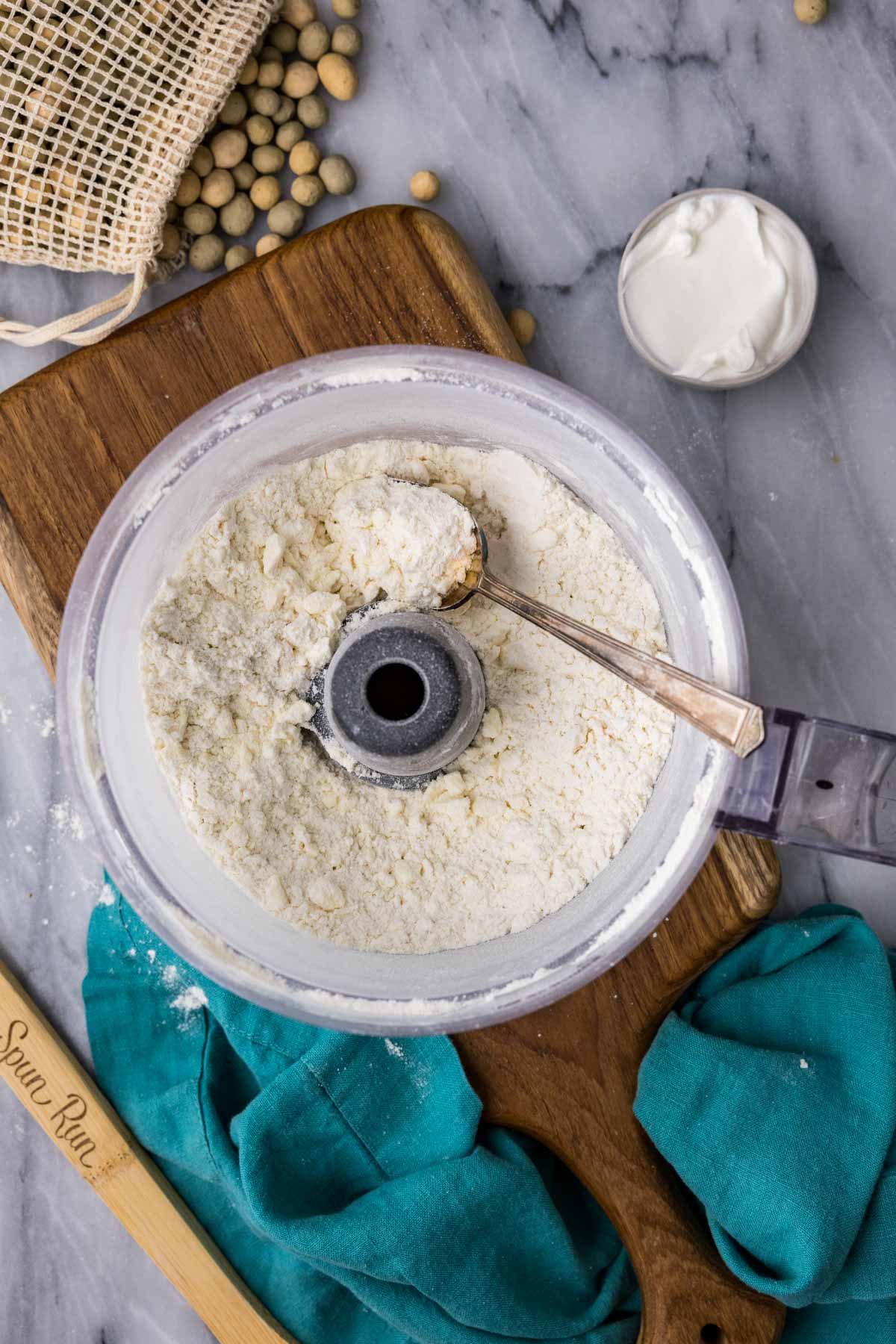
- Cut in the butter. Pulse the dry ingredients in the bowl of a food processor. Add cubed cold butter and pulse a few times until your mixture resembles coarse crumbs, but note that you should still have distinguishable pieces of butter remaining in the food processor. Aim for chocolate-chip-sized bits!
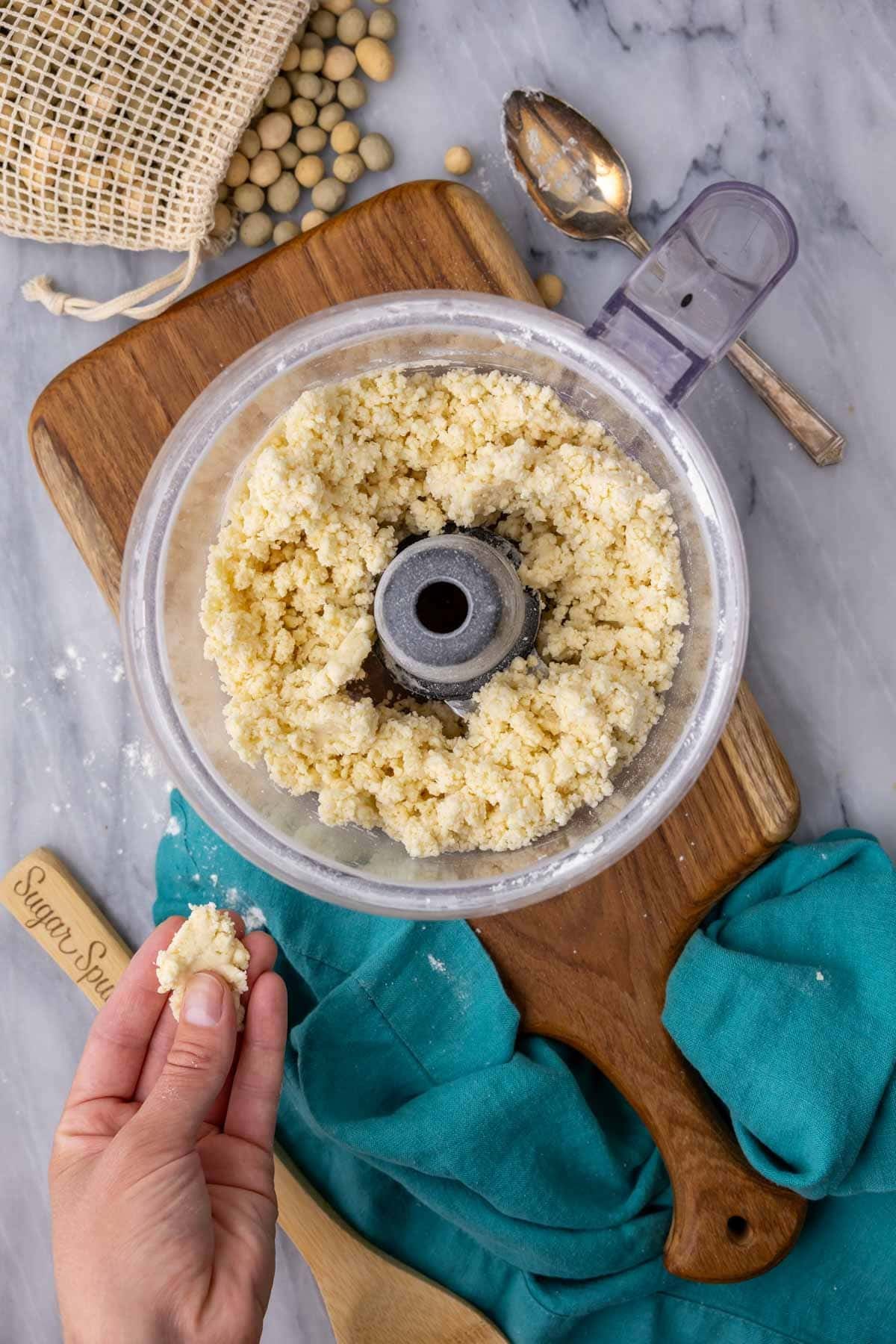
- Add the sour cream and pulse a few more times until mixture is beginning to cling together. Do not simply blend the dough nonstop; pulse in 1-second intervals, otherwise you’ll end up with an overworked dough that is tough. You should still be able to see some butter pieces remaining in the dough (again, for flaky results!).
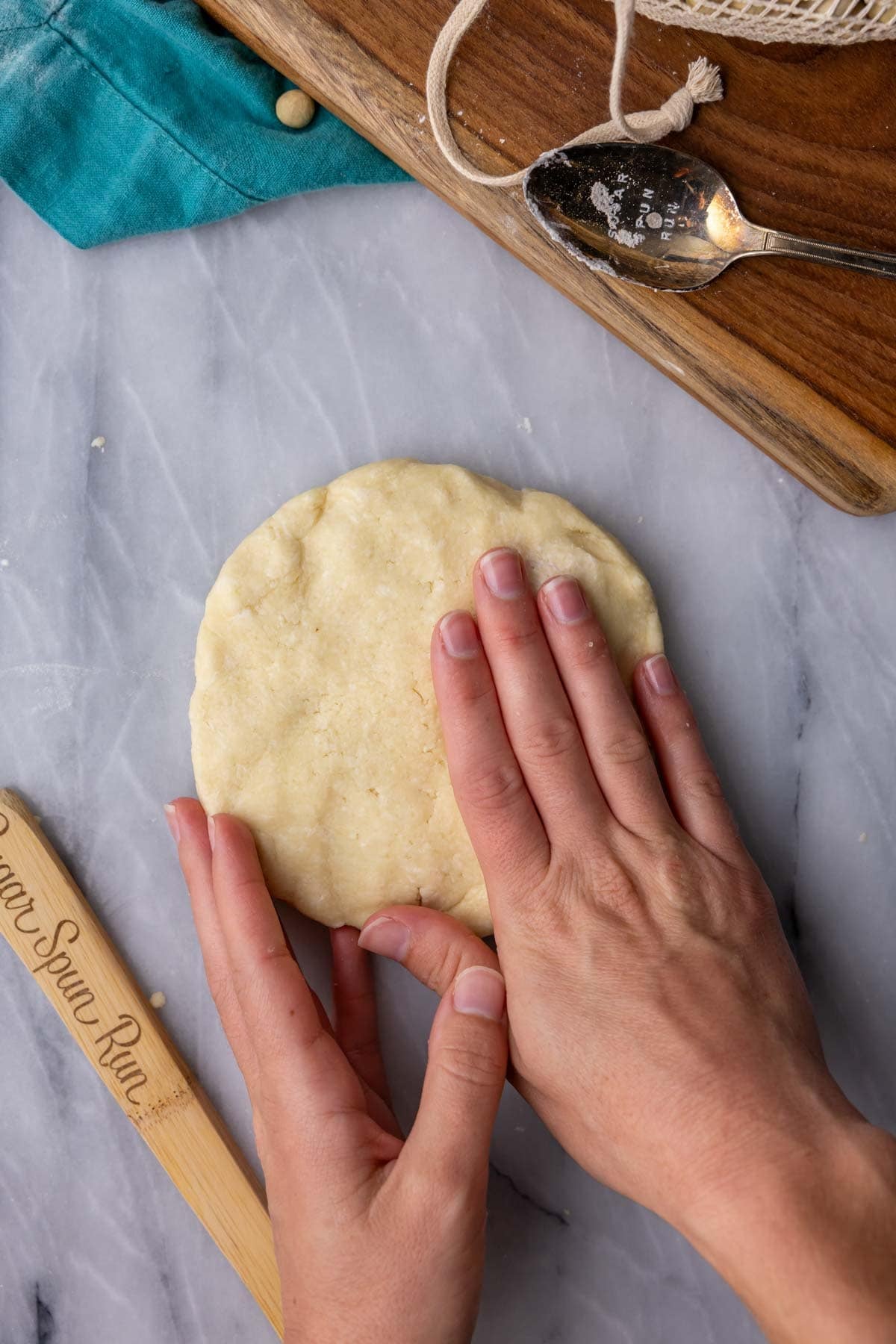
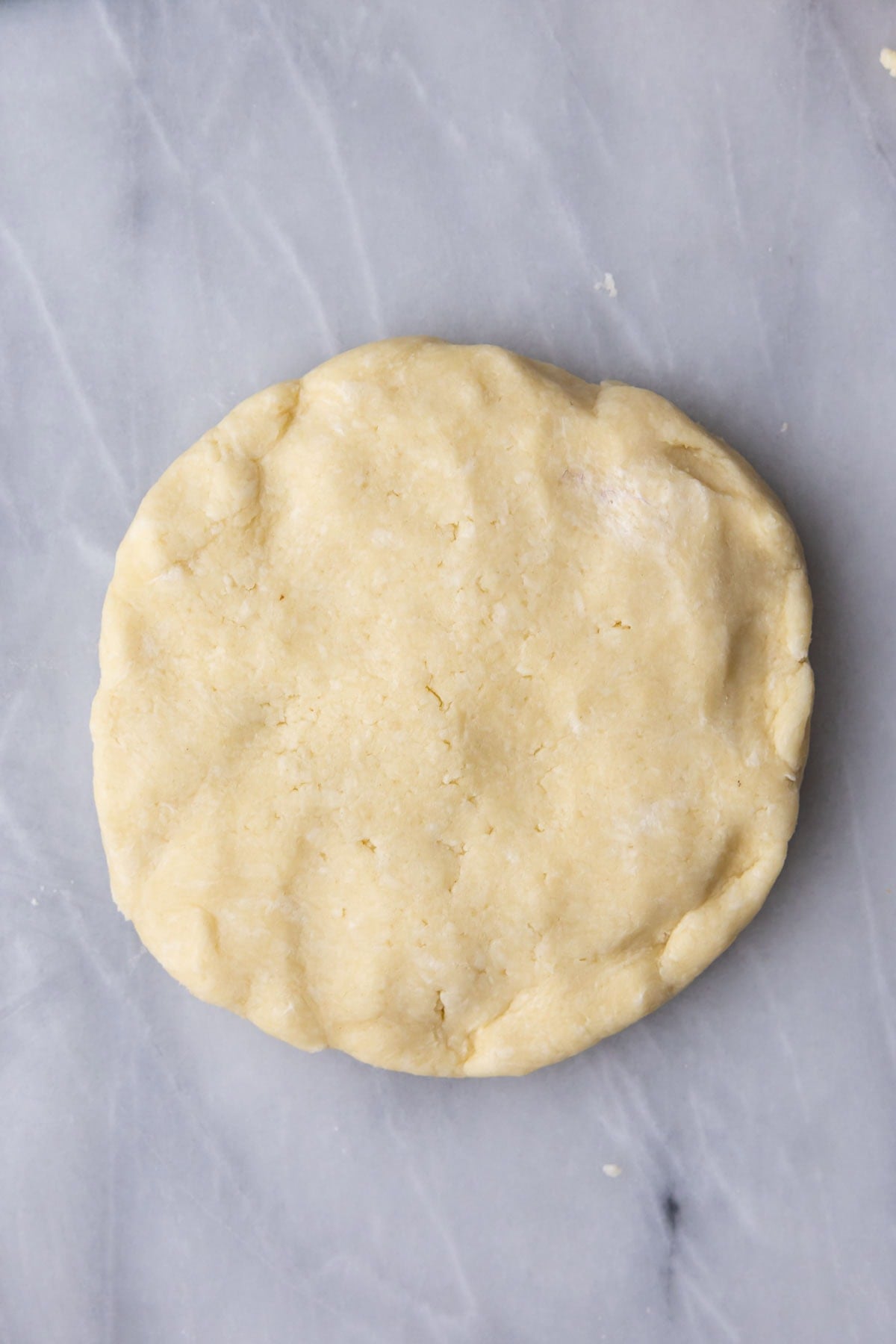
- Chill. Transfer dough onto a clean surface and gently, quickly work into a ball before flattening into a smooth disk (smooth the edges too–this helps when rolling!). Wrap in plastic wrap and place in the fridge for 45-60 minutes.
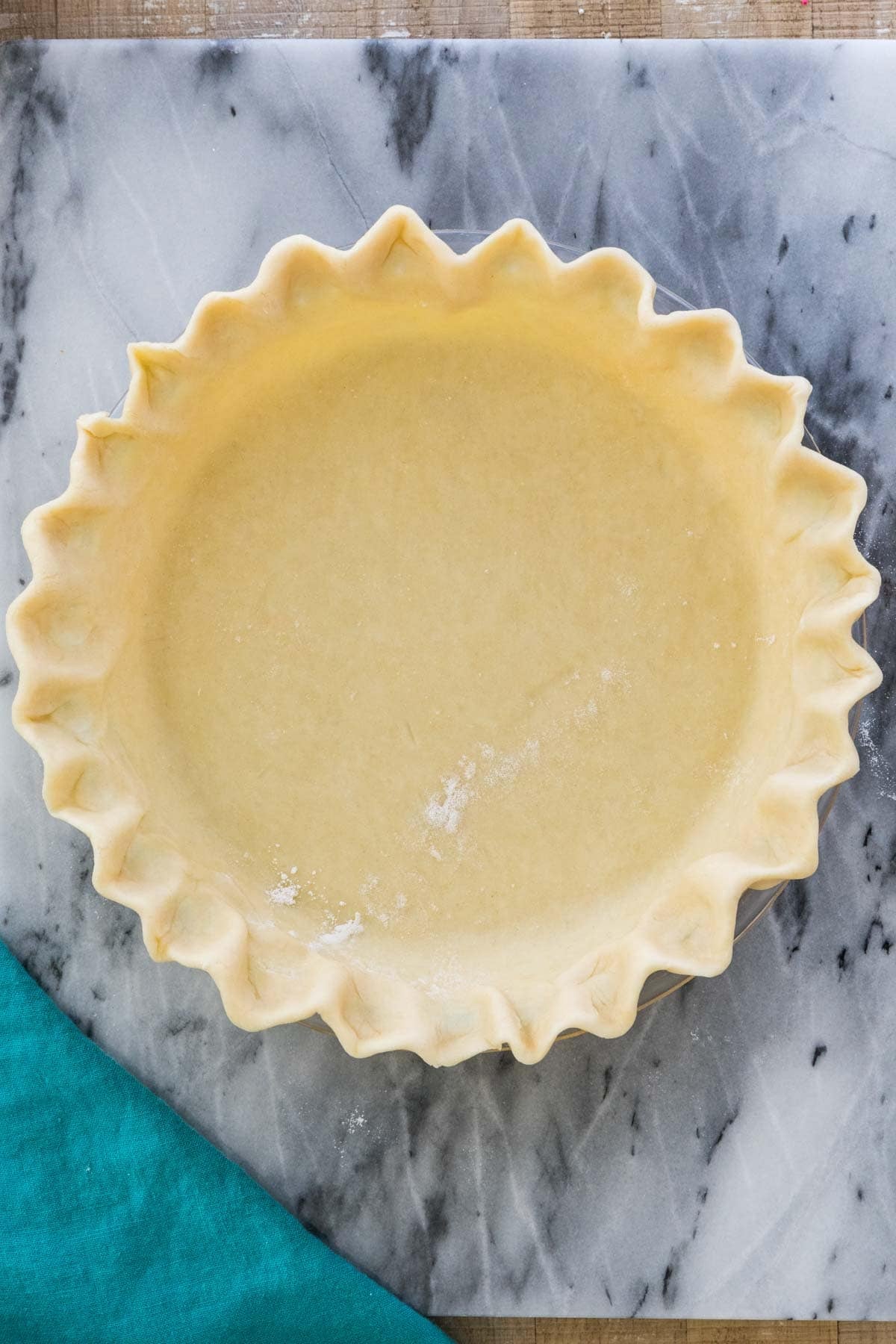
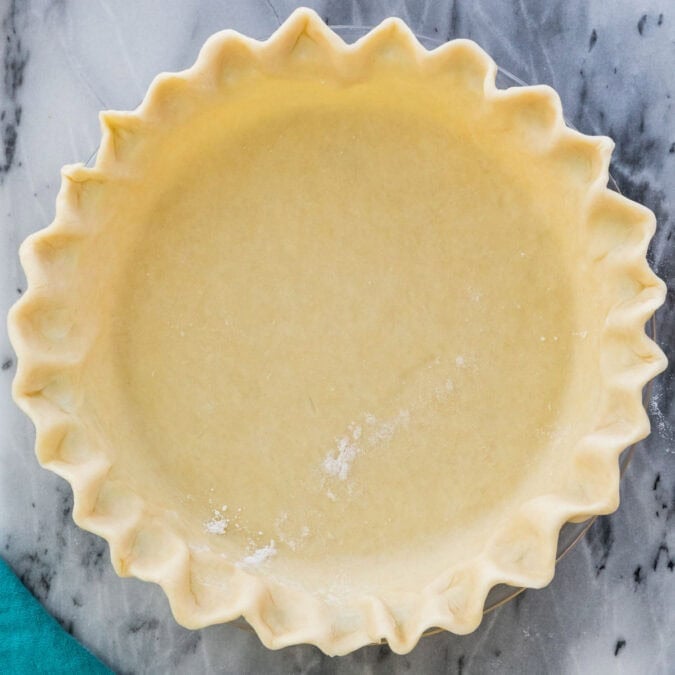
- Roll & use as desired! Remove dough from the refrigerator and roll it out into an even 12-inch circle. Arrange in pie plate and crimp/flute the edges before blind baking or filling. Hint: The easiest way, I’ve found, to transfer the pie dough to the pie plate is to gently wrap/roll it around the rolling pin then carefully unfurl it into the pie dish.
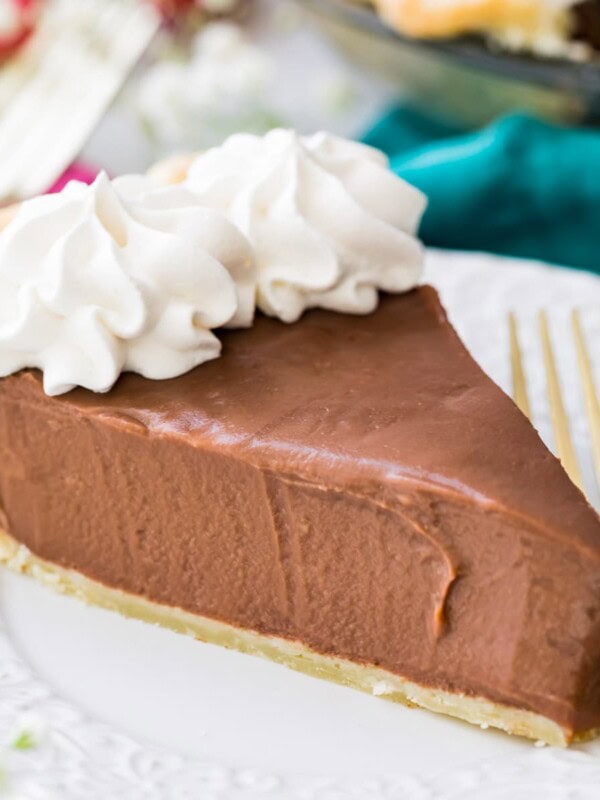
This recipe is great for blind baking. Perfect for pies that need a precooked crust before adding a filling, like chocolate pie or my pumpkin pie recipe.
Sam’s Tip
To prevent sticking, use a spatula to loosen the dough from the counter periodically while rolling. I’ll often lift the dough off the counter with the spatula, add a bit more flour underneath, and then proceed with rolling.
No Food Processor? No Problem!
This easy pie crust recipe can be made by hand, no problem. Simply combine the dry ingredients in a bowl, then cut in the butter with a pastry cutter or grater. Stir in the sour cream, then proceed with the forming, chilling, and rolling as directed.
One thing to note: If you are making the dough by hand, you may need to add a small bit of ice water after the sour cream. If I ever need to, it’s usually only a teaspoon or two just to help the dough cling together.
Easy peasy! 🙌
Pie Crust Troubleshooting
While this pie dough recipe is super easy, I still want to make sure you have every resource you need in case you run into issues. Here are the most common issues (and how to avoid them)!
- My dough is too dry and crumbly. First, it’s important to make sure you’ve measured your flour correctly before you get to this point (I highly recommend a kitchen scale). The dough should still appear somewhat crumbly, but no dry flour should remain and it should easily hold together when pinched between your fingers. If it doesn’t, try pulsing it a few more times. If it’s still too dry, you can add ice water, just a teaspoon at a time, until it holds together. Don’t add more than is absolutely needed!
- My pie dough cracks when I roll it. The dough may just be too cold! Let it rest at room temperature for 5 minutes, then try again. I also recommend smoothing the edges of your dough into a neat, rounded disk before chilling; this helps prevent cracks when rolling it out.
- My pie dough sticks to the counter. First, keep your dough well-chilled, this is super important and warm dough is more likely to stick. Make sure your work surface and rolling pin are lightly floured, and you can lightly flour the surface of the pie dough, too, if needed. As you roll it out, it will naturally warm and become prone to sticking to the counter surface. If it sticks, slide a thin spatula beneath it and add a little more flour. If the dough becomes too warm, pop it back in the fridge for a few minutes.
- My pie crust shrinks when baking. This can happen if the dough has been stretched to fit the pie plate or if the gluten hasn’t had enough time to relax. Roll the dough large enough to fit comfortably into the plate without needing to pull/stretch it further, and anchor the crust firmly to the pie plate by crimping or forming to the edge of the pie plate. If you’re blind baking, be sure to use enough pie weights to support the side of the crust when baking, too, and make sure to chill the dough again (after shaping into the pie plate) before baking.
- My pie crust isn’t flaky. Cold butter is key! You should still see small pieces of butter (think chocolate chip-sized) throughout the dough before chilling. If you process the dough too long or let the butter become too warm, you can lose those beautiful flaky layers. A food processor is especially helpful for keeping the dough buttery and flaky. Handle the dough as little as possible, and keep it as cold as you can.
- I don’t know how to neatly transfer my pie dough to the pie plate. Gently and loosely roll the dough over your rolling pin, then unroll it into your pie plate. This is far easier than trying to lift the entire round of dough with your hand (which often misshapes it, too). I demonstrate this technique in my video (in the recipe card).
Frequently Asked Questions
Yes! If you don’t have a food processor, you can use a pastry blender, knife, or a grater to cut the butter into your dough, and then stir in the sour cream (a wooden spoon works well for this).
If you have one, I strongly recommend a food processor though–it will make your baking so much easier and less messy! And it’s helpful for so many recipes, like scones or cheese crackers.
Yes! Just make sure your pie dough is tightly wrapped before freezing. It will keep for several months in the freezer. When you’re ready to use it, let it thaw overnight in the fridge before using.
Absolutely! This pie crust recipe is great for making in advance. Prepare the dough as directed in the recipe, wrap it tightly in plastic wrap, then refrigerate for up to 5 days or freeze for up to a few months. When you’re ready to use thaw it overnight in the refrigerator (if frozen) and let it sit at room temperature for about 15 minutes (or until soft enough to roll without cracking).
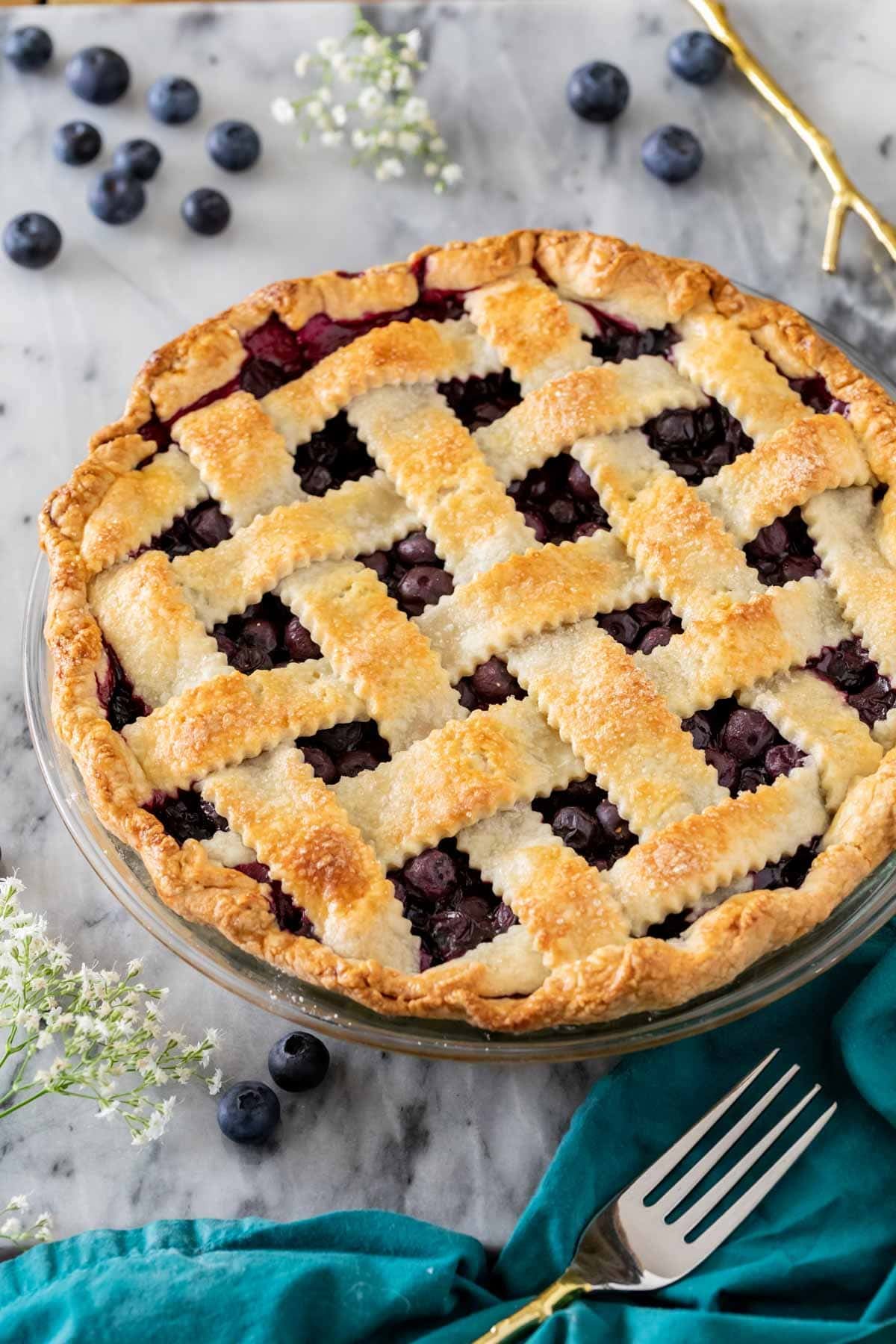
Put Your Pie Crust to Use!



If you ever have leftover pie dough that you don’t want to waste, use it to make my pie crust cookies! 🍪
Enjoy!
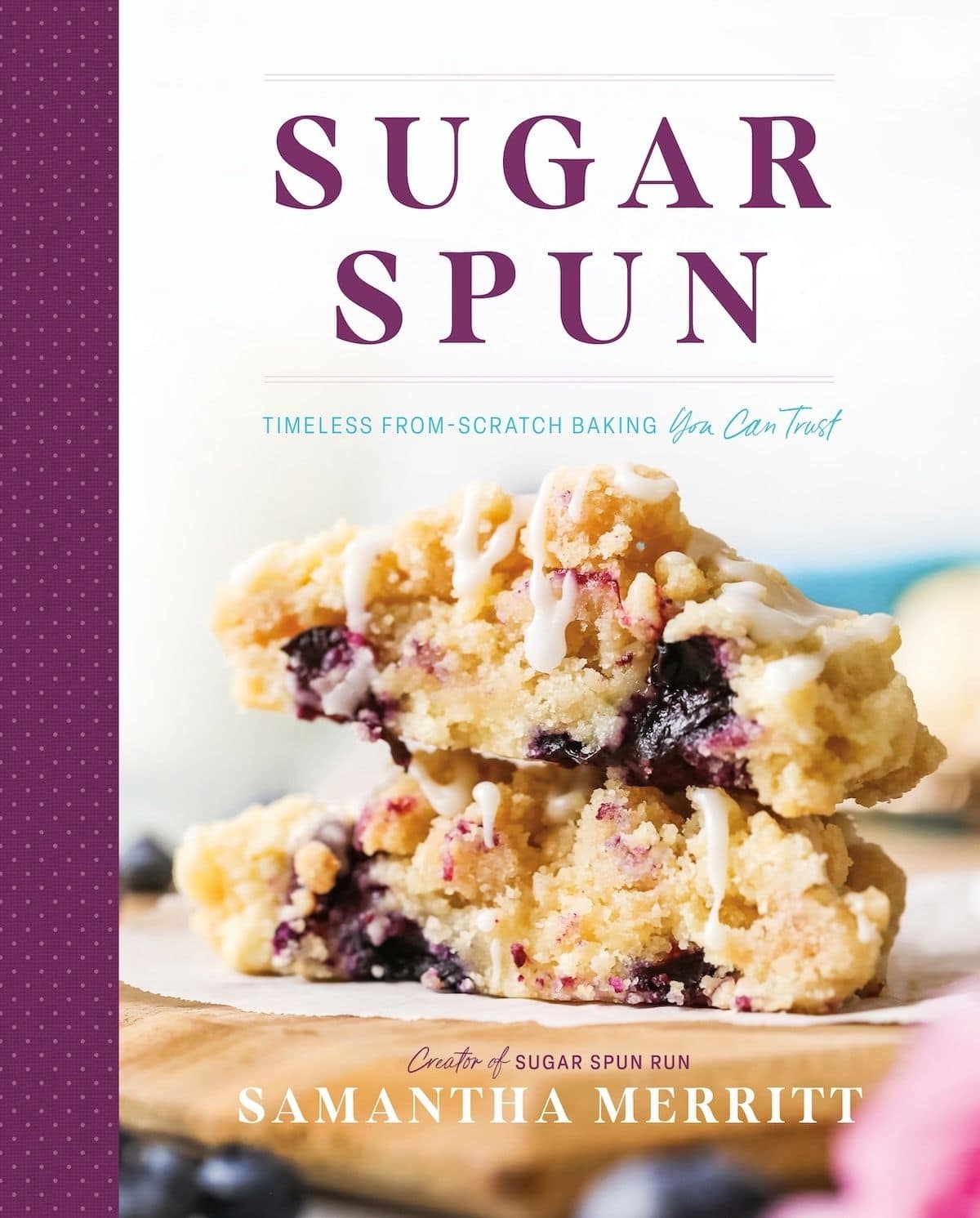
Did you know this is one of my personal all-time favorite recipes? I even included it in my new dessert cookbook!
Pie Crust Recipe
Ingredients
- 1 ¼ cups (156 g) all-purpose flour
- 2 teaspoons granulated sugar, optional
- ¼ teaspoon table salt
- 8 Tablespoons (113 g) unsalted butter, very cold and cubed
- ¼ cup (60 g) sour cream
Instructions
- Note: This recipe makes ONE (1) pie crust. If you need a double crust, simply double all of the ingredients.1 ¼ cups (156 g) all-purpose flour, 2 teaspoons granulated sugar, ¼ teaspoon table salt
- Combine flour, sugar (if using), and salt in the canister of a food processor and pulse briefly to combine.
- Scatter butter pieces over the top of the flour mixture and pulse again until butter is mostly combined and mixture resembles coarse crumbs (there should still be discernible pieces of butter remaining in the mixture, some as large as a chocolate chip).8 Tablespoons (113 g) unsalted butter
- Add sour cream and pulse again until mixture just begins to cling together (about 15 1-second pulses, though this can vary). The dough may still look slightly crumbly, but there should be no dry flour streaks remaining and it should hold if you pinch it between your fingers. Don't overdo it!¼ cup (60 g) sour cream
- Transfer dough to a clean surface and work into a ball (try not to over-handle the dough, you want it to stay as cold as possible to keep the butter from melting and your hands are very warm!). Flatten into a disk, wrap tightly in plastic wrap, and transfer to refrigerator to chill for at least 45-60 minutes before proceeding/using as desired.
- If arranging into a pie plate, remove the dough from the refrigerator once it has chilled and transfer to a clean, lightly floured surface. Use a rolling pin to roll into a 12” circle (add flour as needed and be sure to lift the pie dough and add flour beneath it while rolling to keep from sticking, if needed) and arrange into a pie plate, crimping or fluting the edges (I provide a visual on fluting the edges in my video above).
- Transfer to pie plate and use according to your pie filling recipe’s instructions, or see my detailed tutorial on how to blind bake pie crust.
Notes
Sour cream
Full-fat sour cream is your best bet for this recipe, but in a pinch you could substitute full-fat plain Greek yogurt.Making without a food processor
If you do not have a food processor you may use a pastry cutter, grater (freeze the butter for 20 minutes then grate it into the flour mixture), or even a knife to cut the butter into the flour mixture before stirring in the sour cream.Blind baking
To blind bake this pie crust (that is, partially or fully bake it before adding your filling), see my detailed tutorial on how to blind bake a pie crust.Lattice crust
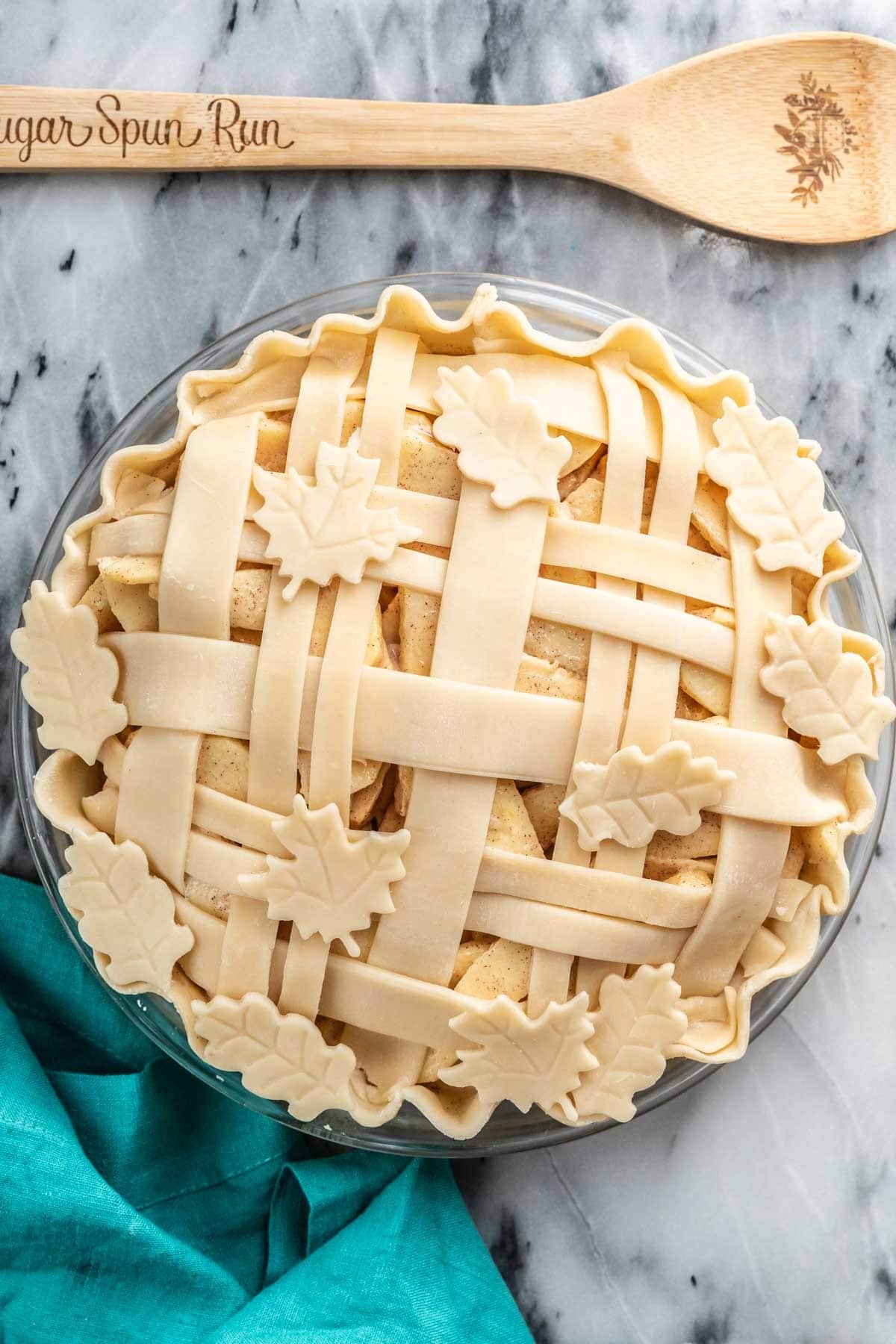
I have a detailed tutorial on exactly how to do a lattice pie crust. You will need to double this recipe in order to do so.Making in advance
This pie dough may be made up to 5 days in advance of rolling out and using. Store tightly wrapped in the refrigerator. If chilling for this long, you will likely need to let the dough soften on the counter at room temperature for 15 minutes or possibly longer to make it soft enough to roll without cracking.Freezing
This pie dough may be frozen and will keep for several months in the freezer if tightly wrapped. To use, thaw overnight in the refrigerator and then use as desired.Gluten-free note
I have not tried it myself, but others have successfully made this recipe with Cup4Cup gluten-free flour.Nutrition
Nutrition information is automatically calculated, so should only be used as an approximation.
Like this? Leave a comment below!
I originally published this recipe in September of 2017. I’ve since updated the post to include helpful tips and hints, step-by-step photos, and a new video. The recipe remains the same!










Can margarine be used in place of butter
Hi Kelly! I’m not sure if it would turn out, and if it does, it won’t be nearly as flaky as it should be.
LOVED this pie crust ! I am 73 years old and have made many pies in my LIFETIME and allow me to say your recipe is over the moon. So easy and so yummy. I did brush butter the top and sprinkle on just a bit of sugar. Guess one can’t change their old ways. Oh wait.. yes they can. I will never use any other recipe for my pie crust except yours. Thank you ! ! Truly enjoy baking your baked goodies. Sincerely LINDA
Thank you so much, Linda! I am so glad you enjoyed the pie crust so much. 🙂
Okay so at first I thought you were just prone to hyperbole Sam. Every recipe was “the best” ever made. Oh sure, now let’s see about this “best” “easy” pie crust. As a seasoned baker of pies I had to check this one out. Hmm…I was probably already baking pies before she was a twinkle in her Mama’s eye, I said. Down here South of the Mason Dixon, down here in Dixie, we take our pies seriously. Among the church goin crowd, which is just about everybody, makin a good pie is a skill every woman worth her salt, ought to have down. But getting that crust right time after time is challenging. The legacy of our foremothers must be carried forward, pie making is up there on the mastery list. Well, girl, you just handed your readers a chunk of pie gold with this recipe. It is all that you say it is: easy, delicious, foolproof, consistently great for any pie – sweet or savory. Hear that you young-uns! Sam got it right – this really is the only pie crust recipe you will ever need to carry you through the millenium to grannyhood – when you proudly hand it down to YOUR grandchildren. We have Sam and her Mom to thank!
Thank you so much for such a sweet comment, Leslie! I am so glad you enjoy the pie crust so much. 🙂
Why does it take 50 minutes to blind bake a crust? Unless I’m misreading the instructions that seems to be a long time.
If you’re baking it filled with sugar as indicated in the instructions, that’s just how long it takes. If you were to bake it without the weight inside it would bake much faster, but unfortunately it would also likely shrink in on itself.
Wouldn’t the sugar inside the aluminum foil melt in the oven. It says sugars melting point is 320F.
Hi Leia. There is enough sugar in there you won’t have an issue. I have done it several times with no problem. You can even reuse the sugar afterwards. 🙂
I was wondering if you could use yogurt instead of sour cream?
Hi, Mary. It is possible that plain greek yogurt may work, but having not tried it, I am not sure how it will turn out.
Thank you for This amazing recipe! I’ve tried it several times and it turns out perfect! I’m not a great baker, but this recipe certainly helps. Very grateful!
I am so glad you enjoyed it, Lise! 🙂
So yummy! I’m going to make this again for sure! Made a double crust chicken pot pie. I wove the top layer and added an egg wash. I wish I could post a picture it turned out so pretty. Thank you!!!
I’m so happy to hear that it was a hit! Yours sounds beautiful, I wish there was a way to share photos here, too. You can always tag me #sugarspunrun @sugarspun_sam on IG or share the photo in my Facebook Baker’s Club 🙂
I have trouble with the bottom of my pie crust getting soggy. I made your Pecan Pie Recipe and it did the same thing. I haven’t
tried your crust recipe but I am when I bake my next pie.
Do you have any suggestions as to how to keep the bottom of the crust crispier and prevent the soggy bottom.
Hi Cathryn, hmm, I’ve never had mine come out soggy. I wouldn’t recommend assembling it until you are ready to bake (don’t pour the pecan pie filling in and then let it sit in the fridge overnight, for example) and I’d make sure your oven is reading the correct temperature, but other than that I’m not sure what might be making it soggy.
Baking the pie crust as close to the bottom of the oven will help plus brush a little egg white on the inside bottom crust before adding your filling. It creates a seal to prevent juicy pies from getting soho.
Wow… I have tried many pie crusts and have never really been satisfied with the recipe. Tonight however I used this recipe with some frozen fruit I had in the freezer and it was amazing! I made a double recipe for top and bottom of my pie and added an egg wash. It was beautiful and flaky. Not to crispy or to soft. I just want you to know this will be my future pie crust from here on out. Thank you for sharing such a treasure.
I am so glad you enjoyed it, Jessica! 🙂
Can you freeze this?
I think it should be ok to freezer. After you form the dough into a disc, wrap it up tightly in cling wrap and then wrap it in some aluminum foil or a freezer bag.
I’m trying this recipe out for the first time this weekend (fingers crossed!). I’m making mini pies though. How many minis do you think I could make with this recipe? Thanks!
It really depends on the size of the mini pies. The pie crust fits a 9 or 10 inch pie plate.
I don’t have a food processor but I do have a KitchenAid. Can I use it to mix the dough?
You can cut the ingredients together with a pastry cutter. I don’t think the kitchenaid will work in this case.
You can cut the butter in using your fingers BUT! the trick to a tender flakey pie crust is keeping everything COLD! Work fast. have the flour, butter, sour cream & dish cold. I use the 1955 Betty Crocker recipe my mom used. It’s the one I grew up using. I did try this one today with a quiche, I omitted the sugar. It was very good.
I do not have a food processor. What can I use instead to mix the ingredients? Thank you!
You can cut everything together with a pastry cutter. ☺️
Have you cooked a gluten free crust if so what flour do you use Sandy from Jackson Tennesse Thanks
I am not very familiar with gluten free baking, so I have not made a gluten free pie crust. Sorry….