
Sourdough Bread Recipe

This post may contain affiliate links. As an Amazon Associate I earn from qualifying purchases. Please read my disclosure policy.
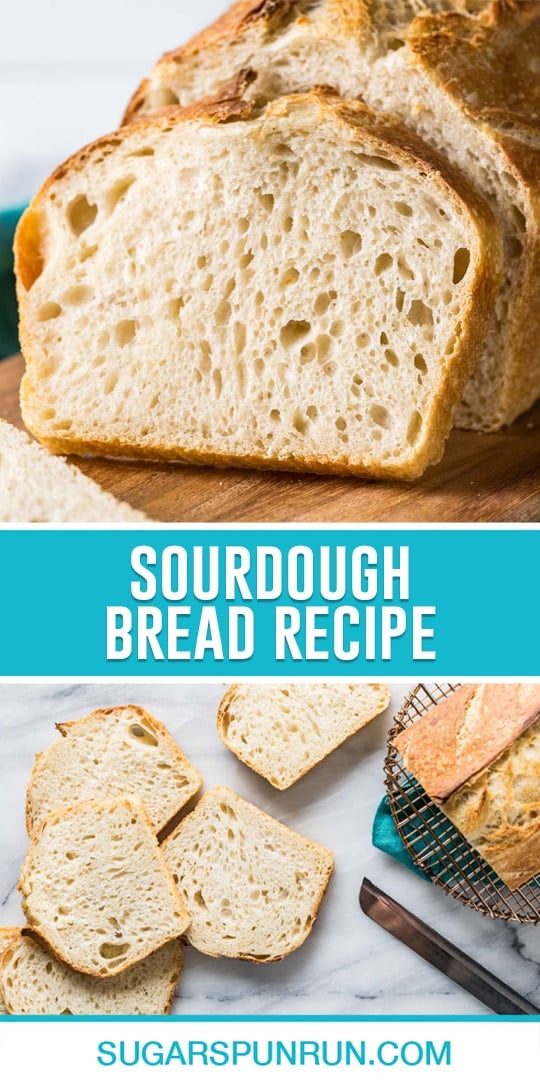
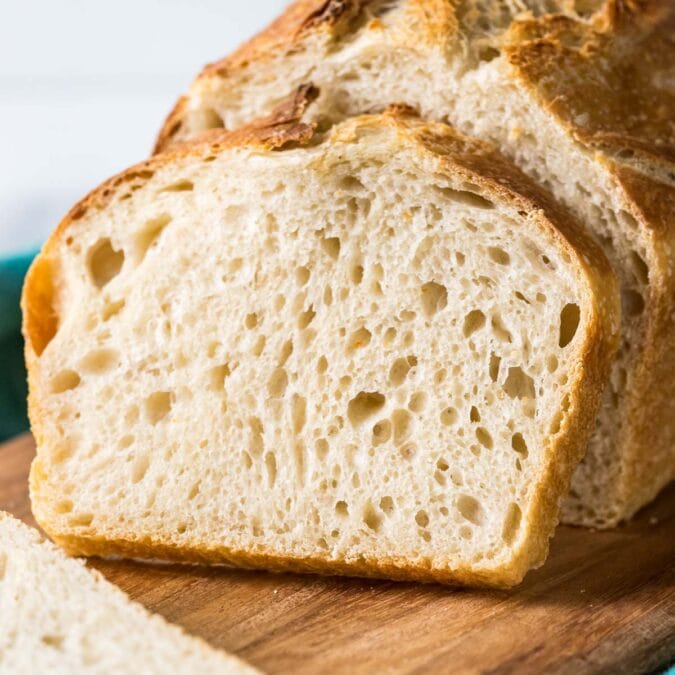
My easy sourdough bread recipe yields a hearty, flavorful bread with a soft springy interior and a thick, crusty exterior. No extra equipment (banneton and Dutch oven not required), uses just 5 simple ingredients, and is perfect for enjoying on its own or using for sandwiches! My version is both beginner friendly and adored by sourdough enthusiasts. I’ll be walking you in detail through every step and include a video tutorial so you can learn how to make perfect sourdough bread like a pro.
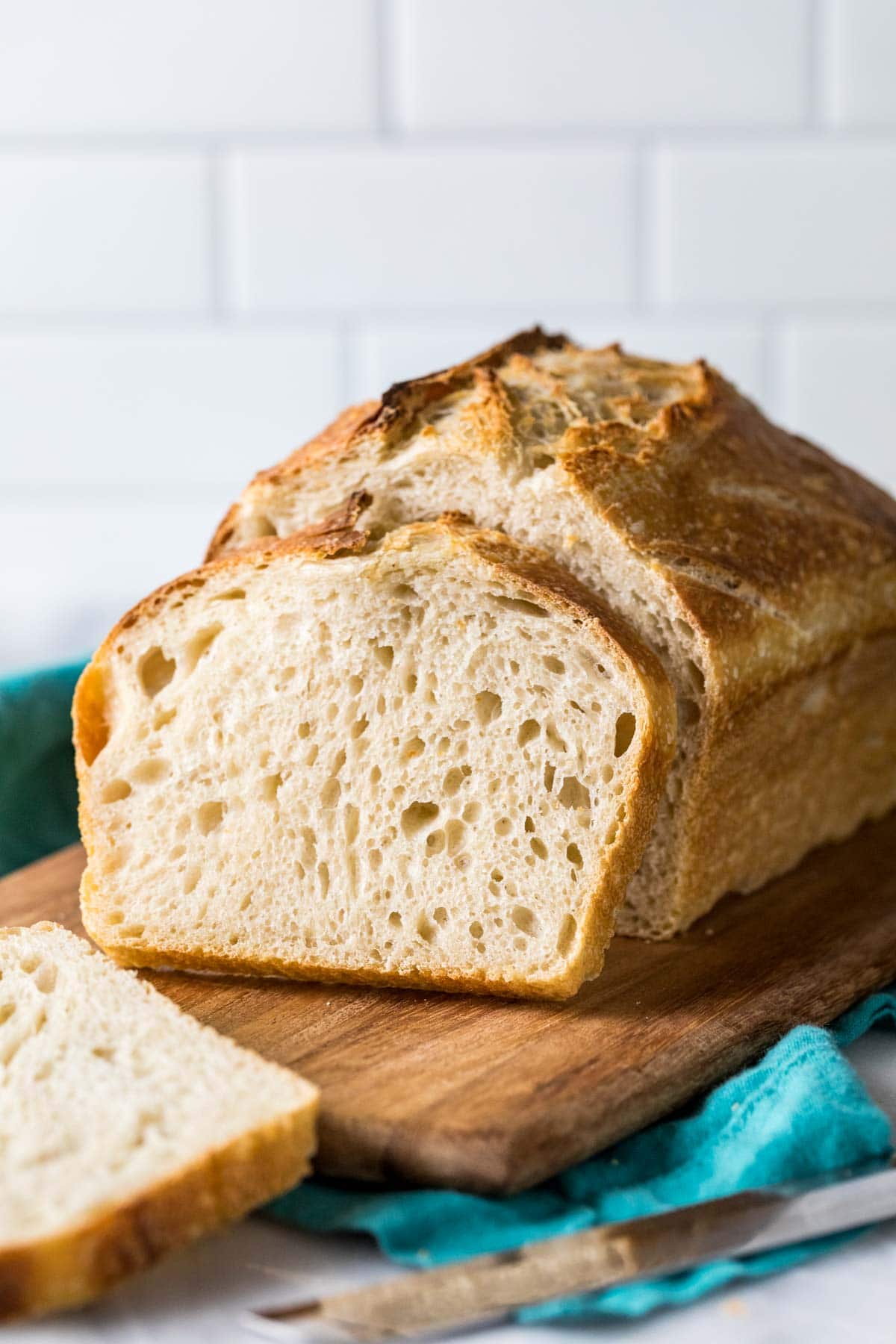
Homemade Sourdough Bread is Easier Than You Think!
It probably goes without saying that many of the recipes on my website are frequent flyers on my weekly meal rotation, but I’m not sure if there’s a single thing I make as often as this sourdough bread recipe. This easy sourdough bread is the only bread we eat in my household anymore. I make 2-3 loaves a week and keep a stockpile in my freezer at all times (handy for making sourdough homemade croutons and breadcrumbs)! And once you try it… well, I think you will, too.
Making sourdough bread at home is shockingly easy, especially if you use my sourdough starter recipe. It is time consuming and you must have patience, but the work itself is very approachable and I wanted to share a version that was easy to follow. There’s no kneading, no mixer, no fancy equipment — you don’t even need a Dutch oven, just a pair of bread pans! It’s perfect for beginners and advanced sourdough bakers alike.
Ingredients
Just 5 simple ingredients (and that’s counting the water)… Let’s talk about them:
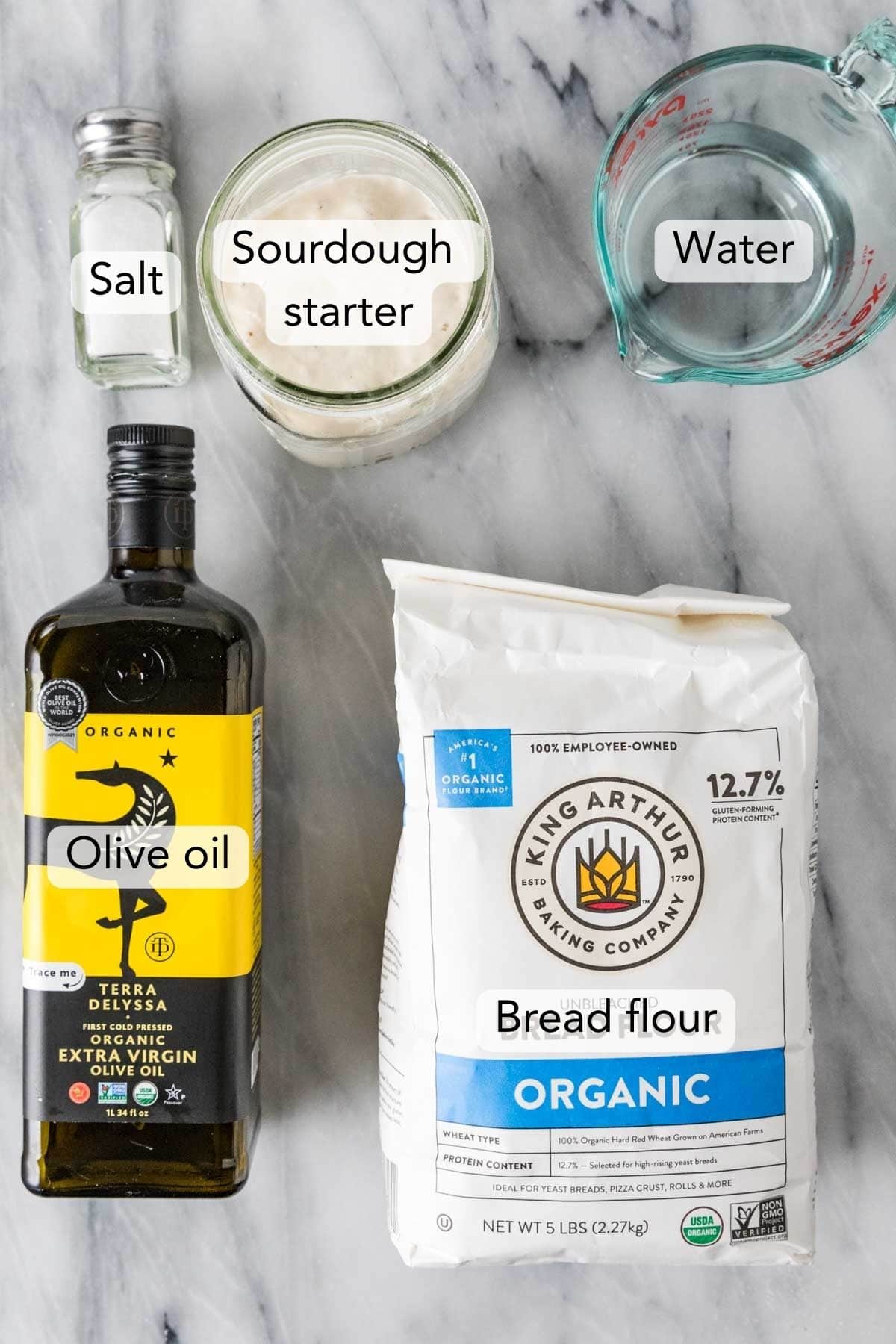
- Sourdough starter. I recommend making your own by using my sourdough starter (this does take over a week to prepare, but it’s worth it!). We rely on the starter for home-grown yeast with this recipe, instead of using a store-bought yeast.
- Bread flour. I prefer bread flour to all-purpose for my sourdough bread recipe. Bread flour has a higher protein content and produces a better-crumbed sourdough bread (it’s chewier!) in my opinion. If you don’t have it, all-purpose is not as great but will be “fine”, but do try the recipe at least once with bread flour.
- Olive oil. A bit of olive oil helps make the bread perfectly chewy and soft. I also find it keeps my sourdough softer longer.
- Salt. Salt is critical for flavor (unsurprisingly) but it also plays some other important roles in sourdough bread. It helps balance the acidity from our starter, strengthens the gluten in the dough (important for shape and texture), and it even helps extend the shelf life of the bread by acting as a natural preservative. Don’t let anyone tell you it’s going to hinder your yeast, it won’t (or at least won’t to any noticeable degree and your sourdough would be worse off without it).
- Water. The water called for in my recipe will yield a sourdough loaf that is about 70% hydration. I love this hydration level; it produces a crumb that’s neither too dense nor too open, that’s not too sour but is still flavorful, and that is easy to shape and extremely versatile — we use it for everything from dipping in chicken pot pie soup to eating sandwiches (I love to use it for a mean short rib grilled cheese). Once you’re comfortable baking a bread at this hydration level, you can experiment with increasing the water if you’d like. More water usually yields a bread with a more open crumb, a more tangy flavor, and a crumb that’s less suitable for sandwiches but good for dipping.
Once you’re comfortable with making a basic sourdough bread recipe, it can be fun to experiment with adding inclusions (like cheese!) or branch out to other recipes that rely on starter. On my website I highly recommend jalapeno cheddar sourdough bread or sourdough pizza dough.
My sourdough bread recipe is written first weights because I find it’s the easiest and most reliable way to make it (just like with my macaron recipe); however, I have included cup measurements in the recipe card as well.
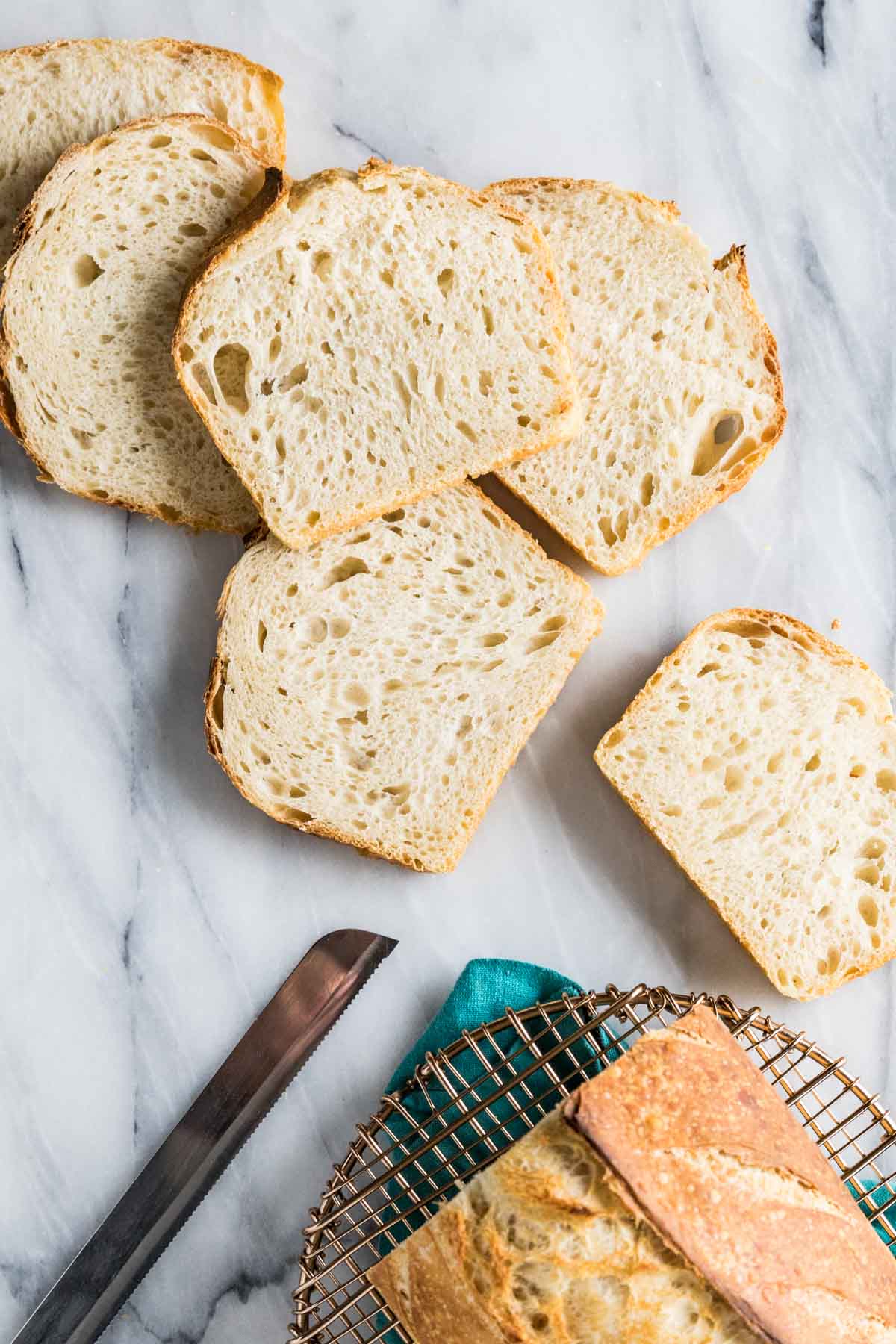
How to Make Sourdough Bread
Make the Dough
The first 4 steps in my sourdough bread recipe are the “autolyse” period (or sometimes called an “inclusive autolyse” because we are incorporating all of our ingredients at this point). This step helps boost fermentation, improves the texture (more open crumb!) and flavor, and makes the dough easier to work with.
Note that I do, quite intentionally, include salt in this first step. Some bakers argue that salt will inhibit the yeast growth and negatively impact the crumb. Not so! With the duration of this autolyse and the composition of this particular sourdough bread recipe adding salt at this stage does not make a difference. Leaving it out for this step only makes it more difficult to incorporate later and increases your likelihood of accidentally forgetting to add it altogether (which would be a shame!).
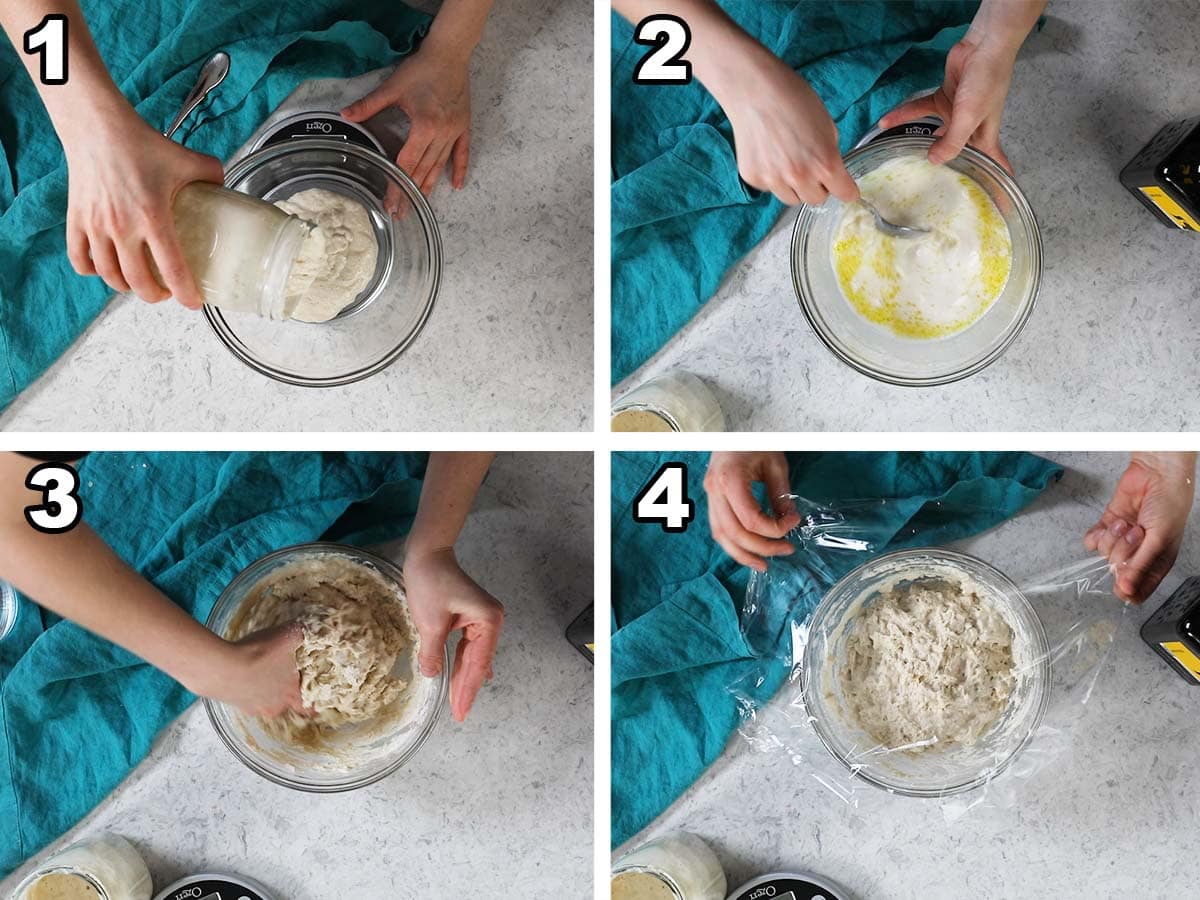
- Combine your active, bubbly sourdough starter with warm water and olive oil in a large mixing bowl. The stater being warm and bubbly is critical for this.
- Add the bread flour and sprinkle the salt over the flour.
- Stir until mostly combined (your dough will still look shaggy). Do not over-mix!
- Cover and let sit at room temperature for one hour.
Stretch and Fold Your Sourdough
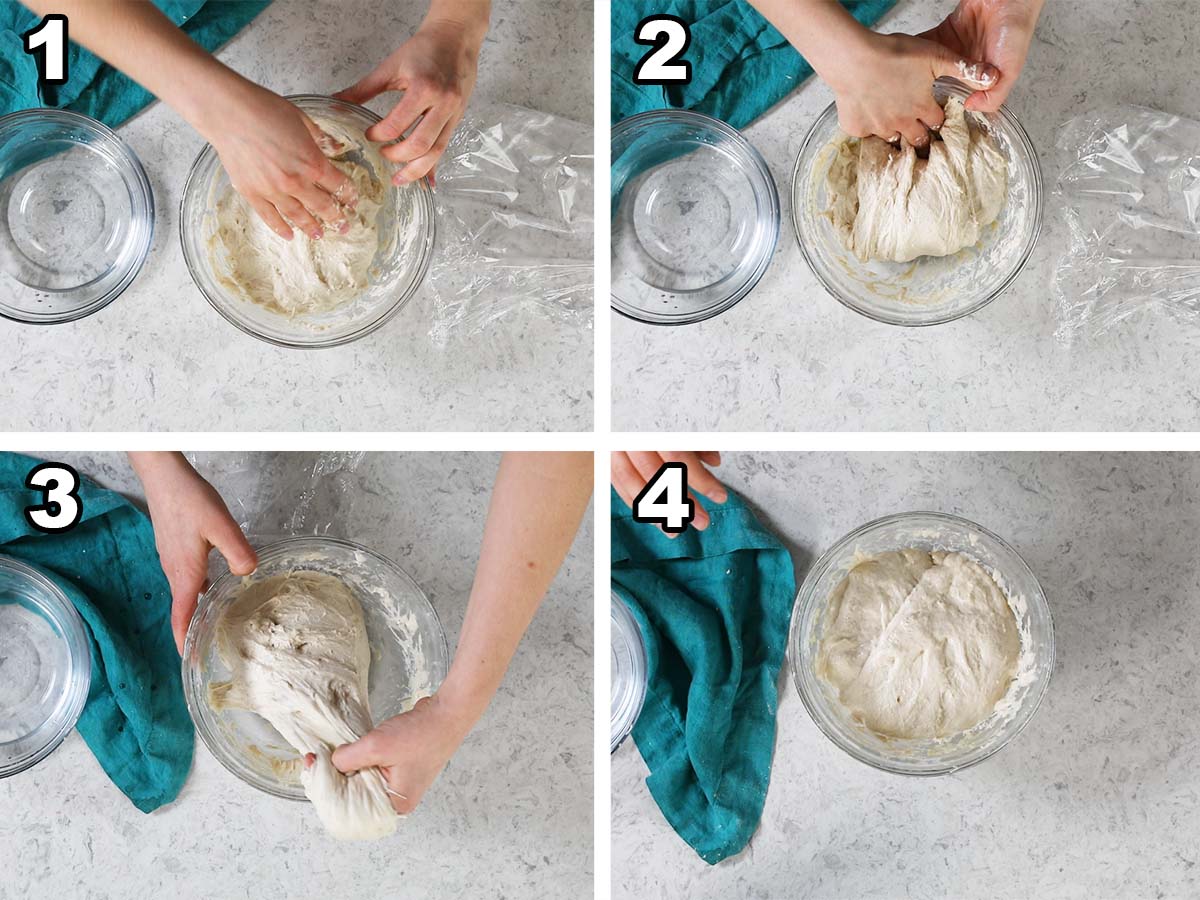
- Form your dough into a ball using your hands, the run your hands under cool water (helps prevent the dough from sticking to you while you’re handling it).
- Stretch the top of the dough up and over the bottom, then turn the dough 90 degrees and repeat. I demonstrate this in the video below if you need a better visual.
- Repeat the stretch and fold process a total of four times, then cover and place in a warm place to rise for 30 minutes.
- Let your dough rise until increased in size by 80%, repeating the stretch and fold process every 30 minutes.
SAM’S TIP: Resting the sourdough in a warm place helps speed up the process. Some good options in your kitchen usually include the top of the refrigerator, a proofing oven, or just your (turned off) oven with the light on. Note that sometimes the inside of your oven can get pretty hot even with just the light on… if yours does I recommend cracking the oven door.
Shape the Dough
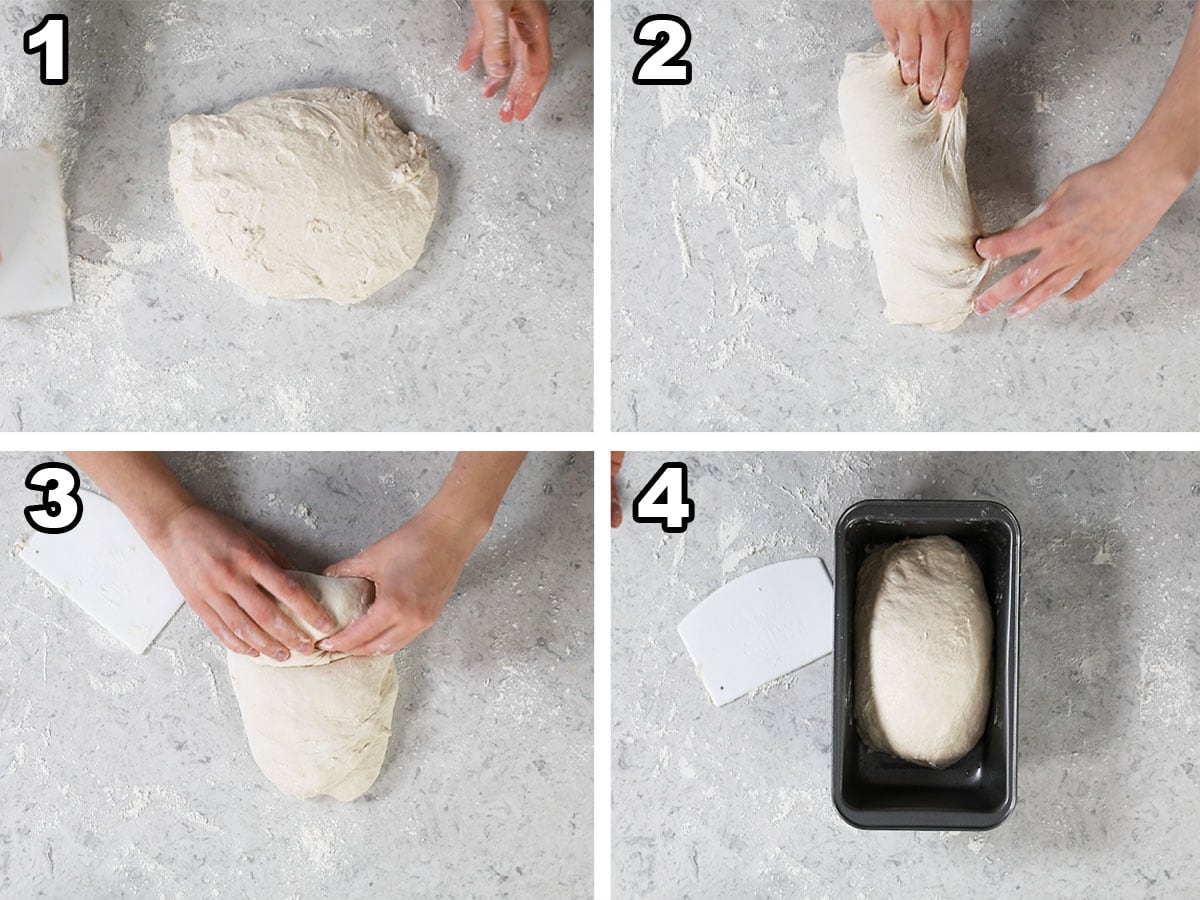
- Deflate and form your dough into a rectangular shape on a lightly floured surface.
- Lift the right side of the dough, fold it over to the center, then repeat with the left side (like folding a paper in thirds).
- Roll into a tight log starting with the short end of the rectangle, then tuck the ends under.
- Place in a greased bread pan, cover, and place in the fridge to rest overnight.
SAM’S TIP: I strongly recommend proofing your dough in the refrigerator overnight rather than baking right away. Proofing overnight will help develop the flavor, help the bread rise better, and encourage more fermentation. That being said, I don’t like to let my dough sit in the fridge for longer than 48 hours (absolute max) before baking. Letting it sit too long can cause over-proofing and can compromise the final texture of your sourdough bread. I also don’t freeze my dough before baking, so I can’t advise on that.
Baking
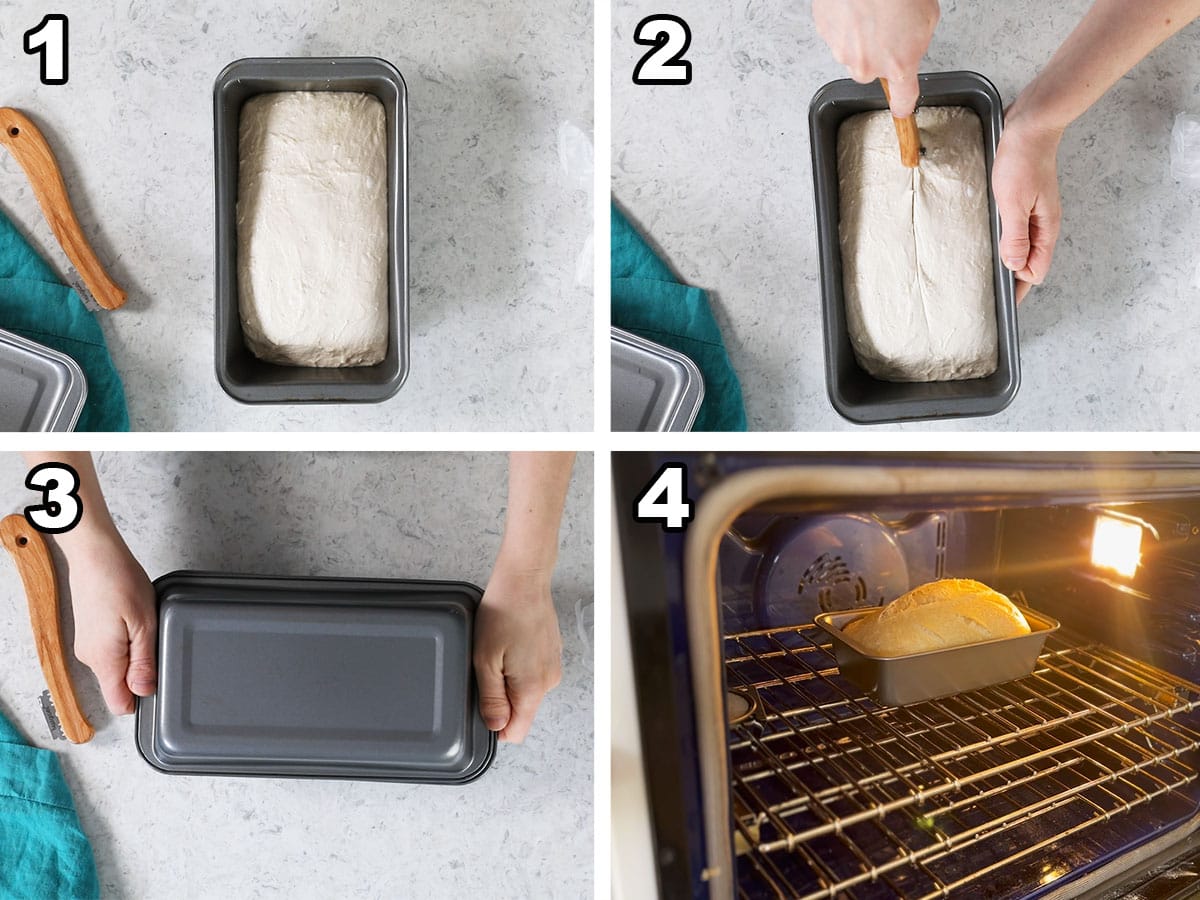
- Let the dough rest at room temperature while your oven preheats.
- Score the bread about 1/4″ deep down the center.
- Cover with another bread pan or an aluminum foil tent.
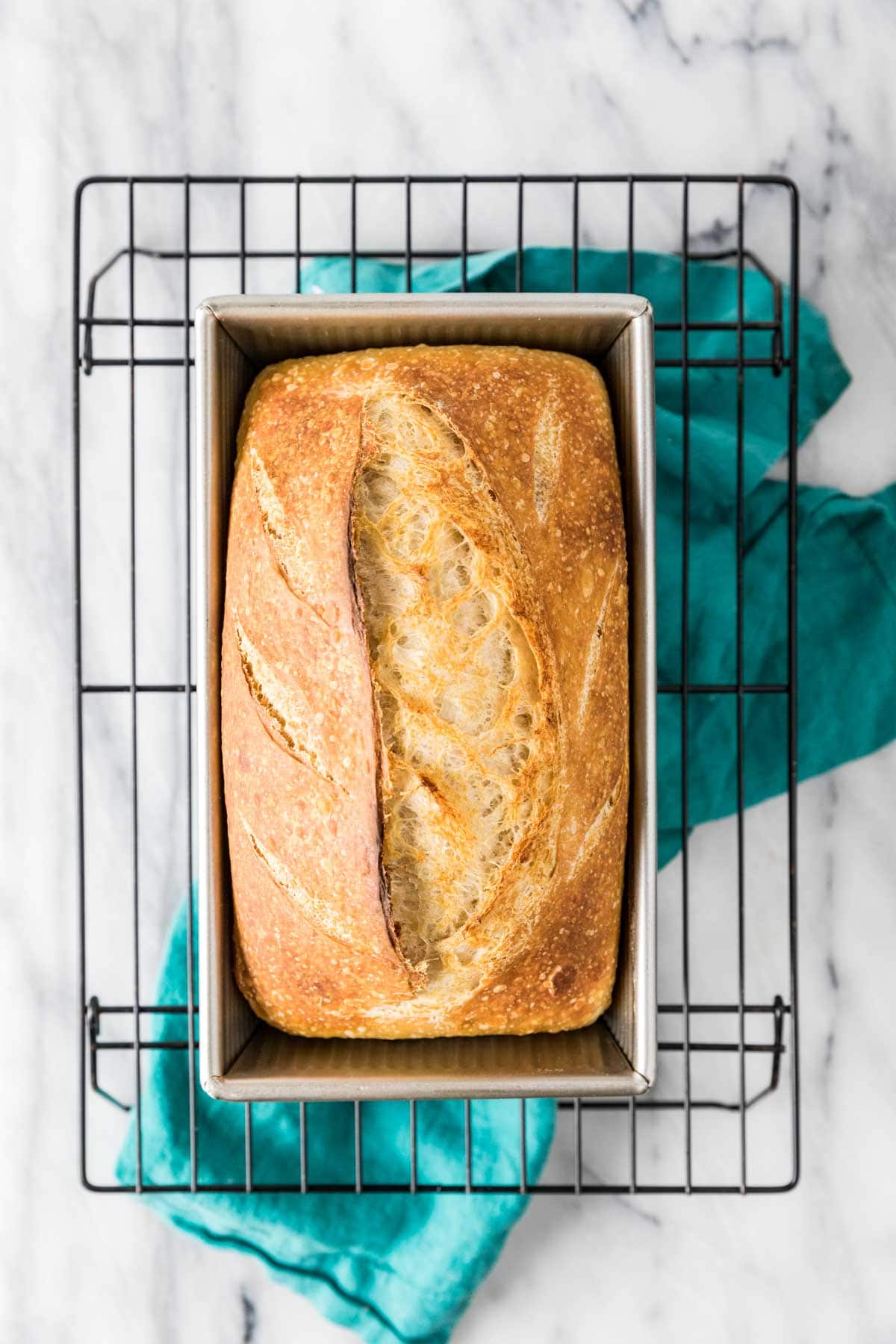
- Bake at 450F for 30 minutes, then remove the cover and bake for 20-23 minutes or until the bread reaches an internal temperature of 206F (97C).
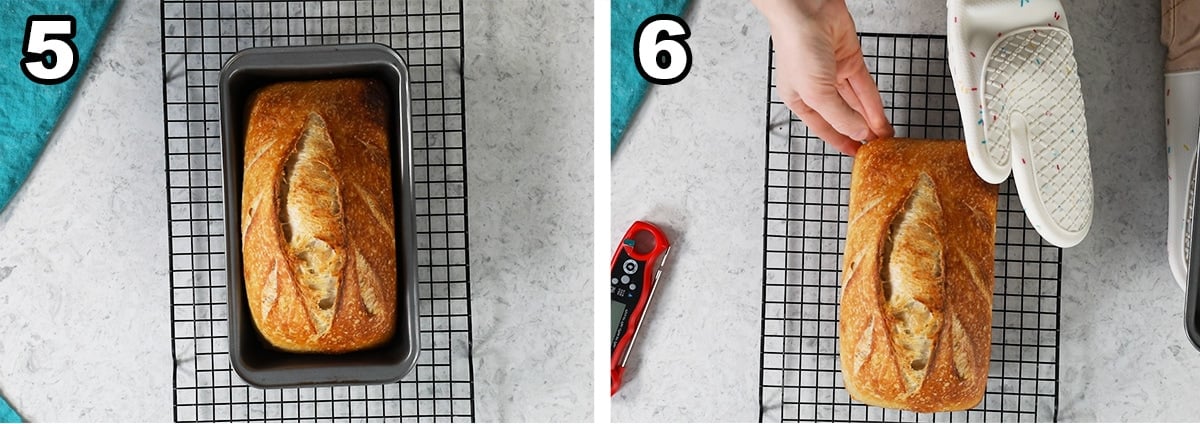
- Let the bread cool in its pan for 10-15 minutes.
- Remove the bread from the pan (carefully, it’s still hot!) and place on a cooling rack. Don’t let it sit in the bread pan too long, or your sourdough bread could end up soggy from the steam that it releases in the pan that can’t escape. Once removing to a cooling rack, allow the bread cool completely (or at least almost completely) before slicing.
SAM’S TIP: Resist the urge to cut into the bread while it’s still hot (I know, so hard, so tempting!). Cutting into it too soon can negatively affect the crumb of the bread. As the dough cools, it is actually finishing cooking. Cutting into it too soon lets steam escape too fast while simultaneously trapping moisture inside. This can make the center gummy and ruin the texture, so have a little patience!
Frequently Asked Questions
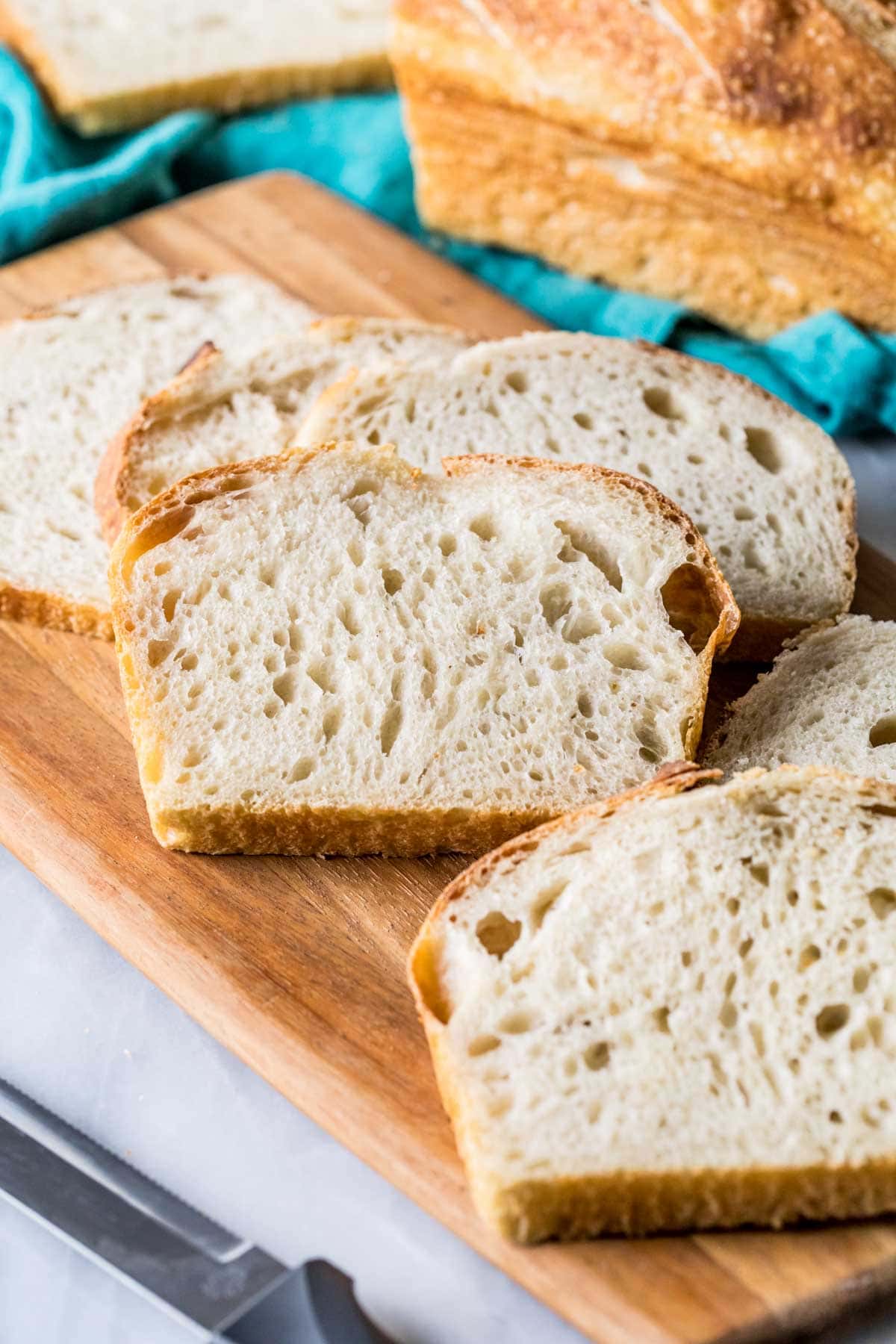
Sourdough is definitely one of the more nutritious types of bread. It’s prebiotic-rich, made by fermenting dough with wild yeast and bacteria (sounds not-so appetizing but in reality is delicious) and is more digestible than your standard white bread. It also has a lower glycemic index and less gluten than normal bread. If you’re going to be indulging in bread, this is arguably a better option than standard white bread.
While a traditional sourdough bread recipe is obviously not gluten free, sourdough bread is sometimes tolerated by people who are gluten sensitive (but not people with Celiac Disease). This is because some of the gluten is consumed during the fermentation process, which makes the bread more easily digestible.
Yes, of course! I wanted to share an easy sourdough bread recipe that can be made with basic kitchen equipment, but you can just as well use a Dutch oven. Follow the written recipe through the rolling and tucking step, then place the dough in a lightly floured banneton (I use my Kitchenaid mixer bowl lined with a lightly floured kitchen towel, because I don’t actually have a banneton). Cover and let it rise overnight (or for two nights) in the fridge.
The next day, carefully turn out your dough onto a large piece of parchment paper and carefully lower this into a 4.5qt Dutch oven (a larger one would work, but your bread will be flatter and will likely cook faster). Allow the dough to sit uncovered while the oven preheats, then score, cover with a lid, and follow recipe instructions for baking.
You can preheat your Dutch oven (as I do in my artisan bread recipe) to make it nice and hot before adding your dough if you’d like, but honestly I rarely do this step with this recipe.
Some of my favorite things to serve with sourdough bread:




I know that there are many sourdough bread recipes out there and so many different ways to make it, but this is my personal favorite version that I’ve carefully developed over the past few years. I can’t wait to hear how you like it (let me know in the comments!), I hope you’ll always want to keep a loaf in your house, too! 🩷
Enjoy!
If you try this recipe, be sure to tag me on Instagram, and you can also find me on YouTube and Facebook
Sourdough Bread Recipe
Equipment
- Bread lame (optional, or use sharp knife)
Ingredients
- ⅔ cup (150 g) active starter, bubbly, active, fed
- 1 ⅓ cups (315 g) warm water, 90F
- 1 ½ Tablespoons (18 g) olive oil
- 3 ⅔ cups (450 g) bread flour
- 2 teaspoons (13 g) table salt
- Oil or butter for greasing pan
- Additional flour for dusting work surface
Instructions
Make the dough
- In a large mixing bowl, combine sourdough starter, water, and olive oil. Stir until combined.⅔ cup (150 g) active starter, 1 ⅓ cups (315 g) warm water, 1 ½ Tablespoons (18 g) olive oil
- Add bread flour and sprinkle the salt overtop. Use your (clean) hands or a wooden spoon to stir together until dough is mostly combined. It will still be a bit shaggy and should not be cohesive (don’t over-mix) but no dry patches of flour should remain.3 ⅔ cups (450 g) bread flour, 2 teaspoons (13 g) table salt
- Cover bowl with plastic wrap and let sit undisturbed for one hour (this is the “autolyse” period).
Stretch & Fold
- Form dough into a ball with your hands.
- Run your hands under cool water (prevents sticking!) and grasp the top of the dough and stretch it over the bottom. Turn the dough 90 degrees and repeat. Turn 90 degrees and repeat again, then once more (four total stretch & folds).
- Allow dough to rest, covered, in a warm place for 30 minutes.
- Repeat step 2 above every 30 minutes as dough rises.
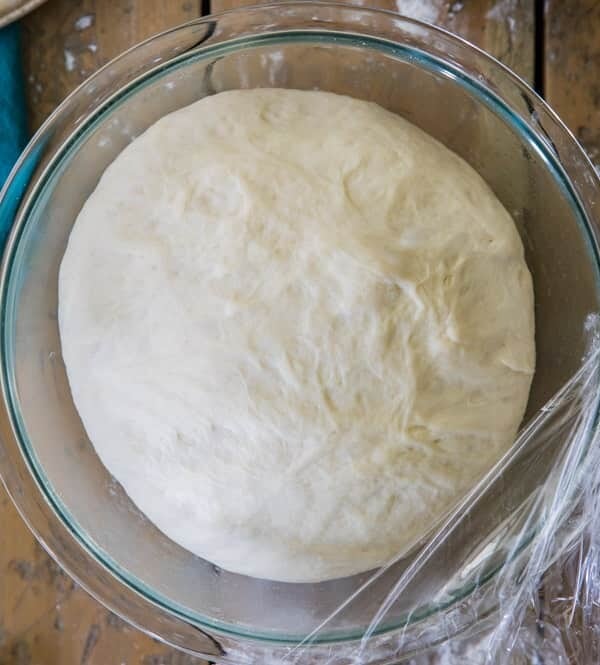
- Allow dough to rise (stretching and folding every 30 minutes as indicated) until dough has increased in size about 80% (how long this takes depends on the temperature of your kitchen, typically mine is ready within 4-6 hours).
Forming the Dough
- Lightly grease a 9×5 loaf pan with olive oil or butter.Oil or butter for greasing pan
- When dough has risen sufficiently, turn it out onto a clean, lightly floured surface.Additional flour for dusting work surface
- Use your hands to gently deflate the dough and pat it into a rectangular shape. Lift the right side of the dough and fold it into the center (almost as if you were closing a book). Then, lift the left side of the dough and fold it over the first fold (use a bench scraper if the dough is sticking to your counter).
- Starting with a skinny end, tightly roll the dough, as if you were rolling up a cinnamon roll. Tuck the ends under and carefully transfer to prepared bread pan (See Notes if you would like to bake in a Dutch oven). Don’t worry if the bread doesn’t fill the pan right now.
- Cover pan tightly with plastic wrap and transfer to the refrigerator to rest overnight/for 12-48 hours.
Baking
- Remove the sourdough from the refrigerator and preheat your oven to 450F (230C). Allow the dough to rest (covered or uncovered) in a warm place while the oven preheats, for at least 30-35 minutes, before proceeding. (if the center of the dough hasn't risen to above the lip of the pan, I will sometimes let the bread rest at room temperature until it does, 1-2 hours).
- Once oven has preheated, uncover bread (if still covered), and make a clean slice (about ¼” deep) down the center with a sharp knife or bread lame (to score it) then cover with another 9×5 pan (if you don’t have a second pan, you can make a makeshift lid using aluminum foil; tent it as high as the bread pan is deep).
- Transfer to center rack of preheated oven. Bake, covered, for 30 minutes then remove the lid and continue to bake another 20-23 minutes/until golden brown and the center of bread reaches 206-208F (97C) when temped with an internal read thermometer.
- Allow bread to cool in pan for 10-15 minutes before gently turning it out onto a cooling rack (careful, the pan will still be hot!) to cool for at least an hour or two before cutting into it.
Notes
Cleaning note
Never wash sourdough starter or any of the sourdough dough down your sink, it can block it in a hurry. Instead use a bowl scraper to scrape any excess scraps of dough out and straight into the trash can.How to bake in a Dutch oven.
After shaping the dough, place it in a lightly floured banneton or a bowl lined with a floured kitchen towel (I like to use my stand mixer bowl!) Cover and refrigerate overnight. The next day, gently turn the dough out onto a sheet of parchment paper and lower into a 4.5qt Dutch oven (a larger one works but will yield a flatter loaf and may need to bake a bit less time). Allow to rest uncovered while your oven preheats (or for up to an hour) then score, cover with lid, and bake as directed.To bake the same day:
Follow recipe through step 4 under the “Forming the Dough” section. Immediately after transferring dough to pan, preheat oven to 450F (230C). Allow dough to rest uncovered while oven preheats, at least 30 minutes. Once oven is preheated, follow directions in recipe starting with step 2 under the “Baking” section. Note that bread will not be as flavorful or nutritious & texture will not be as great if it is not allowed to sit in the fridge overnight.Storing & Freezing
Store in an airtight container at room temperature for up to a week. You may also freeze this bread. Freeze the whole loaf by wrapping tightly in plastic wrap and then wrapping in foil. When ready to thaw, keep covered completely and defrost at room temperature before unwrapping. We prefer to freeze pre-sliced: Cut bread into slices and storing in a plastic Ziploc bag (remove as much air as you can before freezing). If you struggle with freezer burn or plan to freeze the bread longer than a few weeks, you can individually wrap each slice in plastic wrap before closing in the plastic bag.Nutrition
Nutrition information is automatically calculated, so should only be used as an approximation.
Like this? Leave a comment below!












Oh, and I’d like to add that my neighbor has been buying sourdough bread for $14 a loaf from someone a half-hour away who makes it by hand, but she loved yours much more.
And I’ve been using your recipe as my master one for other things too, like pizza crust and cinnamon rolls (but I add 1/4 cup sugar for cinnamon rolls or sweet bread), and it works great no matter what I use it for. Thank you.
Homemade is always so much better if you ask me! I’m so glad everyone has enjoyed it so much! 🙂
Hi Sam, I just wanted to share this: I made a loaf of your bread (but in a Dutch Oven) and shared it with a neighbor as a thank you for some honey they gave us from their backyard. The next time I walked past, she ran out in bare feet to catch me and said, “I just have to tell you that that’s the best bread I ever tasted. And I mean EVER. Ever ever.”
Thought you might like to hear that. Yours is the first recipe I tried since I started making sourdough in February (because you did it in a loaf pan, which is the only thing I had at the time), and I’ve stuck with it ever since. My family loves it! Blessings to you! Thank you. 🙂
Heather, this is such a compliment! Thank you for sharing this, I so appreciate you trusting and trying my recipes, it means so much to me!! ❤︎
Hello! Curious, if I wanted to include 20 g of honey should I just remove 20 g of water?
I’m so excited I found your recipe, because my family loves your “Best Pizza Dough”! It made it into the family recipe book. All family favorites go into the book! I noted it was taken from SugarSpunRun.com 😉
I’m so glad you’ve enjoyed everything so much! I think if I was adding honey I would add a touch more flour, as needed, instead of removing water. 🙂
This is the only sourdough recipe I ever use! Even when I do inclusion loaves, this recipe is my base and everyone always loves it. My advice for those people who find their crust gets a little too dark on that second bake is to check the internal temp of their loaf after about 16/17 minutes on the second bake. If it hits 205F it’s done and you can take it out. My oven doesn’t do a super job of maintaining a consistent temperature so it’s all about the temp checks for me and it’s perfect every time.
Thanks for the review, Leslie! Enjoy 😊
Hi! I love this recipe! How do you add inclusions? I’m interested in jalepeno cheddar and maybe apple cinnamon….do you have a recipe?
I would put any add-ins in during the stretch and fold process. 🙂
i used a regular metal loaf pan. I’ll try the baking stone, thanx!!
Would I be able to add maple syrup or honey to this loaf, if so how many grams? And would you recommend changing out certain grams of bread flour for whole wheat bread flour?
Hi Katia! You can add a little bit of honey. If the dough becomes too moist you can add a touch more flour. I wouldn’t go crazy with the amount of honey being added. I’m not sure how to swap out whole wheat flour since I haven’t tried it before.
Excellent!!
First off, THANK YOU!! 💜 I’m a sourdough newbie, started my starter at the end of May. Tried baking my first sourdough round loaf in late June, the first 3 were inedible, 🤦🏼♀️🤷♀️ then I found YOU! 🥰 A loaf is so much more practical for us! We love the test and the texture! We love it plain, with lots of butter and/or honey. Or toast it and for grilled cheese too! This recipe is awesome! Your video helped so much along with the recipe instructions. I bake a great loaf every time. My challenge has been to, not burning the bottom. 👀 I have been putting a sheet pan under the loaf pan, plus a little parchment paper (it gets crispy but it’s ok) So, I have a couple of questions. Am I doing Step 5 correct? I have been doing 4-6 stretch and fold sets depending on the dough, then I let it sit on the counter for a few hours until it doubles in size, then I put it in the fridge.
Also, have a request for jalapeño and cheese sourdough. It looks like I just fold that in at the end of my bulk fermentation. Have you ever added in anything, any advice?
Thanks again! Excellent recipe! 😋
Jill
Hi Jill! I’m so glad to hear you are enjoying the bread so much! Is there a reason for the sheet pan underneath the bread pan? It shouldn’t be overflowing. I would try to remove that and see if that helps with the browning on the bottom. You should be doing stretch and folds every 30 minutes until it has almost doubled in size then you will transfer it to the pan and into the refrigerator. Others have added jalapenos and cheese in. I would just do it while doing the stretch and folds to work the jalapenos and cheese into the dough. 🙂
This was the first sourdough snadwich loaf I made! Followed the recipe and procedures to a tee.. when I removed the top pan, it looked great. I let it run for another 20 minutes but it got quite dark on top.. and the IT read 178C.. so I put it back for another 10 minutes.
After it got close to temp, I pulled it and let it cool. While it was not the prettiest, it tasted great; nice taste and very good texture!!
The next one is in the fridge getting ready for tomorrow
Perhaps I’ll leave it in with the cover a little longer this time to get it to temp and then keep an eye on the browning?
Thanks for the recipe!!!!
Hi Dermott! I’m glad you were still able to enjoy it! Did you mean 178C not 178F? 178C is quite a bit higher than what it needs to reach. If you find it’s burning too quickly is it possible that your oven could be running a bit hot?
Thanks for the reply Sam! Yes, it was Farenheit, and you are probably correct on the oven; Friday’s run was at what my oven told me was 440F and I ran it for 33 minutes before uncovering – it was still a little browner than I amined for, but nothing like the first.
Overall, for sure, a winner, and it’s almost all gone. Another will be made on Monday; waiting for the starter to get lively!!
I’m so glad you were sill able to enjoy it! 🙂
New to sourdough but where other recipes have failed me, this one was a great success! Tasty, chewy, delicious! The loaf was gone in seconds, even when I went to reach for a hidden slice…my young teenagers had sniffed it out and ate it! Thank you! btw…toasted…mindblowing!
So glad our recipe was a winner for you, Janet! Sounds like you might need a new hiding spot 😉 Enjoy ❤️
I loved trying the recipe, but the bottom of my loaf burned rather badly, any advice for preventing that in the future?
I’m so sorry to hear this happened, Carolyn! Is your oven temperature accurate? That could cause burning, or potentially it just needed a minute or 2 less. 🙁
Hi there. What type of a pan are you baking it in? I had one loaf do that as well but switched to a baking stone bread pan and it works out perfect. This recipe is the absolute easiest and tastiest ever.
Hi! Quick question. Just wanted to know, I don’t have bread flour so would it come out too different if i used regular flour?
Hi Emily! You can use all purpose flour, but we really recommend bread flour over all purpose for this recipe. Bread flour has a higher protein content and produces a better-crumbed sourdough bread 🙂
Hi Sam,
I am new to sourdough baking and would like to try your bread recipe but have a question. Because it takes my starter until afternoon to double, and if I don’t have another 4-6 hours for the first proof before bedtime, can it go in the frig overnight? If so, how would I proceed the next day? Thank you!
Hi Shelly! Is it possible to feed your starter a little earlier? You should really do the stretching and folding throughout those 4-6 hours and then it can sit in the refrigerator overnight. I hope that helps! 🙂
Sam!! This recipe is soooo very good. I really appreciated your detailed steps and video. it definitely takes a time commitment so plan to be home but WOW, so worth it. Please continue making more sourdough discard recipes. Thank you!!
Thank you so much, Aubree! I’m so glad you enjoy it so much! I am slowly adding more and more sourdough recipes. 🙂
Best tasting recipe. I baked this in my Dutch oven and it came out perfect! I will definitely be using this recipe again!
I’m an avid home baker and have made sourdough for years. After trying several recipes and methods, I came across this one and I will never use another recipe again! I’ve been using this recipe weekly for the past year or more and it’s absolutely perfect! I’m convinced the key to success is in the folding. It’s really not a big deal-just plan on making it when you’re home.