
Sourdough Bagels
This post may contain affiliate links. As an Amazon Associate I earn from qualifying purchases. Please read my disclosure policy.

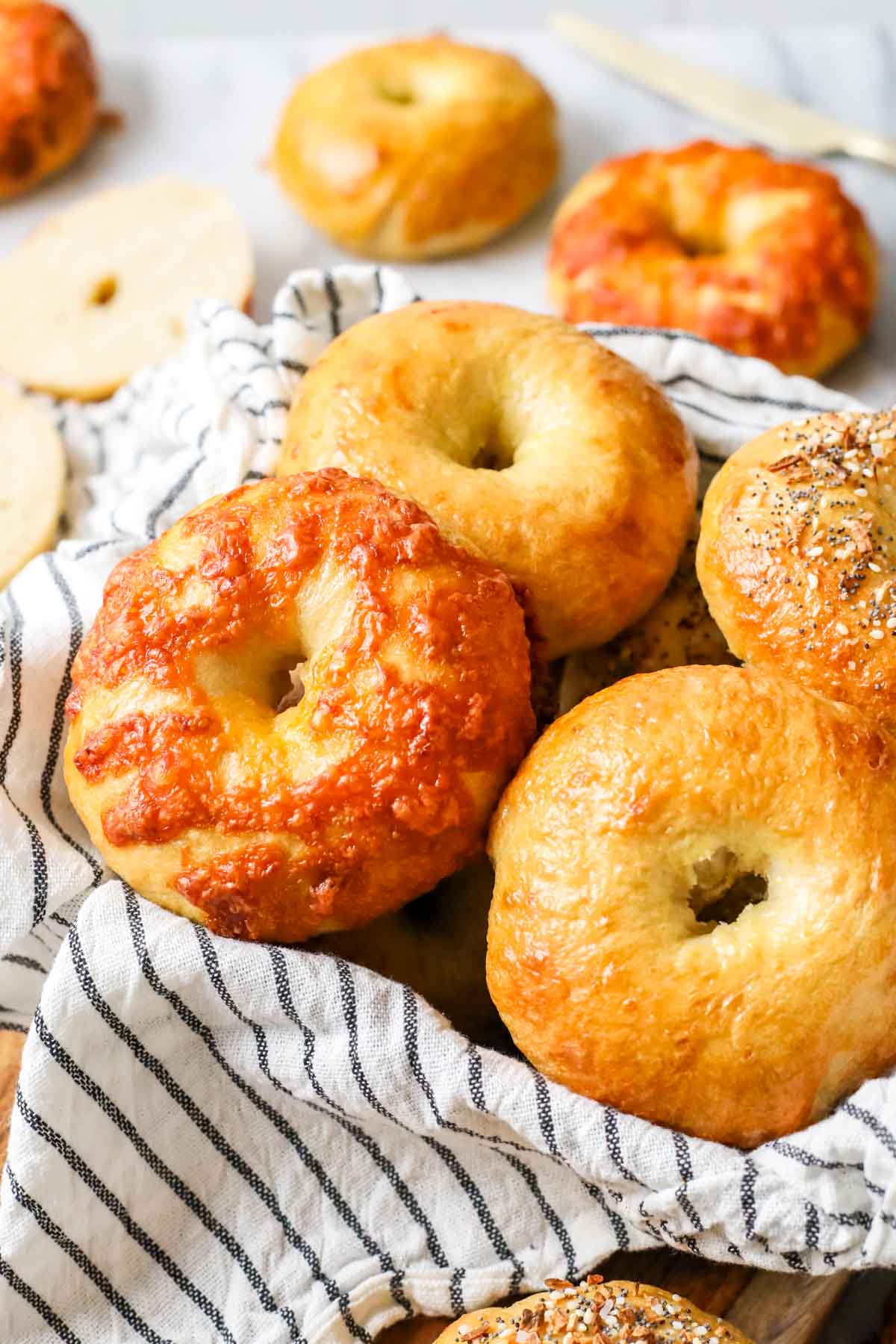
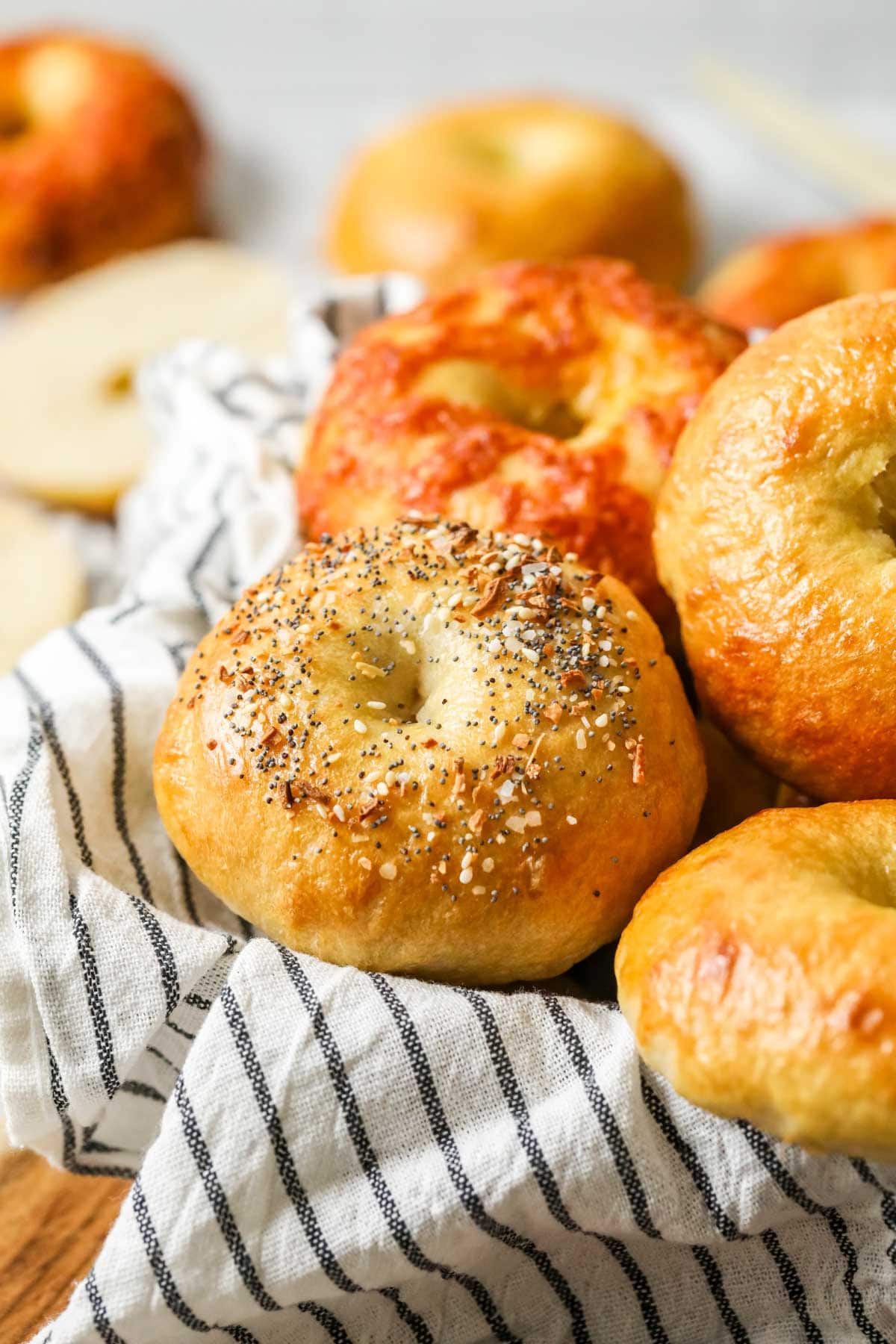
These sourdough bagels are made with just 7 ingredients (and no supplemental yeast!). They take some time to make, but the final flavor and texture is well worth it! Totally customizable with your favorite seasoning, dried fruit, cheese, etc.
Homemade Sourdough Bagel Recipe
Today we’re making authentic sourdough bagels! You won’t need any store-bought yeast for this recipe; just homegrown sourdough starter and a few pantry staples. They take a bit of time to make, but that time is just what you need to make bakery-worthy, chewy bagels with a fantastic sourdough depth.
4 Things to Know About This Recipe:
- Taste: The sourdough adds depth of flavor without overpowering any mix-ins or toppings you choose to add. I include a few of our favorites flavorings below!
- Technique: Pretty easy! There’s some kneading and shaping involved, but nothing too complicated.
- Ingredients: Very simple and basic–we’re using just seven ingredients today! Most importantly, we are not using any supplemental yeast, which means these are real deal, authentic sourdough bagels.
- Time: While the process is fairly simple, this sourdough bagel recipe is a two-day commitment, so keep this in mind before you get started. This is because we are using sourdough starter instead of a combination of sourdough discard and yeast (just like when making my sourdough donuts). You cannot rush the process; it will be an exercise in patience, but your patience will be greatly rewarded with chewy, fresh bagels 😉
Ingredients
We’re keeping things super simple; here’s what you need (plus I recommend an egg for the egg wash–I forgot to add that before I snapped this photo!).
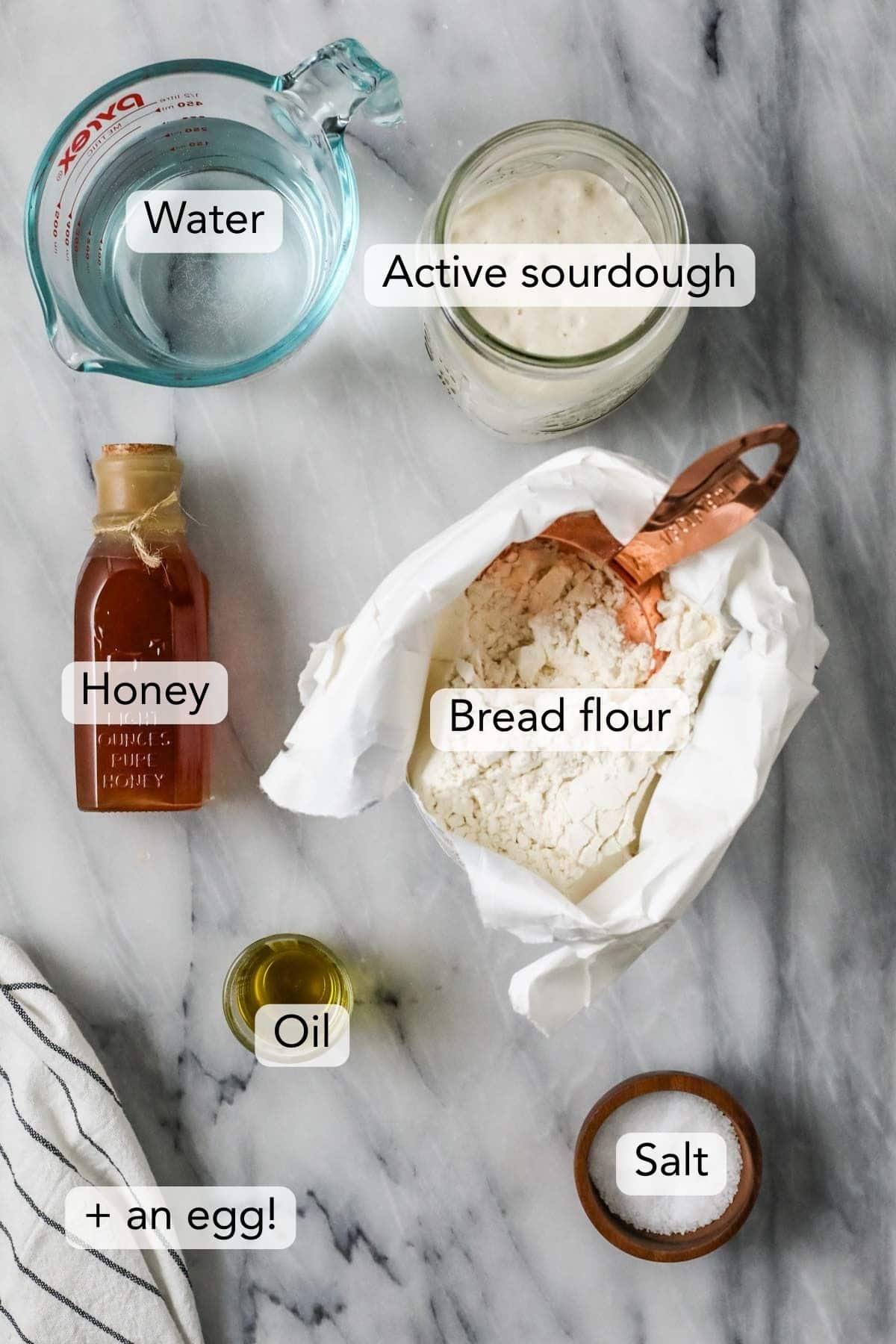
- Sourdough starter. Use an established, active and bubbly sourdough starter. If you haven’t yet begun your sourdough journey, head on over to my post on how to make a sourdough starter.
- Honey. We’ll add this to our dough and to the boiling water we’ll dip our bagels in before baking (a key step for that classic bagel texture and appearance).
- Bread flour. Bread flour really is best here; I don’t recommend substituting all-purpose flour (bagels will be more fluffy and less chewy, and a good bagel should have a nice chew). Note that you may need more or less than what I recommend and should add this by how the dough feels/looks, just like when making my sourdough soft pretzels.
- Egg (not pictured above). We will whisk this with a little water to make an egg wash for brushing over our bagels before adding any toppings and baking.
- Cornmeal (not pictured above). This is optional, but if you want to sprinkle some over your pan before you add your bagels, feel free. It adds a little texture and helps keep the bagels from sticking to the pan, but isn’t really necessary if you use parchment paper.
Remember, this is just an overview of the ingredients I used and why. For the full recipe please scroll down to the bottom of the post!
SAM’S TIP: Traditionally, you would boil your bagels in water and barley malt syrup. Barley malt syrup can be difficult to find, so I typically substitute this with honey (which works very well). You can use either; just know one is not a direct substitute for the other. I include measurements for both in the recipe.
How to Make Sourdough Bagels
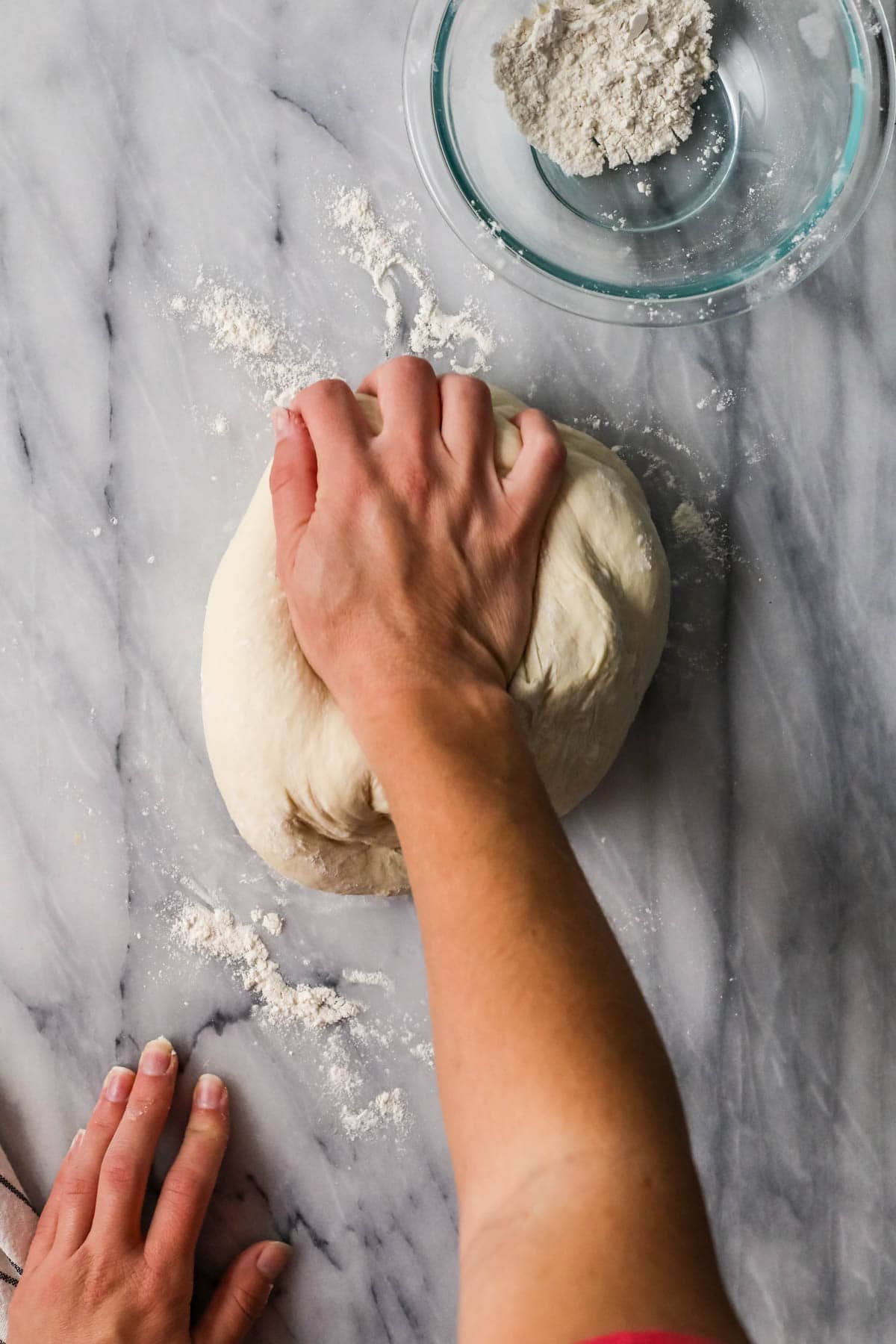
- Step 1: Make the dough. Add the warm water, sourdough starter, oil, and honey to a mixing bowl. Stir together, then add the salt and 3 cups of the flour. Gradually add more flour until the dough starts to form a ball and cling to itself, then turn it out onto a lightly floured surface. Knead with your hands until the dough is smooth and elastic; this usually takes about 10 minutes (add any mix-ins towards the end of this process). Place in a lightly oiled bowl, cover, and let rise for several hours. Once it has nearly doubled in size, transfer the dough to the fridge and ferment overnight.
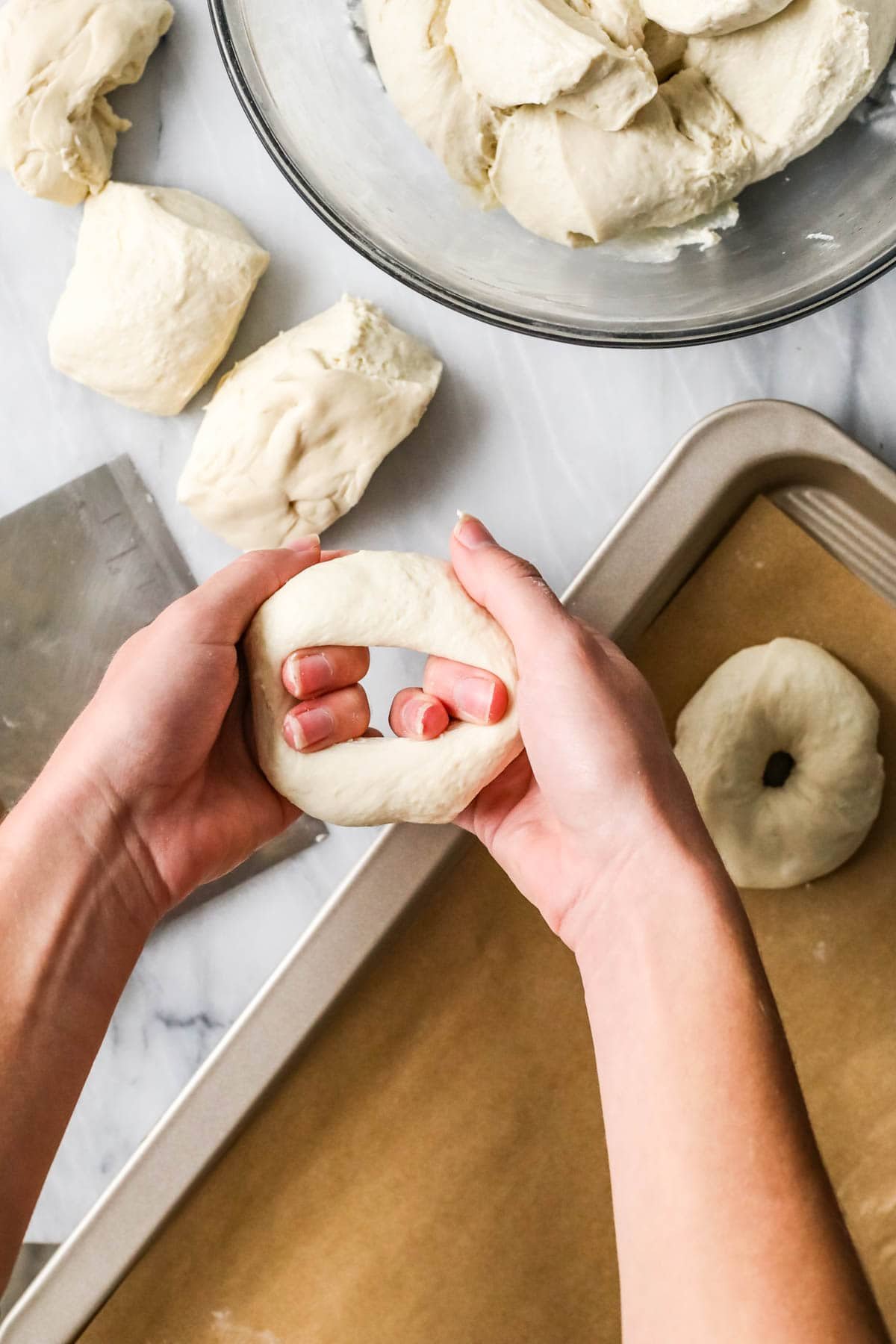
- Step 2: Shape the dough. Deflate the dough with your hands and divide into 12 equal pieces, forming each into a tight ball. Poke a hole in the center of each ball with your thumb, making each hole about 2″ wide (they will shrink!).
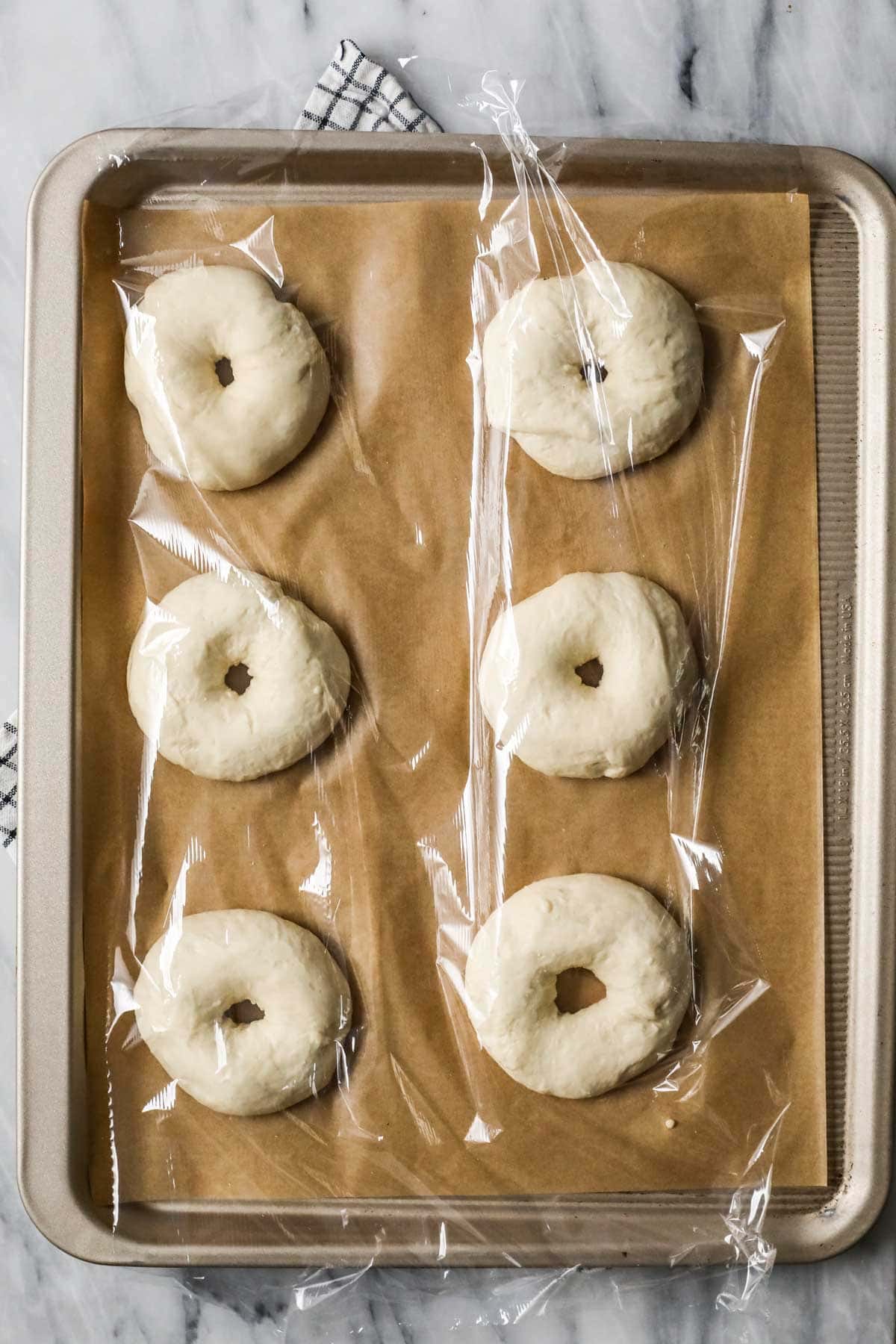
- Step 3: Proof. Place the bagels on a parchment lined baking sheet (dust with cornmeal first, if desired), then cover. Let rise until they look puffy, about 30 minutes.
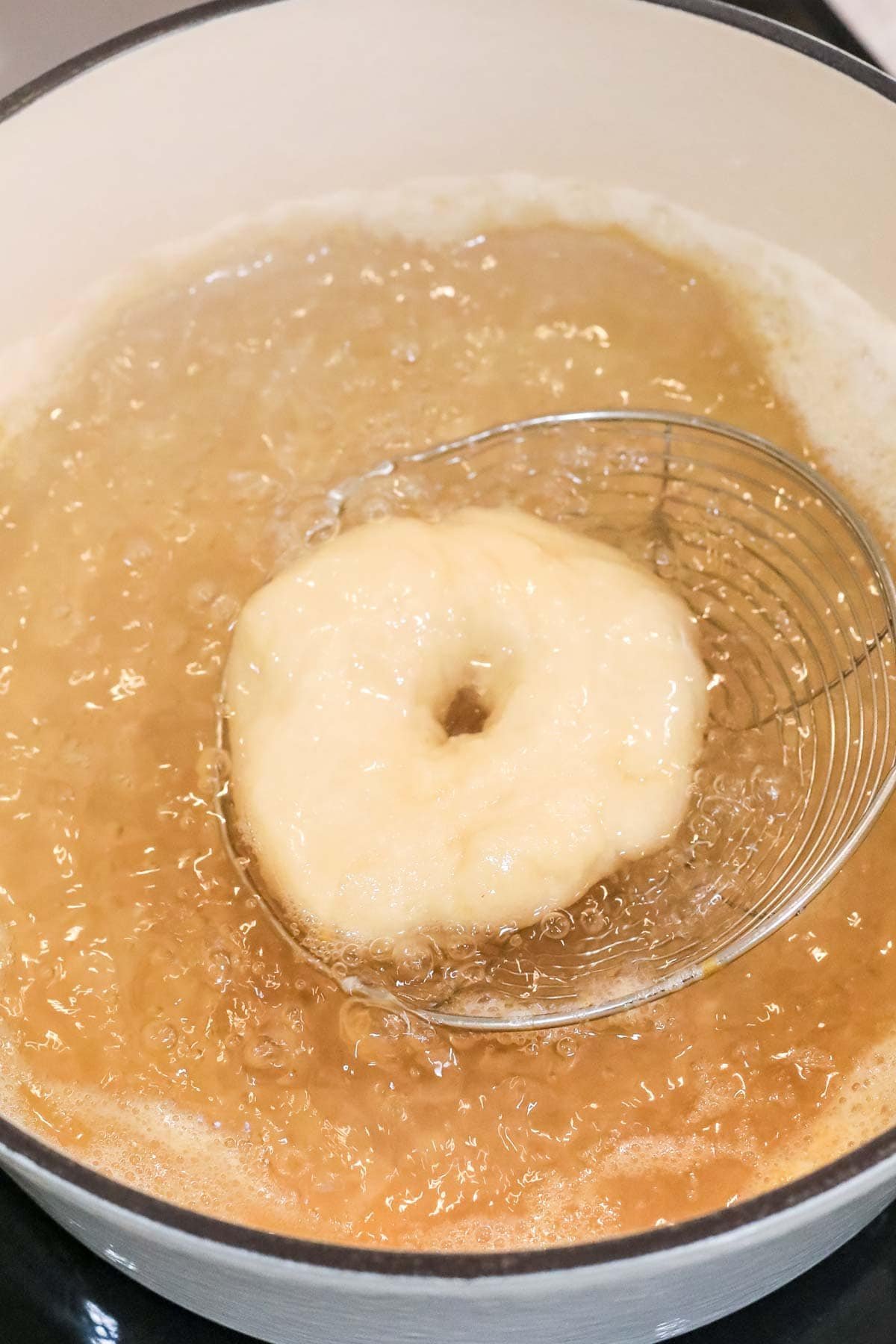
- Step 4: Boil. Boil each bagel in the water and honey mixture, about 1 minute per side. Drain, then return the bagels to the baking sheet and brush liberally with egg wash. Add any toppings now, if you plan to use them.
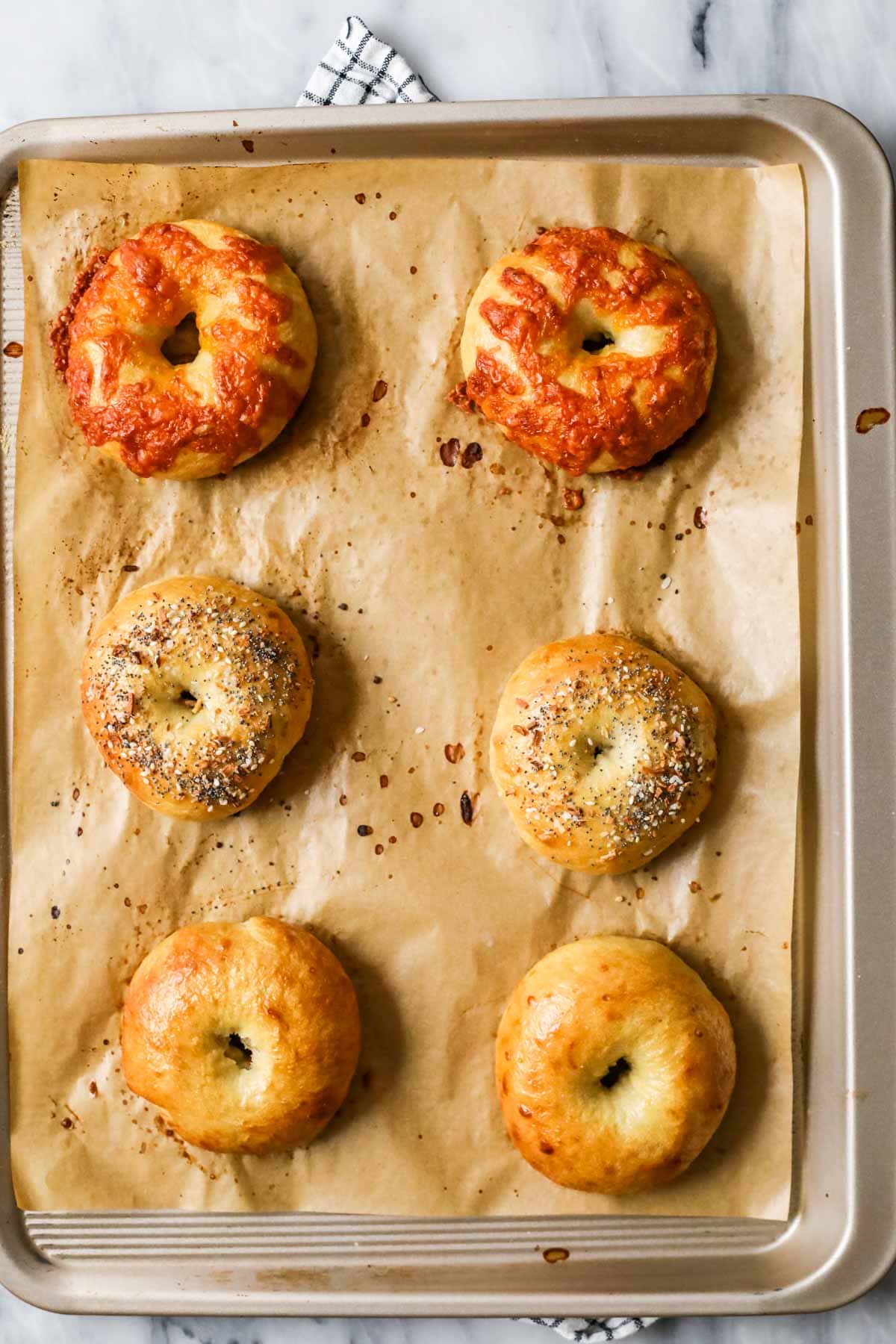
- Step 5: Bake. Bake one tray at a time until golden brown. I like to check my bagels with a digital thermometer; the centers should reach 205F when they are done.
SAM’S TIP: I don’t recommend baking more than one tray of bagels at a time unless you really, really know your oven well. It’s totally fine to let one tray of bagels sit on the counter while the other one bakes (just like when making sourdough pretzels).
Frequently Asked Questions
Traditional bagels (like my homemade bagels) use commercial yeast for their rise, while sourdough bagel recipes rely on the wild yeast from an active, bubly sourdough starter.
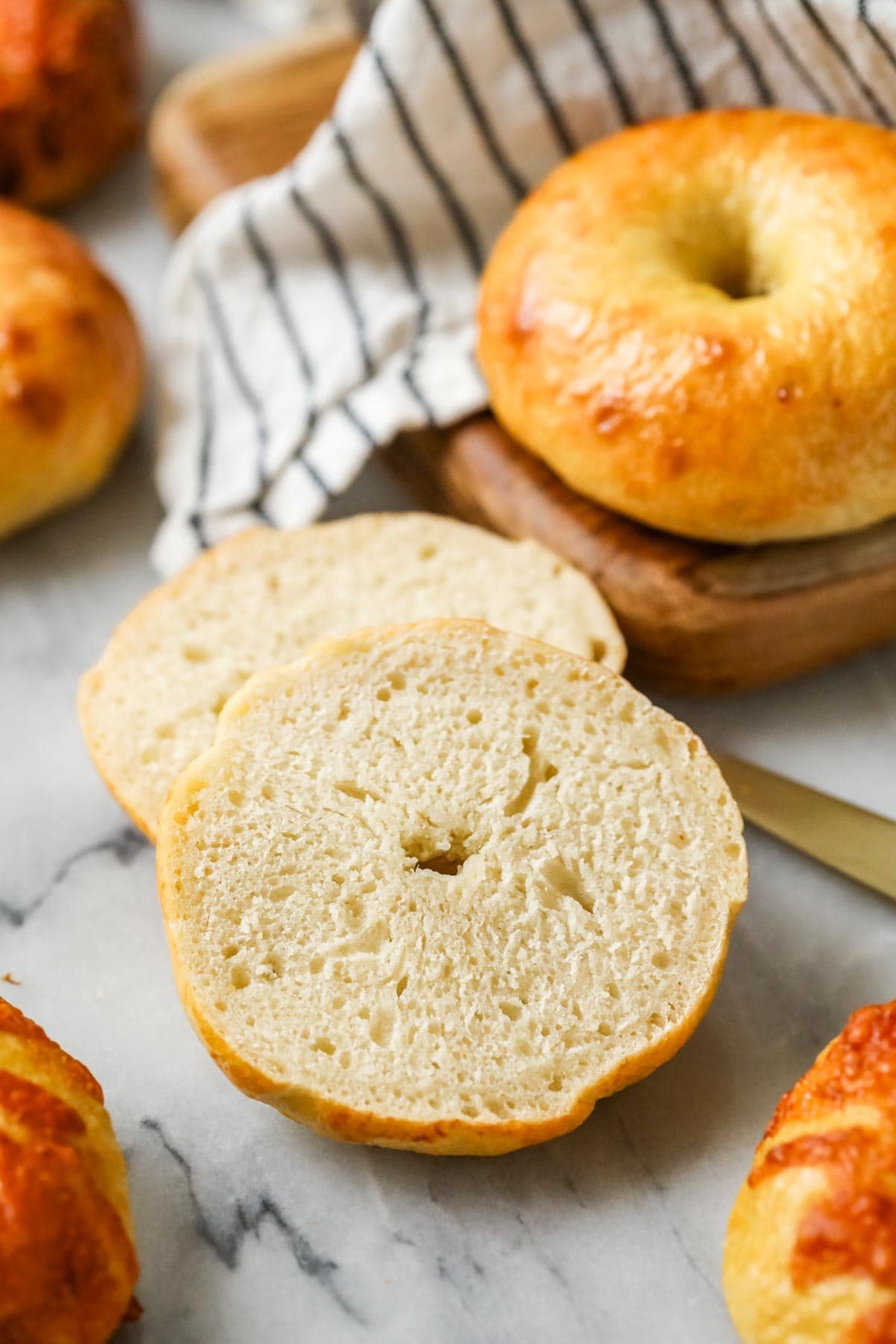
As a result, sourdough bagels take much longer to make (the long fermentation is critical), and they have a slightly tangy flavor similar to a sourdough bread. They still have that perfectly chewy, classic bagel texture though!
Much like my sourdough bread recipe, sourdough bagels have a lower glycemic index, are easier to digest, and have less ingredients (and no preservatives!) compared to standard store-bought bagels.
You can always add dried fruit like blueberries or raisins, minced onion or garlic, asiago cheese, cinnamon, chocolate chips, sprinkles, etc.
Or, skip any mix-ins and just add a topping like sesame seeds, a sprinkle of cinnamon sugar, poppy seeds, coarse salt, or everything bagel seasoning. There are lots of options here!
Bread flour really is best for making these bagels as it has a higher protein content and results in chewier bagels (which is what we’re aiming for). If you use all-purpose flour, the recipe will still “work”, the bagels will just ve less chewy. If all I had on hand was all purpose flour, I wouldn’t let it stop me from making this sourdough bagel recipe, I would just make a mental note to make sure I tried them with bread flour next time, because they’re even better that way!
More Ways to Use Your Sourdough Starter:
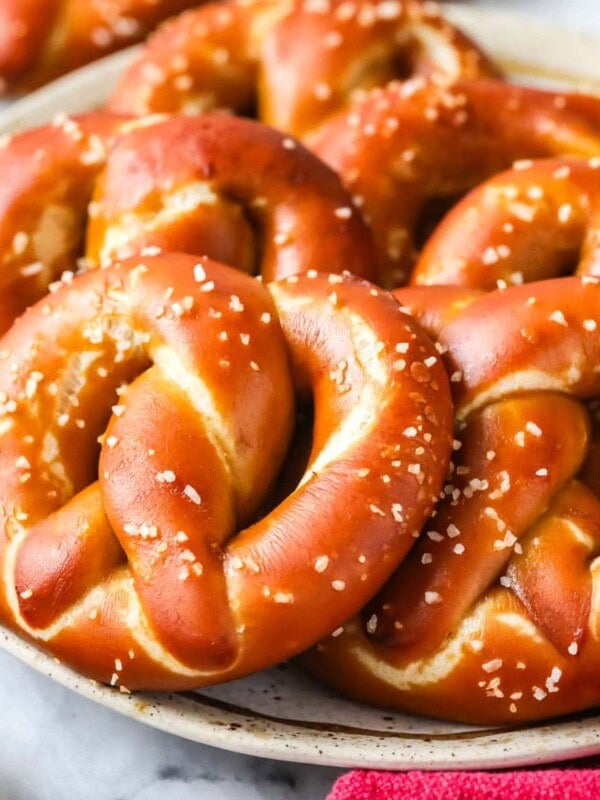

I can’t wait to hear what flavors you try! Let me know in the comments ⬇️
Enjoy!
Let’s bake together! Subscribe to my newsletter to be notified of all the newest recipes, and find my free recipe tutorials on YouTube 💜
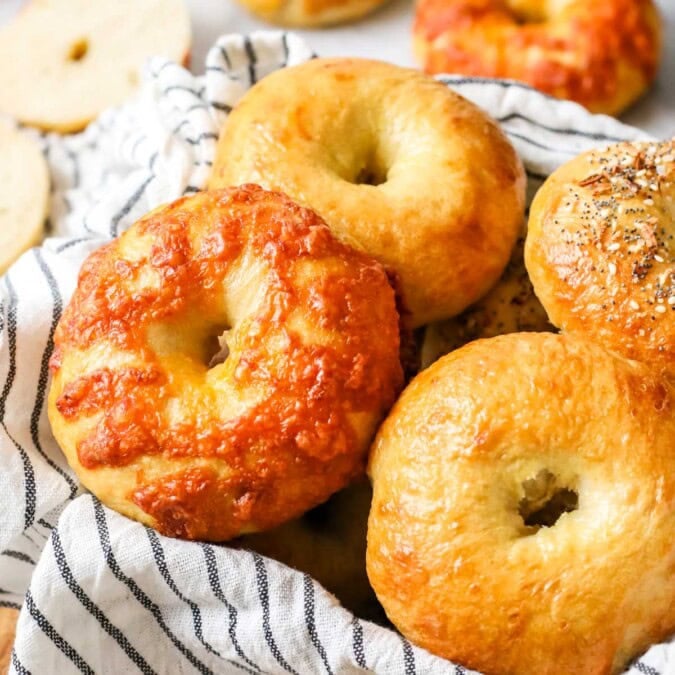
Sourdough Bagels
Equipment
- Large pot for boiling
Ingredients
- 1 ⅔ cups (395 ml) warm water
- ⅔ cup (150 g) active sourdough starter
- 2 Tablespoons avocado oil, (may substitute vegetable oil or canola oil)
- 3 Tablespoons honey
- 5 ½ cups (690 g) bread flour + additional as needed
- 1 Tablespoon table salt
For boiling/cooking
- 1 Tablespoon cornmeal, (optional)
- 8 cups (2 L) water
- ¼ cup (60 ml) honey, (Or you may substitute 2 Tablespoons barley malt syrup)
- Any desired bagel toppings, (cheese, everything bagel seasoning, etc.)
Egg wash
- 1 egg
- 1 teaspoon water
Instructions
Before you begin, note this dough is a two-day process. The dough will be made in one day and will need to rest for 5-7 hours at room temperature before fermenting overnight (at least 12 hours) in the refrigerator.
- Make the dough: Heat water to 105F (41C) and add to a large mixing bowl (see note if you would like to use a stand mixer) along with sourdough starter, oil, and honey, and stir to combine. Add 3 cups (375g) of your flour, sprinkle salt overtop, and stir well.1 ⅔ cups (395 ml) warm water, ⅔ cup (150 g) active sourdough starter, 2 Tablespoons avocado oil, 3 Tablespoons honey, 1 Tablespoon table salt
- Add additional flour: Gradually, while stirring, add remaining 2 ½ cups (315g) flour as needed until the dough begins to cling to itself (note you may not need all of the flour listed or you may need a bit more, this depends on humidity and your starter).
- Knead: Transfer dough to a clean, lightly floured surface and knead by hand until the dough is smooth and elastic (about 10 minutes).
- Proof: Transfer dough to a large, lightly oiled bowl, cover tightly (with a lid or plastic wrap), and allow rise in a warm, draft free place until nearly doubled in size, about 5-7 hours. Then, transfer to the refrigerator to ferment overnight (12-36 hours).
The next day:
- The next day, line two baking sheets with parchment paper and dust lightly with cornmeal (if using). Set aside.1 Tablespoon cornmeal
- Shape: Remove dough from the refrigerator and gently deflate by pressing down with your hands. Turn out onto a clean surface and divide into 12 even pieces. Form each piece into a tight ball and use your thumb to gently form a hole into the center that’s about 2” (5cm) wide (the holes will shrink after shaping, this is fine and why we start larger than we actually want).
- Proof: Place bagels on prepared baking sheets, spacing at least 2” (5cm) apart, and cover with a clean towel or plastic wrap. Set aside to rise until puffed, about 30-60 minutes.
- Preheat and boil: Once bagels are nearly finished rising, preheat your oven to 425F (220C). Pour water and honey into a Dutch oven or a large pot, stir, and turn stovetop to medium-high heat and bring to a rolling boil.8 cups (2 L) water, ¼ cup (60 ml) honey
- Boil: Working in batches, boil bagels for 45-60 seconds per side then gently drain and return to prepared sheet.
- Brush with egg wash: Once all bagels have been boiled, whisk together egg and a teaspoon of water. Brush egg wash liberally over bagels and sprinkle with any toppings, if using.1 egg, 1 teaspoon water, Any desired bagel toppings
- Bake: Transfer bagels to preheated 425F (220C) oven for 17-20 minutes (I bake one tray at a time, the second tray is fine sitting on the counter while the first bakes) until bagels begin to turn golden brown or the internal temperature of the bagel reaches 205-210F (97-99C) if tested with an internal read thermometer.
- Allow bagels to cool then slice and enjoy!
Notes
Stand mixer
While this dough can be mixed and kneaded in a stand mixer with the dough hook attachment, it is a very stiff dough and can be a lot for a mixer, especially the kneading stage.Storing
After baking, allow to cool and store in an airtight container at room temperature for up to 3 days. Bagels may also be frozen. Individually wrap in plastic wrap then store in an airtight container or Ziploc bag for up to 2 months. Thaw on the counter at room temperature or reheat from frozen.Nutrition
Nutrition information is automatically calculated, so should only be used as an approximation.
Like this? Leave a comment below!











Quick question – what do you consider an active sourdough starter for this recipe? I store mine in the fridge and it usually takes 3-6 hours to start getting bubbly after a feeding, and much longer than that to double in size. I’m fairly new to using sourdough starter so I appreciate your guidance!
Hi Anna! You will want to use it when it reaches that peak doubled in size point. 🙂
Qual seria a substituição do souerdough por fermento biológico?? É possível trocar? Qual quantidade?
Hi Silvana! I do have a bagel recipe that uses yeast that you could try. )
good morning Sam,
can you use your discard for the bagels
Hi Jan! You need that yeast so you want it to be active and bubbly. I wouldn’t recommend using discard.