
Easy Homemade Biscuits

This post may contain affiliate links. As an Amazon Associate I earn from qualifying purchases. Please read my disclosure policy.
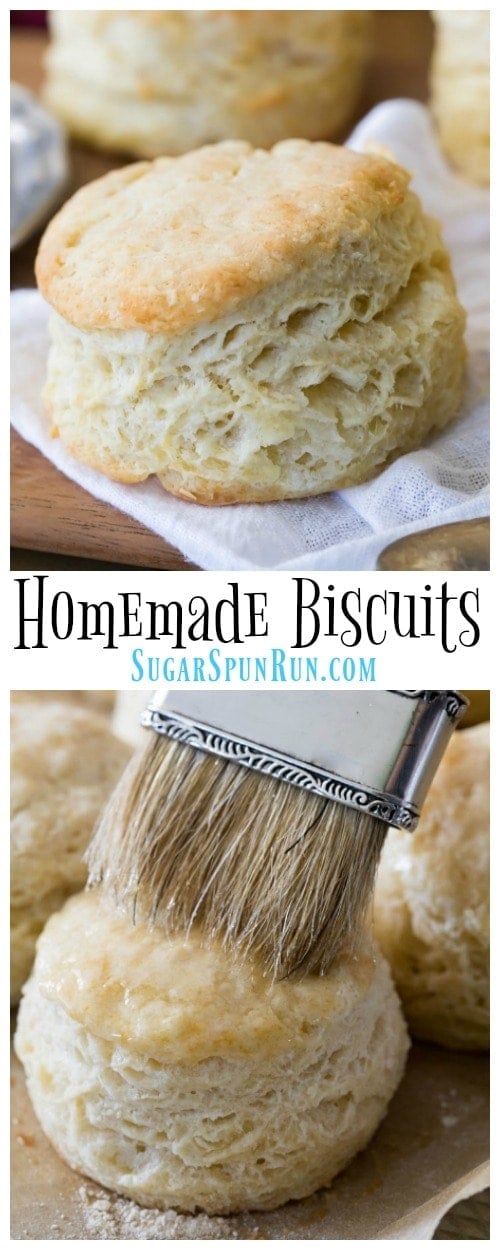
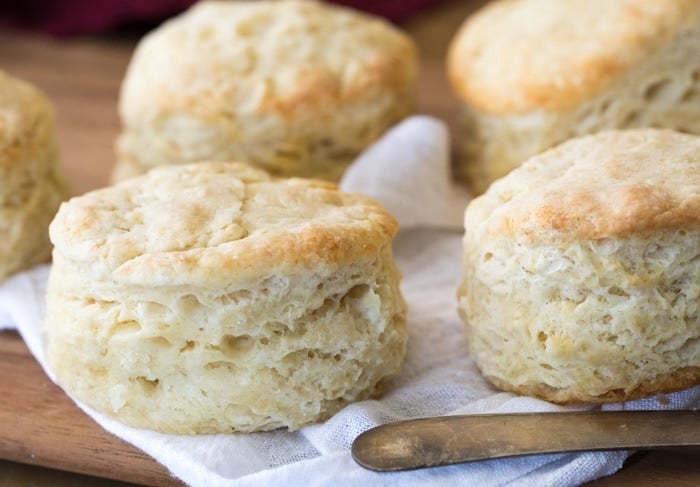
Buttery, soft, and made completely from scratch, this easy homemade biscuit recipe deserves a permanent place in your recipe repertoire. This recipe is made with all butter, no shortening!
With just 6 ingredients that I bet you already have on hand, these homemade biscuits are so simple to make and I’ve included plenty of tips (and a video!) to make sure you end up with perfect biscuits every single time.
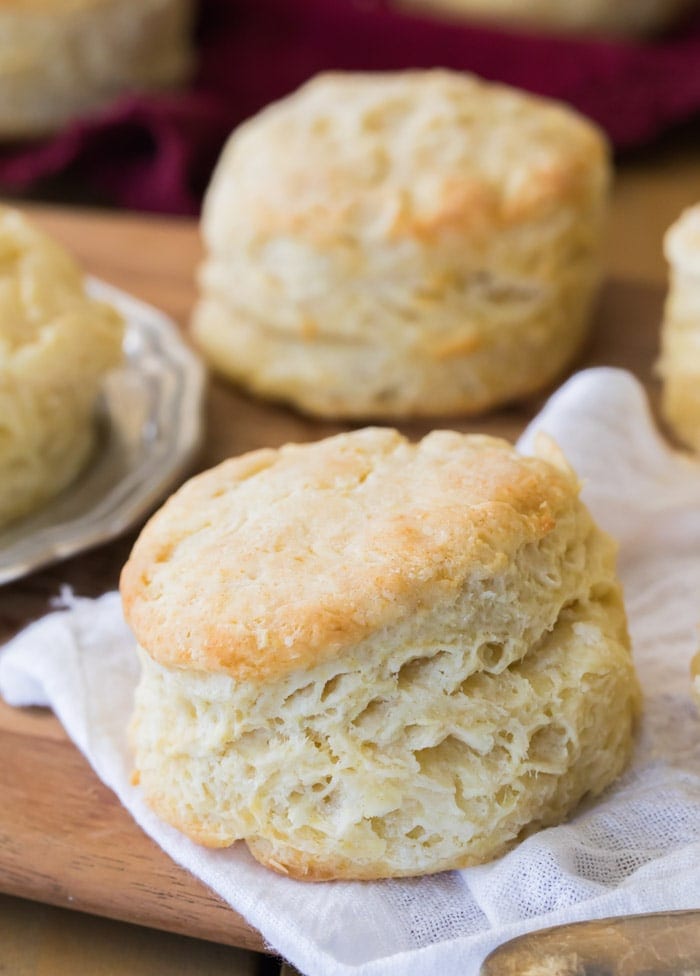
Two reasons I’m super excited to share this homemade biscuit recipe with you today:
One: because homemade biscuits are delicious (obviously) and they’re so easy to make. So many people buy the canned version without realizing that they already have all of the ingredients to make them from scratch in their pantry.
The taste of a pre-made biscuit doesn’t hold a candle to a homemade biscuit. Not. even. close. Preservatives and artificial flavors, you aren’t welcome here.
Two: because ever since I started working on this biscuit recipe a few weeks ago, “Mind Your Own Biscuits” by Kacey Musgraves has been stuck in my head and I’ve been singing it off-key relentlessly.
Don’t get me wrong, I love Kacey Musgraves and her music, but every time I start singing my dog starts actually crying. It’s sad and hilarious, and if I wasn’t so embarrassed by my terrible singing voice I would have shared a video of it by now. Hopefully, by publishing this recipe I’ll release myself from the endless refrain and the animal abuse will finally stop.
But let’s talk more about the first reason.
Homemade biscuits call for just six ingredients: all-purpose flour, baking powder, sugar, salt, butter, and milk. And then more butter once they’re finished baking because of course we need more butter.
I mentioned that these biscuits are easy so do not be alarmed by all the tips that I have for you below. These biscuits are easy, but technique matters and I want to arm you with all the information that you need so that you can make these easily and have them come out perfectly the very first time.
The tips are simple but important, and while some more seasoned bakers already know them, I want to give everyone an even playing field.
Tips for Making Homemade Biscuits
- The butter and milk for this recipe need to be as cold as possible for fluffy and soft biscuits. I freeze my butter before using it and recommend keeping the milk in the refrigerator right up until it’s time to add it to the dry ingredients.
- Don’t overwork the dough! Keep in mind that you want your butter to stay as cold as possible when making these biscuits, and the more you have your hands on the dough the softer the butter will become. Definitely don’t use an electric mixer for this recipe.
- We’re going to do a little bit of laminating. This means folding the dough over itself multiple times (5-6 times here) to encourage flaky layers in our biscuits. You can watch the video below to see exactly how this is done.
- Don’t use a rolling pin, use your hands to gently work the dough into a flat rectangle before cutting out your biscuits.
- Don’t be afraid to add flour to the dough if it’s too sticky while you are handling it (and make sure to work on a lightly floured surface).
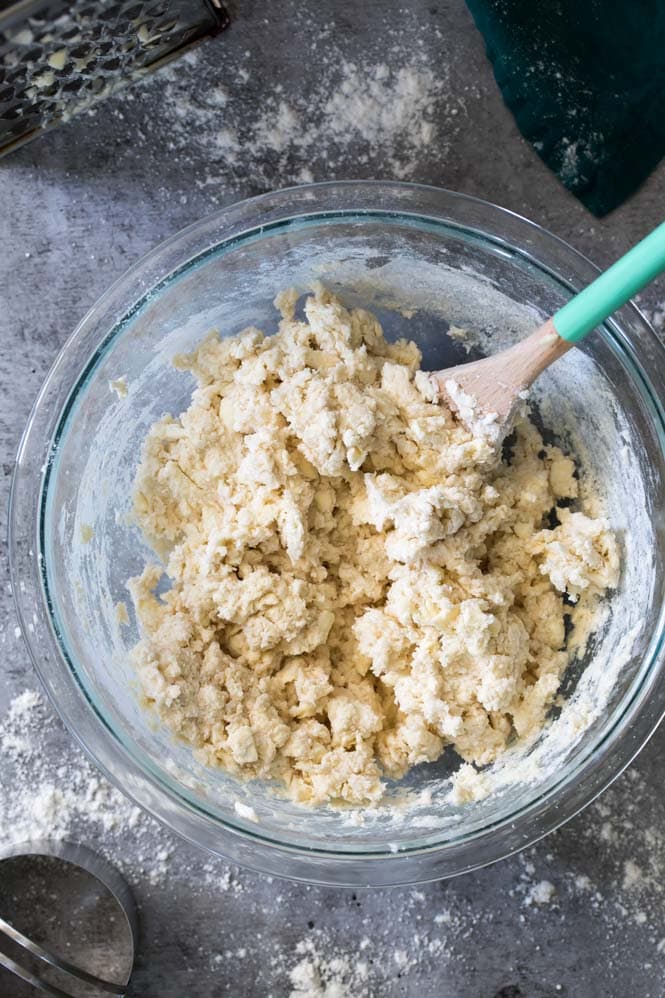
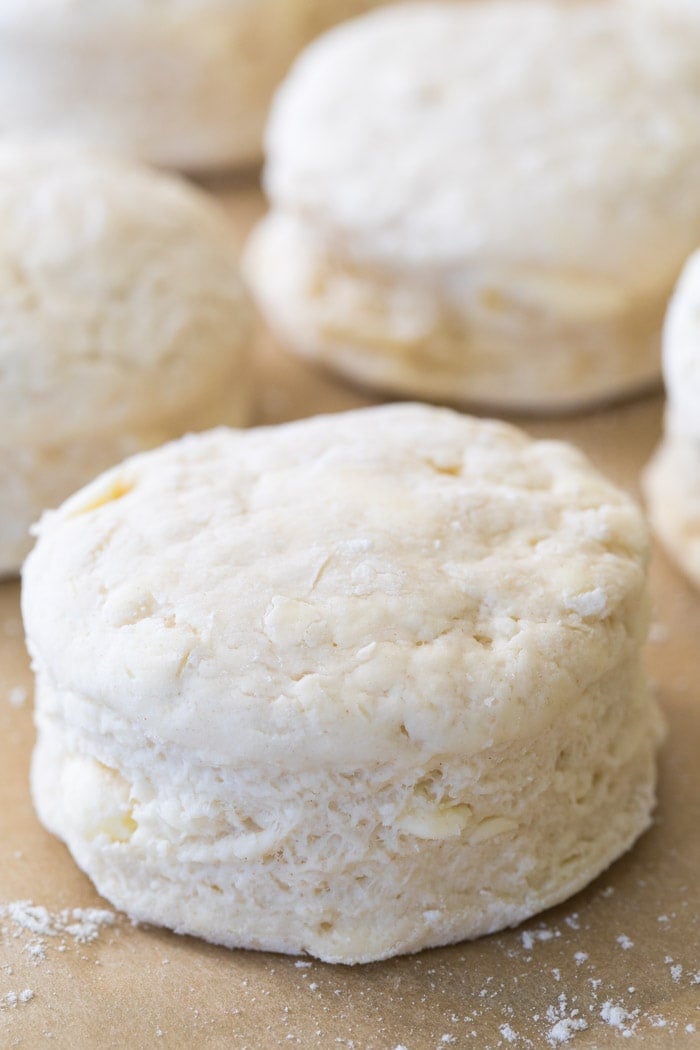
Visual clue: If you look at the pre-baked biscuit below, you’ll see that you can actually see the butter pieces in the dough. This is what you want, the ingredients won’t be well-combined like with a cookie dough and seeing bits of butter means you’ve actually done everything right here. Hooray!
A Few Notes on Butter in Homemade Biscuits
The butter is possibly the most important part of this recipe, and the way you handle it can make or break your homemade biscuits.
While you can certainly use a pastry cutter to cut your butter into the dry ingredients, I recommend freezing your butter for about 30 minutes before beginning. Then, use a box grater to grate the butter before combining this in with your dry ingredients.
I use this technique in my scone recipes and highly recommend it with these biscuits, too. Not only is it much easier than using a pastry cutter, but it does a great job of finely shredding and distributing the butter throughout the mixture without overworking the butter (remember, you want to manage the butter as little as possible so that it’s as cold as possible when going into the oven).
Alternatively you could also use a food processor (like I do with my pie crust recipe), but it’s just so easy to grate in the butter that I always use this method instead.
And yes, I do recommend using unsalted butter in this recipe and then adding salt. If you want to know more about why I write my recipes this way, you can read all about it (and an easy substitution if you only have salted butter on hand) in this post that I wrote about salted vs unsalted butter.
I know I’ve mentioned to you guys a few times that I’ve been working on a baking contest/challenge/I’m really not sure what to call it, but I’m planning a post where I encourage all of you to bake along with me. The goal is to get people baking recipes they may have not tried before, and I’m encouraging everyone to share their results for a chance to win a small prize.
Well, today’s homemade biscuit recipe is essentially the base for the baking challenge that I’ll be sharing in exactly one week, so take this as a hint that making today’s recipe is a great way to get a jump start for the challenge!
To make sure you’re among the first to be notified of all new recipes and baking challenges, make sure you’re subscribed to my e-mail list. It’s free, and you get a free e-book of 8 of my favorite cookie recipes.
Enjoy!
How to Make Homemade Biscuits
I know I talked a lot in this video, but I really feel that the tips are so important, and will help ensure your biscuits come out perfectly!
Homemade Biscuits
Ingredients
- 2 cups all-purpose flour, (250g)
- 1 Tablespoon baking powder
- 1 Tablespoon granulated sugar
- 1 teaspoon salt
- 6 Tablespoons unsalted butter, very cold (85g), unsalted European butter is ideal, but not required
- ¾ cup whole milk¹, (177ml) buttermilk or 2% milk will also work
Instructions
- For best results, chill your butter in the freezer for 10-20 minutes before beginning this recipe. It's ideal that the butter is very cold for light, flaky, buttery biscuits.
- Preheat oven to 425F and line a cookie sheet with nonstick parchment paper. Set aside.
- Combine flour, baking powder, sugar, and salt in a large bowl and mix well. Set aside.2 cups all-purpose flour, 1 Tablespoon baking powder, 1 Tablespoon granulated sugar, 1 teaspoon salt
- Remove your butter from the refrigerator and either cut it into your flour mixture using a pastry cutter or (preferred) use a box grater to shred the butter into small pieces and then add to the flour mixture and stir.6 Tablespoons unsalted butter
- Cut the butter or combine the grated butter until the mixture resembles coarse crumbs.
- Add milk, use a wooden spoon or spatula to stir until combined (don't over-work the dough).¾ cup whole milk¹
- Transfer your biscuit dough to a well-floured surface and use your hands to gently work the dough together. If the dough is too sticky, add flour until it is manageable.
- Once the dough is cohesive, fold in half over itself and use your hands to gently flatten layers together. Rotate the dough 90 degrees and fold in half again, repeating this step 5-6 times but taking care to not overwork the dough.
- Use your hands (do not use a rolling pin) to flatten the dough to 1" thick and lightly dust a 2 ¾" round biscuit cutter with flour.
- Making close cuts, press the biscuit cutter straight down into the dough and drop the biscuit onto your prepared baking sheet.
- Repeat until you have gotten as many biscuits as possible and place less than ½" apart on baking sheet.
- Once you have gotten as many biscuits as possible out of the dough, gently re-work the dough to get out another biscuit or two until you have at least 6 biscuits.
- Bake on 425F for 12 minutes or until tops are beginning to just turn lightly golden brown.
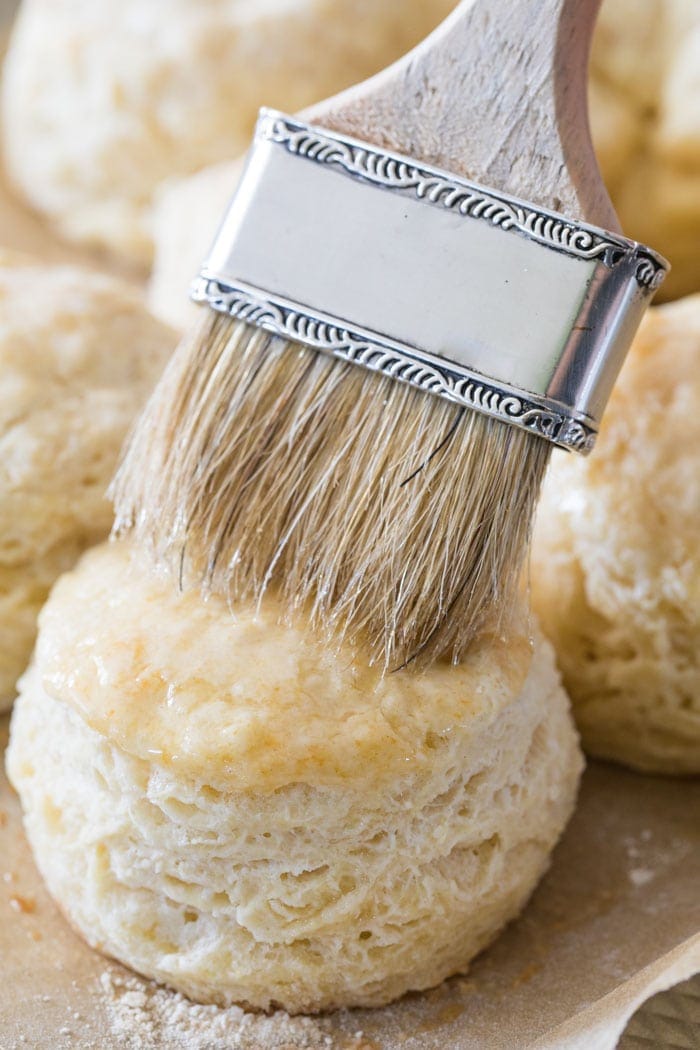
- If desired, brush with melted salted butter immediately after removing from oven. Serve warm and enjoy.
Notes
Nutrition
Nutrition information is automatically calculated, so should only be used as an approximation.
Like this? Leave a comment below!
Penny likes to supervise the photography process. Fortunately, this setup got her vote of approval.










can you substitute oil for butter?
Hi Sue! I would not recommend it here. The really cold butter helps make soft fluffy biscuits and oil wouldn’t work quite the same. 🙁
This is not a good recipe. I could cry..
Hi Norma! What happened to your biscuits. I can help you troubleshoot and be on your way to fantastic biscuits! 🙂
My grandma used to make tea biscuits for our family, but as she’s getting older she hasn’t made them in quite awhile. I made your recipe that was easy to follow and they turned out like how my grandmas were. I also gave her some of course and she was very happy especially because its something her mother used to make for her.
These really were one of the most easiest biscuits to make. I loved the additional butter on top. The flavor of it all was so delicious! I will be making these again in my future several more times for sure!
Great recipe. Comes together quick! I use it all the time. Even gave it a savory spin last night as the topper for a chicken pot pie. Thanks!
The top didn’t turn lightly golden brown even though the bottoms were getting a bit burnt. Also the biscuits turned into a blob and tasted salty instead of buttery
I’m sorry to hear this happened! Was your oven fully pre-heated and at the correct temperature? Was your butter really cold? Did you have enough flour in the biscuits?
I love this recipe! Can tge biscuits be frozen prior to baking?
Hi Linda! You can certainly freeze the biscuit dough. I would wrap the biscuits individually and then store in a freezer bag. 🙂
Great recipe! Thank you much for sharing!
Want to try this recipe and live in Denver. Baking at altitude is tricky. Any tips for me so my biscuits turn out?
Thanks
Hi Vicki! Unfortunately I do not have any experience with high altitude baking so I can’t say for sure if there would be any adjustments needed. If you do try it I would love to know how they turn out. 🙂
Can I use self rising flour and what would the measurements be if I did use self rising flour
Hi Bobbie! I wouldn’t recommend self rising flour here. 🙁
We really love this recipe. Is there a way to make this with Wheat flour?
Hi Richard! Wheat flour is a bit “thirstier” I think you could probably swap out some wheat flour, but you may also need more liquid here. I haven’t personally experimented to recommend the best ratios though. 🙁
Have you ever made and cut out the biscuit dough the night before, and then baked these the next morning? I would just freeze them and bake from frozen, but I’m without a freezer right now.
Hi Emma! You shouldn’t have any issues making the dough the night before. Just keep the biscuits in a sealed container overnight in the refrigerator. 🙂
I’m recently widowed and am cooking for one.can the biscuit recipe be halved andor frozen ?
I’m so sorry to hear that, Norman! You can certainly cut the recipe in half, or freeze half of them. I would probably opt for freezing. Make the dough, cut out the biscuits and wrap tightly to store in the freezer. When you want a fresh biscuit you can bake the dough from frozen. They will just take a few minutes longer in the oven. 🙂
I tried this recipe but didn’t have unsalted butter so used salted. Left out the salt because of this. I also used Fairlife 2% milk which tastes like whole milk. The biscuits were pretty bland. And even considering the lack of salt I think the taste would still be bland. I’ll try it one more time using unsalted butter, adding salt per the directions and using buttermilk vs regular milk. The biscuits did have a nice texture.
I’m so sorry to hear this happened, Cindi! The likely cause of this is the milk substitution. The fat really adds to the flavor.
I just tried this biscuit recipe because it was simple, I followed all the instructions to a tee and watched the video. They were still delicious but mine puffed up way too much, the bottoms got kinda burnt and they were still just a tad doughy in the middle. You don’t mention anywhere in the recipe if the temps and cooking time were okay for a convection oven or a conventional oven, and I feel like these temps are just too high for a convection oven and my biscuits started burning before they were fully cooked through, next time I would lower the temp and cook them for slightly longer, and maybe make them a little thinner since they puffed up so much.
I’m so sorry to hear this happened, Maddie! I just want to double check that you used baking powder and only baking powder here? You didn’t add any baking soda? Recipes are typically written to a conventional oven so convection will need an adjustment. It’s typically 25 degrees F less and you should reduce the time as well. I hope they turn out better next time. 🙂