
Chiffon Cake
This post may contain affiliate links. As an Amazon Associate I earn from qualifying purchases. Please read my disclosure policy.

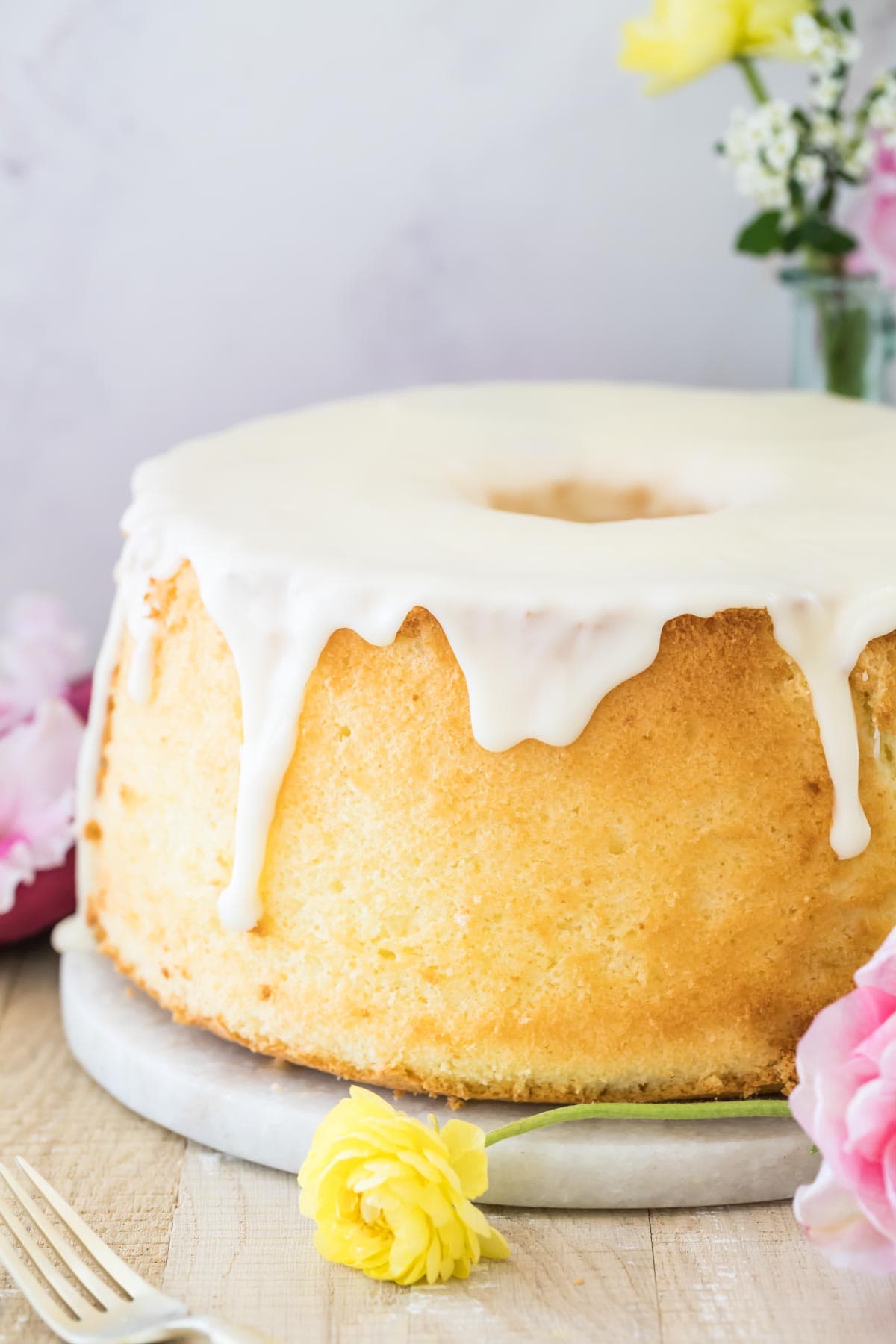
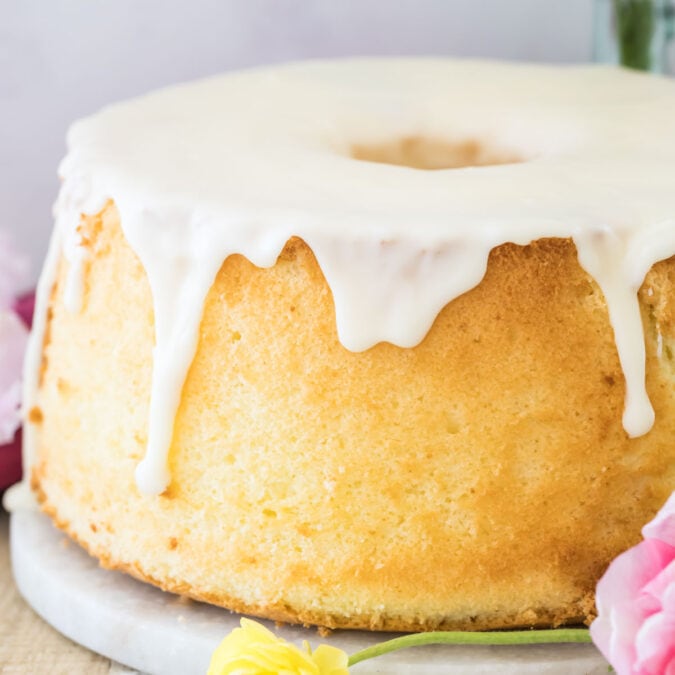
My soft and springy chiffon cake recipe has a light, melt-in-your mouth crumb that’s delicate, but not so delicate that it falls apart. It requires a bit of technique, but nothing that you can’t handle if you read through the steps carefully (and check out my how-to video if you’re a visual learner!).
Have you ever tried a chiffon cake before?
This light and airy cake is slightly heavier than its sister, the angel food cake, thanks to the fact that it incorporates plenty of fat by way of oil and egg yolks (unheard of to the pristine, fat-free angel food cake). Its sponge is slightly heavier and more tender and richer, (it leans towards pound cake in the richness department), but still deliriously soft, springy, and melt-in your mouth.
You’ll dirty a few dishes on your way to this cake, but I guarantee that it’s 100% worth it. All good things come with a cost and a few extra bowls to wash is a small price to pay for chiffon cake. With its light texture and subtle sweetness, it’s the perfect freshly flavored cake for summer.
I put a citrus spin on my chiffon cake because I felt the bright flavor was the perfect summer-y compliment to such a fresh and light cake, but I’ve included alternatives if you’re not a fan of orange flavor (you should really give it a try, though!).
What You Need to Make Chiffon Cake
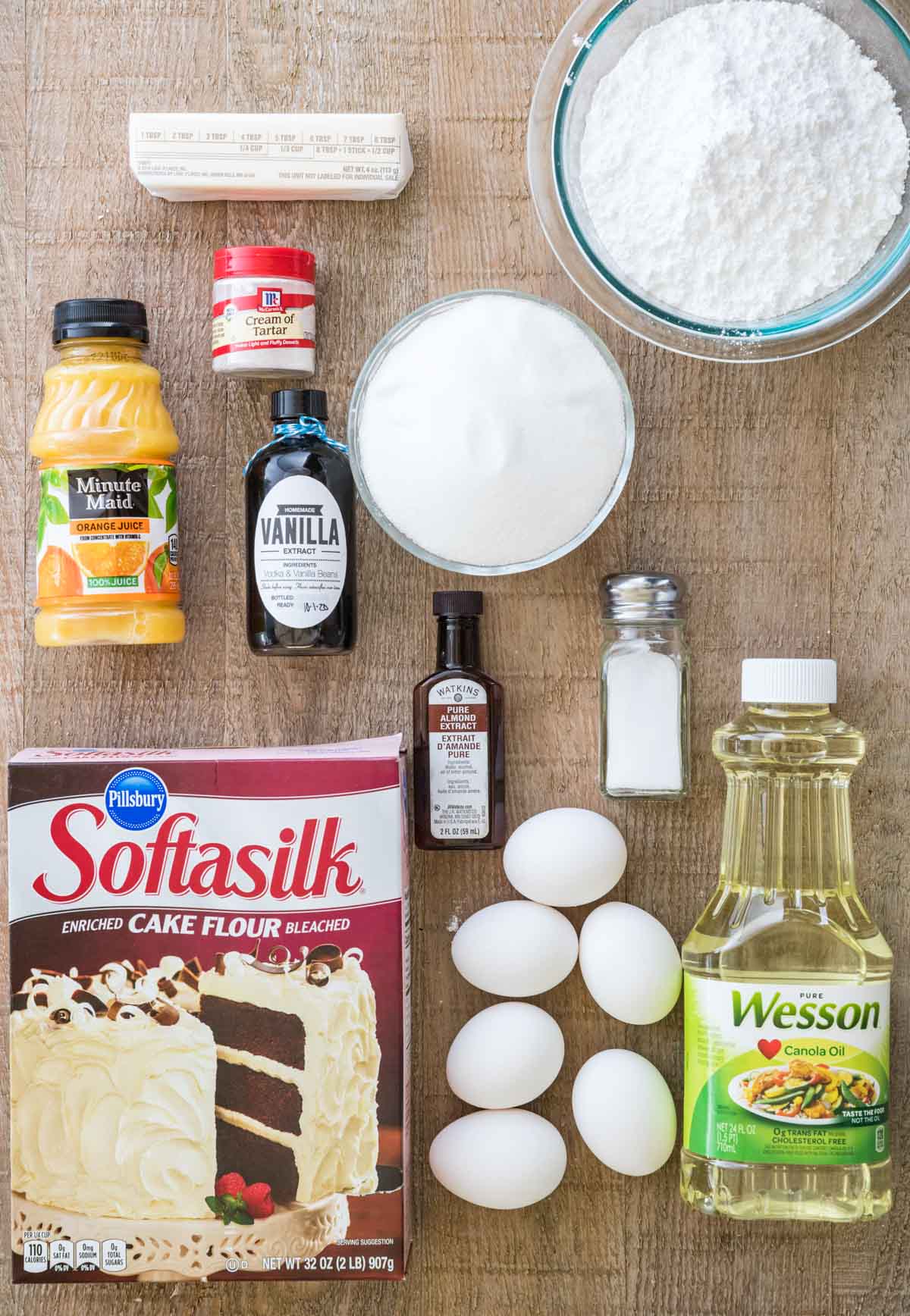
- Cake flour. Cake flour is lighter and finer than all-purpose flour, which typically lends itself to a light crumb. Here is no exception, and since this recipe is otherwise weighed down by the fats included in our ingredient list, I wanted to give the crumb the best chance of rising tall and staying delicate and light. Because of this, I prefer and recommend cake flour only for the best-textured cake.
- Sugar. Using granulated sugar only helps to keeps the cake light (the molasses in brown sugar would weigh it down, plus the flavors would clash with the citrus). The sugar is divided, and some will be reserved to be beaten into the egg whites to help give them stability and structure (which in turn will give the finished cake a tall, light structure).
- Baking powder. This leavener is important in combatting the heavier ingredients (like the oil) and giving us a light texture.
- Eggs. You must divide the egg yolks and egg whites, but we’ll be using both of them. The egg yolks are beaten into the batter, but the egg whites are beaten separately to stiff peaks and then gently folded into the cake batter to help make it light and delicate. If you’ve made my tres leches cake before, you’ll probably recognize this technique and will appreciate the stunning results it yields!
- Oil. If we spend so much time combatting the fat-containing ingredients in this recipe, maybe you’re wondering why we even include them in the first place. The answer is flavor and texture! The oil helps to coat every molecule of the cake, making it tender and melt-in-your-mouth. Any neutral oil (canola oil or vegetable oil) will work. I don’t recommend olive oil which has its own stronger, distinct flavor, and I also don’t recommend using butter, which contains water and will actually make your cake less moist.
- Orange juice (or other liquid!). I love using orange juice because it imparts a light, citrus flavor into the cake (nothing overwhelming, its very subtle but still present). If you’d rather not have the citrus infusion, water will work instead.
- Flavoring. Vanilla extract is a must. For a bright additional flavor, add a drop of almond extract as well!
- Cream of tartar. The role of cream of tartar is to help stabilize the egg whites, ensuring they reach stable stiff peaks and that the cake doesn’t collapse on itself. Cream of tartar is a white powder that can usually be found in the spice section of your grocery store.
If you’d like the same glaze that I used in the photos, you’ll also need butter, powdered sugar, and more orange juice (or milk). It’s based off my donut glaze and is rich and buttery, which I think is a nice contrast to the airy cake.
Remember, this is just an overview of the ingredients I used and why. For the full recipe please scroll down to the bottom of the post!
How To Make Chiffon Cake
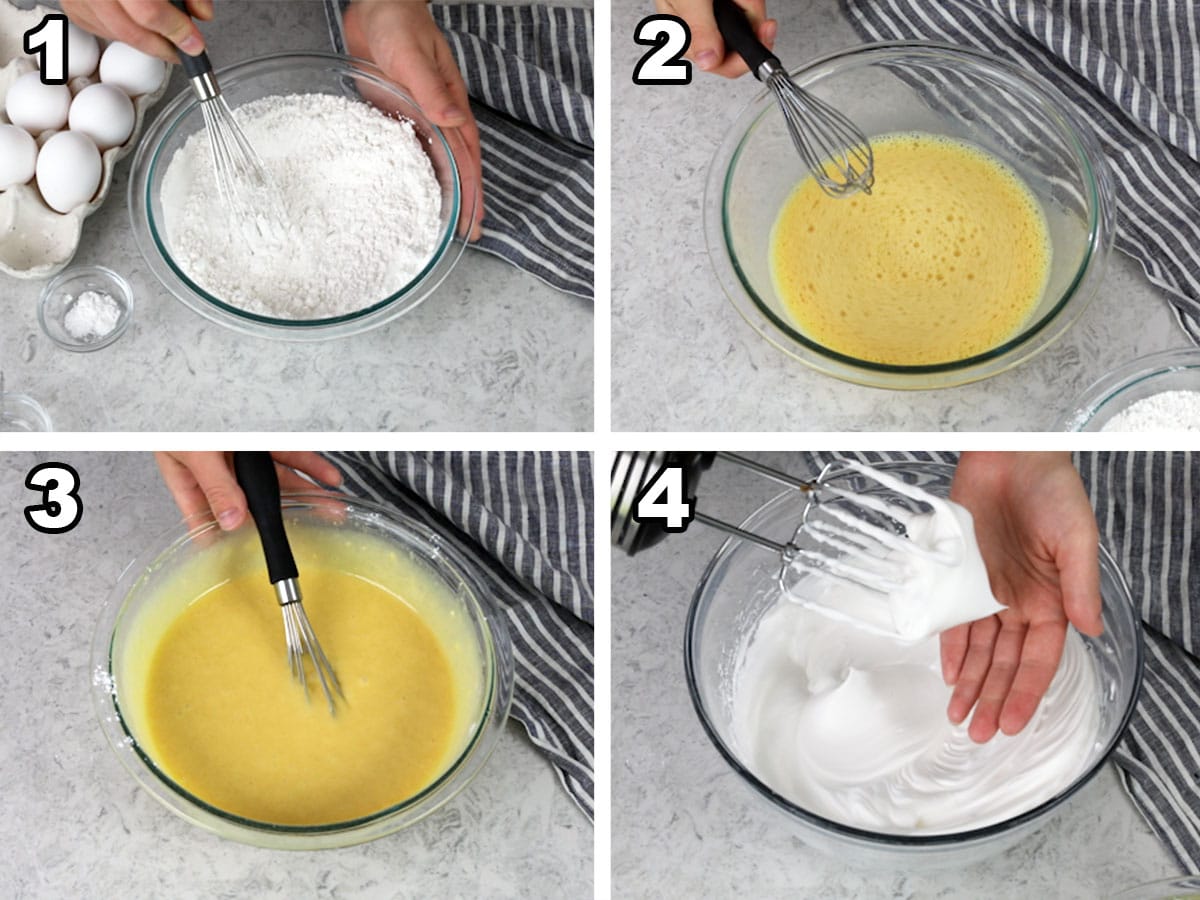
- Begin by whisking together cake flour, baking powder, salt, and some of the sugar (you’ll need to reserve 1/2 cup for stabilizing the egg whites).
- Separately, whisk together the egg yolks (yolks only! Save the whites in a separate large clean bowl), oil, extracts, and orange juice until the egg yolks are broken up and the mixture is smooth and well-combined.
- Combine the flour mixture and the egg yolk mixture and whisk until the two are well-combined.
- In the bowl with your egg whites(yes, you have to dirty several bowls for this recipe, but it’s worth it!) add a pinch of cream of tartar and begin to beat the mixture. Slowly add the sugar until you have thick, stiff peaks that hold their shape and don’t fold over or fold back in on themselves.
SAM’S TIP: Make sure that when you divide your egg whites and yolks, the whites are placed in a completely clean, dry, and grease-free bowl. For best results use a glass or metal bowl, a plastic/rubber one is not recommended. Also make sure that not even a tiny bit of yolk is mixed in with the egg whites. If these steps aren’t followed properly, the egg whites may never reach stiff peaks, no matter how much you whip them.
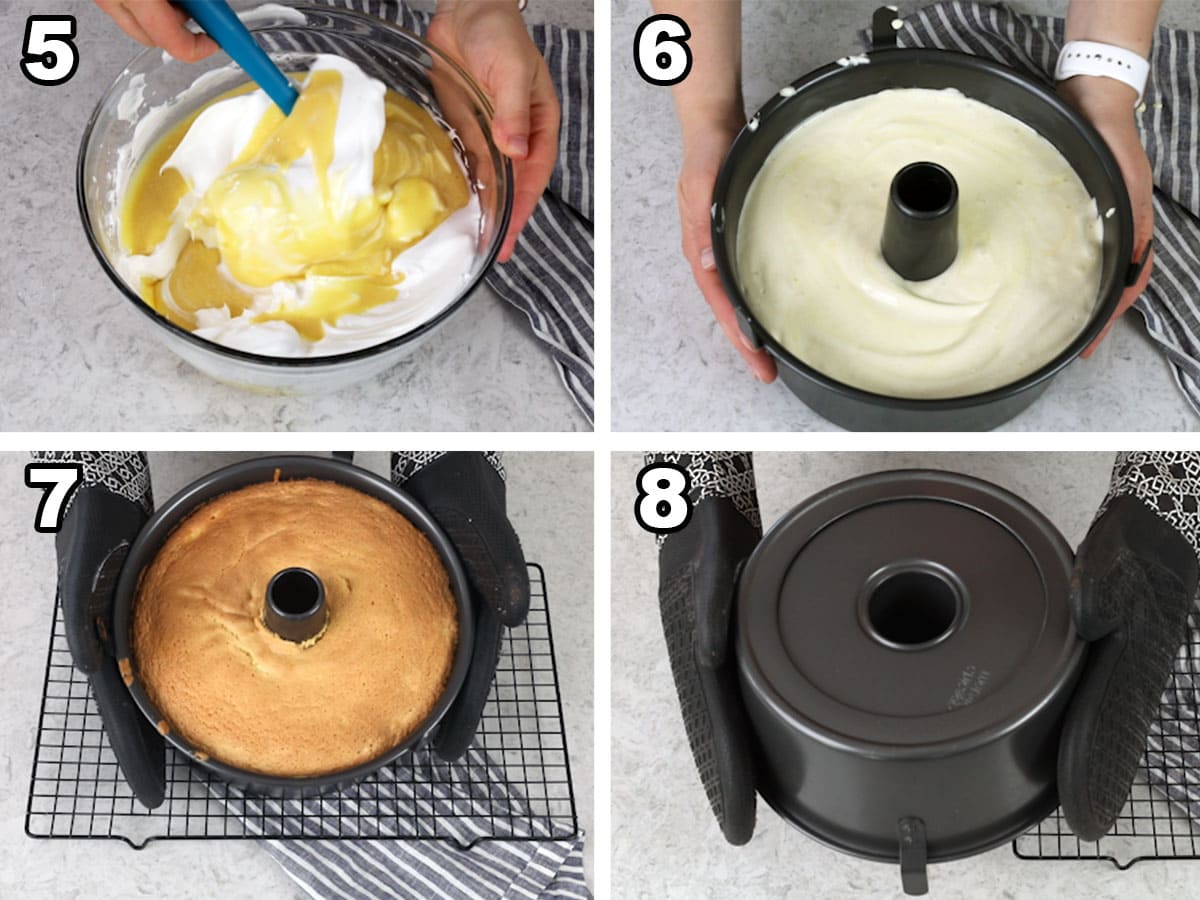
- Gently fold together the egg yolk mixture and the egg whites. You just spent all that time whipping air into your egg whites, so do this part gently to avoid deflating the whites as much as possible. Of course they’ll deflate some as you mix, but if you over-mix your cake could turn out dense or even fall in on itself.
- Spread into an ungreased tube pan.
- Bake until golden brown and any cracks in the surface appear dry. If you lightly touch the surface with your finger, it should spring back and not cave in.
- Carefully invert the cake onto a can or bottle and let it cool completely upside down. This is important for the cake to stay light and airy, if you cool it right-side-up it will shrink in on itself and become dense. A tube pan is important for chiffon cake so that you can invert it this way.
Frequently Asked Questions
If you greased your cake pan or if the cake was not fully baked, it could unfortunately fall out of the pan once it is inverted. I also counsel against using tube pans that have the prongs on the sides that are meant for inverting the pan without a can or bottle. Unfortunately, with some pans, these prongs will pull the sides of the pan away from the center once inverted, sometimes causing the cake to separate from the pan and fall out. Even if your pan has prongs, I still recommend inverting it on a can or bottle.
While a chiffon cake is more dense than an angel food cake, it shouldn’t be as dense as, say, a pound cake. If you find that yours is dense or dry, most likely this is due to either the egg whites not being whipped fully to stiff peaks or over-mixing the batter once you add the egg whites. If you deflate your egg whites, the cake is likely to turn out dense.
Unfortunately I do not recommend it. The tall tube pan allows the cake to rise properly and being able to invert it is critical to the lighter and airier crumb. If you use a regular cake pan or loaf pan, the cake cannot be properly inverted after baking and will shrink in on itself and is likely to turn out flat and dense. I’ve linked to the tube pan that I use in the “equipment” section of the recipe.
More Recipes You Might Like
Enjoy!
Let’s bake together! Make sure to check out the how-to VIDEO in the recipe card!
Chiffon Cake
Ingredients
Chiffon Cake
- 2 ¼ cups (250 g) cake flour
- 1 ¾ cups (350 g) granulated sugar, divided
- 2 teaspoons baking powder
- 1 teaspoon salt
- 6 large eggs, whites and yolks separated
- ½ cup (118 ml) avocado oil or vegetable oil or canola oil
- 1 cup (236 ml) orange juice, may substitute milk or water
- 2 teaspoons vanilla extract
- ¼ teaspoon almond extract, optional
- ½ teaspoon cream of tartar
Glaze (optional)
- ½ cup (113 g) salted butter, melted
- 2 ¼ cups (280 g) powdered sugar
- 2-4 Tablespoons orange juice or milk, as needed
Instructions
- Preheat oven to 325F (165C).
- In a large bowl, combine flour, 1 ¼ cups (250g) granulated sugar, baking powder, and salt and whisk together.2 ¼ cups (250 g) cake flour, 1 ¾ cups (350 g) granulated sugar, 2 teaspoons baking powder, 1 teaspoon salt
- In a separate bowl, combine egg yolks, canola oil, extracts and orange juice (or milk or water) and beat very well until mixture is smooth and well-combined.6 large eggs, ½ cup (118 ml) avocado oil or vegetable oil or canola oil, 1 cup (236 ml) orange juice, 2 teaspoons vanilla extract, ¼ teaspoon almond extract
- Add the egg yolk mixture to the flour mixture and stir until mixture is thoroughly combined.
- In a separate large, clean, dry, and completely grease and moisture-free bowl, combine egg whites and cream of tartar. Use an electric mixer to beat on medium-speed until foamy. Gradually increase the mixer speed to medium-high and gradually add remaining ½ cup (100g) of granulated sugar, about 1 Tablespoon at a time, allowing about 10 seconds of mixing after each addition.½ teaspoon cream of tartar
- Increase mixer speed to high and beat until egg white mixture is thick and glossy and you have reached stiff peaks.
- Add the egg yolk mixture to the egg whites and use a spatula to carefully fold the ingredients together until batter is smooth and completely combined,
- Pour evenly into an ungreased tube pan. Transfer to the center rack of 325F (165C) oven and bake for 50-55 minutes and any cracks on the surface appear dry.
- Remove from the oven and immediately invert onto a can or bottle.
- Allow to cool completely before running a knife along the inside of the pan to release the cake from the pan and then turning it out onto a serving rack. If desired, top with glaze before serving.
Glaze
- Combine melted butter and powdered sugar in a large bowl. Whisk together until smooth. Mixture will be stiff, add orange juice (or milk) starting with 2 Tablespoons, and add more as needed until you have a smooth glaze that drizzles smoothly off the whisk.½ cup (113 g) salted butter, 2 ¼ cups (280 g) powdered sugar, 2-4 Tablespoons orange juice or milk
- Pour evenly over cooled cake. Allow glaze to set (about 30 minutes, though this can vary depending on the specific thickness of your glaze) before slicing and serving.
Notes
Storing
Store in an airtight container at room temperature for up to 4-5 days.Nutrition
Nutrition information is automatically calculated, so should only be used as an approximation.
Like this? Leave a comment below!









Wonderful and light. This cake was first made in 1953, my husband’s birth year. We celebrated his 73rd Birthday with our church congregation using this cake recipe for his Birthday Day Cake.
Since we needed to serve about 50 people; I used it as a sheet cake. It did beautifully @ 325 degrees for 28 minutes. I also lined the bottom of the pan with parchment paper.
Thank you so much for trying my recipe, Midene! I appreciate the feedback baking in a different pan. I’m so glad it was a hit! 🙂
Hi Sam, all your recipes have been wonderful. I made this cake a year ago but got a new tube pan. It’s reinforced aluminum. The cake stuck and fell apart when I tried to release it from the pan. I noticed in your video you may be using a nonstick pan. Would this be better or could I grease the pan?
Thank you… it still tastes great but not great for appearance.
Oh no! I’m so sorry to hear this happened, Nancy! When did you try to release it? I wouldn’t recommend greasing the pan as the cake could fall out when you invert it. 🙁 My best advice is to get the knife all the way around the edge of the pan, but other than that I’m not sure why it would fall apart like that. 🙁 I wish I could be more helpful here. 🙁
This cake was light an fluffy an delicious!!! It is definitely worth the bake. I had neighbors over for dinner and made this for dessert. They raved about it and asked to bring some home. My icing was a little lumpy , I think because the butter was too cooled? I remade it with warm butter, much better!!
I just love the videos, they are so helpful, I am a visual learner and I enjoy them.
Thank you so much for trying my recipe, Nancy! I’m so glad you ultimately enjoyed it! You definitely want to start with melted butter to get a nice smooth frosting. 🙂
I made this cake a couple weeks ago for a home group I belong to, it’s nice because it’s light, but it’s definitely satisfying. It’s a little involved, but it’s totally worth it, I am bringing it to Easter dinner, I’m sure it will be a big hit. It is a wonderful cake! And I love how if you follow the recipe it turns out exactly how it’s supposed to! Thank you for making it easy and for the wonderful recipes!
Thank you so much for trying my recipe, and your kind words, Mark! I’m so glad this cake was such a hit. 🙂
I will be making this soon and am feeling the urge to add orange zest to the recipe! Where would you recommend adding the zest, if you also felt the urge to do so?
Hi Jennifer! I hope you love the cake! You can stir in some orange zest with the orange juice. 🙂
Ok, thank you!
This cake came out amazing! I realized my tube pan is 9.37” and still took it out after exactly 50 minutes. My cake was overflowing a little and the center was slightly “custardy”. This was my error as you called for a 10” pan. My husband was loving the texture! I plan on making this again for Easter for family – Should I give it another 5 minutes you think? Or 10?
This cake has such a fun texture and I am loving how tall it is! Looks great on a cake stand.
I’m glad everyone ultimately enjoyed it! If you have a long wooden skewer you can test the cake for doneness, much like you do with a toothpick and cakes. It could take 5 minutes or a bit longer. I can’t say for sure.
my family loved this cake, and many other recipes from this website, my go to for the best recipes
Thank you so much for trusting my recipes, Mary! I’m so glad everyone enjoyed this cake as well as all of the other recipes. 🙂
This cake is delicious. It’s so light and fluffy. Cooked perfectly. This will become a staple for me. I can’t wait to try it with lemon. The orange flavor is subtle. I’ve made chiffon cakes before but never had one with such a beautiful texture. The light glaze is a perfect pairing.
Thanks for giving it a try, David! We’re so happy you enjoyed our recipe so much 💕