The BEST Scalloped Potatoes

This post may contain affiliate links. As an Amazon Associate I earn from qualifying purchases. Please read my disclosure policy.
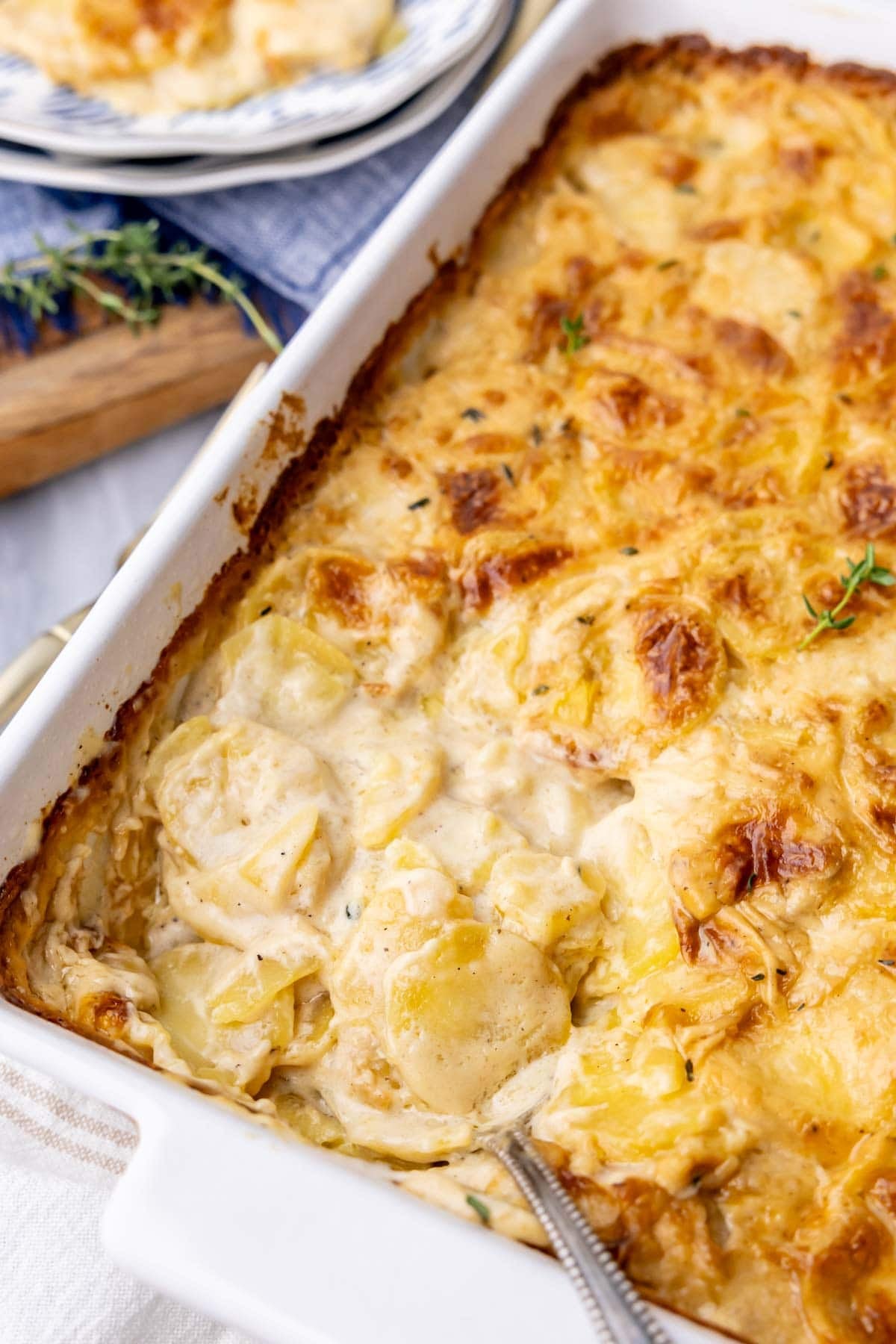
This is the best scalloped potatoes recipe, made with perfectly tender layers of thinly sliced potatoes in a rich, velvety cream sauce. Extensively tested for reliable results, this recipe can be made with or without cheese and can even be made in advance for the holidays! Recipe includes a how-to video!
Creamy, Flavorful, and Homemade Scalloped Potatoes
This is it! After months of testing (and years refining my palate for scalloped potatoes 😉) I couldn’t be more excited to be sharing the (actual) best scalloped potatoes recipe with you.
I know too well that some recipes yield sauces that separate or never thicken properly, while others leave you with gray potatoes or simply fall flat on flavor. I tackled every pain point to create a straightforward recipe that reliably turns out beautifully every time.
And, since I know how hectic holiday cooking can be, I made sure this recipe could be prepared in advance without sacrificing texture or flavor. You’ll find my (thoroughly tested) make-ahead instructions in the recipe card. I can’t wait for you to try this one!
Why This Recipe WORKS
- Starting on the stovetop makes a HUGE difference; I can’t believe more recipes don’t do this. It softens the potatoes and thickens the sauce to the proper consistency before baking, giving everything a head start so there are no surprises when you pull the dish from the oven.
- Incredible flavor, from scratch. No canned soups or packaged mixes, the sauce builds on deep flavors and comes together easily on the stovetop.
- Can be made with or without cheese. Traditionally, scalloped potatoes are made without cheese, while au gratin potatoes include it. However, when testing this recipe it was important to me that it be able to stand alone without cheese, but that cheese could also be added if desired. I include instructions for making today’s recipe with or without cheese (and it’s tasty either way!).
This dish is simple enough to prep as weeknight dinner side dish, but it also makes a fantastic holiday side dish too. Pair with any protein and a green veggie like peas, brussels sprouts salad, or roasted broccoli and some crusty artisan bread!
Ingredients
Only 12 ingredients today, and most are likely already in your kitchen. Let’s chat about them before we get into the recipe.
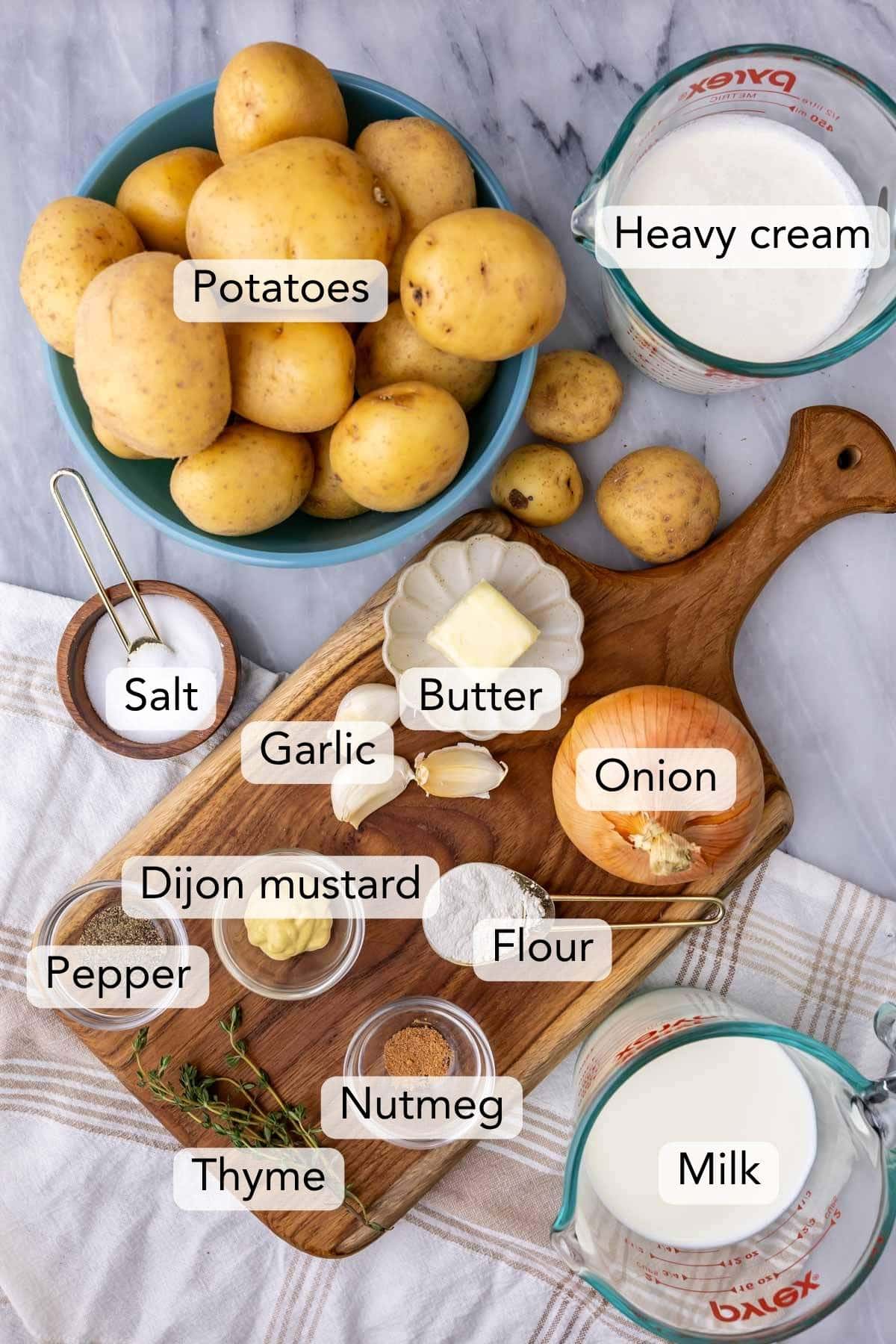
- Potatoes. Gold or yellow potatoes (like Yukon Golds) are my favorite choice; they have a nice buttery flavor and creamy texture. Russets will work, but their flavor isn’t as good (in my opinion) and since they are a starchier potato, they break down much faster as they cook. Another note: I recommend peeling your potatoes, otherwise the dish has a slight… earthy (dirt!) essence.
- Cream and milk. I use equal parts heavy cream and whole milk for a sauce that’s rich and creamy without being too heavy. I don’t recommend using all milk or all cream, as it will change the consistency and richness of the sauce.
- Flour. Just a few tablespoons of all-purpose flour help thicken the sauce so it’s creamy rather than runny, and also stabilizes it to help minimize the risk of it separating during the long cook time in the oven.
- Spices and herbs. Including black pepper, nutmeg, and thyme. I prefer fresh thyme, but dried works in a pinch. The nutmeg is optional, but I recommend trying it in the recipe at least once (I use it in my alfredo sauce and meatball recipe too!).
- Dijon mustard. Just a small amount adds depth of flavor and helps balance the sauce (a trick I also use in my creamy mushroom chicken!). Stick with Dijon mustard; it has a more nuanced, complex and less acidic flavor than its yellow counterpart.
- Cheese (optional!). Traditional scalloped potatoes don’t contain cheese and this recipe is delicious without it! However, I anticipated adding it would be a big question, so I tested extensively with cheese, too. You can add freshly shredded Gruyere, mild cheddar, or a combination of the two (or another good melting cheese like fontina or Monterey Jack). Sharper cheddars don’t melt as smoothly and can make the sauce seem more grainy or more likely to separate. See the recipe notes for detailed instructions!
As always, this is just an overview of the ingredients I used and why. For the full recipe please scroll down to the bottom of the post!
Sam’s Tip for Preventing Gray Potatoes
I ran into gray potatoes a lot during testing. It’s harmless (just oxidation), but it sure doesn’t look pretty! To avoid gray potatoes, cut your potatoes while the onions are cooking. Don’t worry if peeling and slicing takes you a while, just keep an eye on the onions, stirring occasionally and adjusting theheat so they don’t burn (add a splash of broth or water, if needed, to keep them from burning). If they end up cooking long enough to become caramelized onions, even better! You’ll have extra flavorful onions and potatoes that are ready to cook as soon as they’re sliced, giving them less time to oxidize.
How to Make Scalloped Potatoes (Step-by-Step)
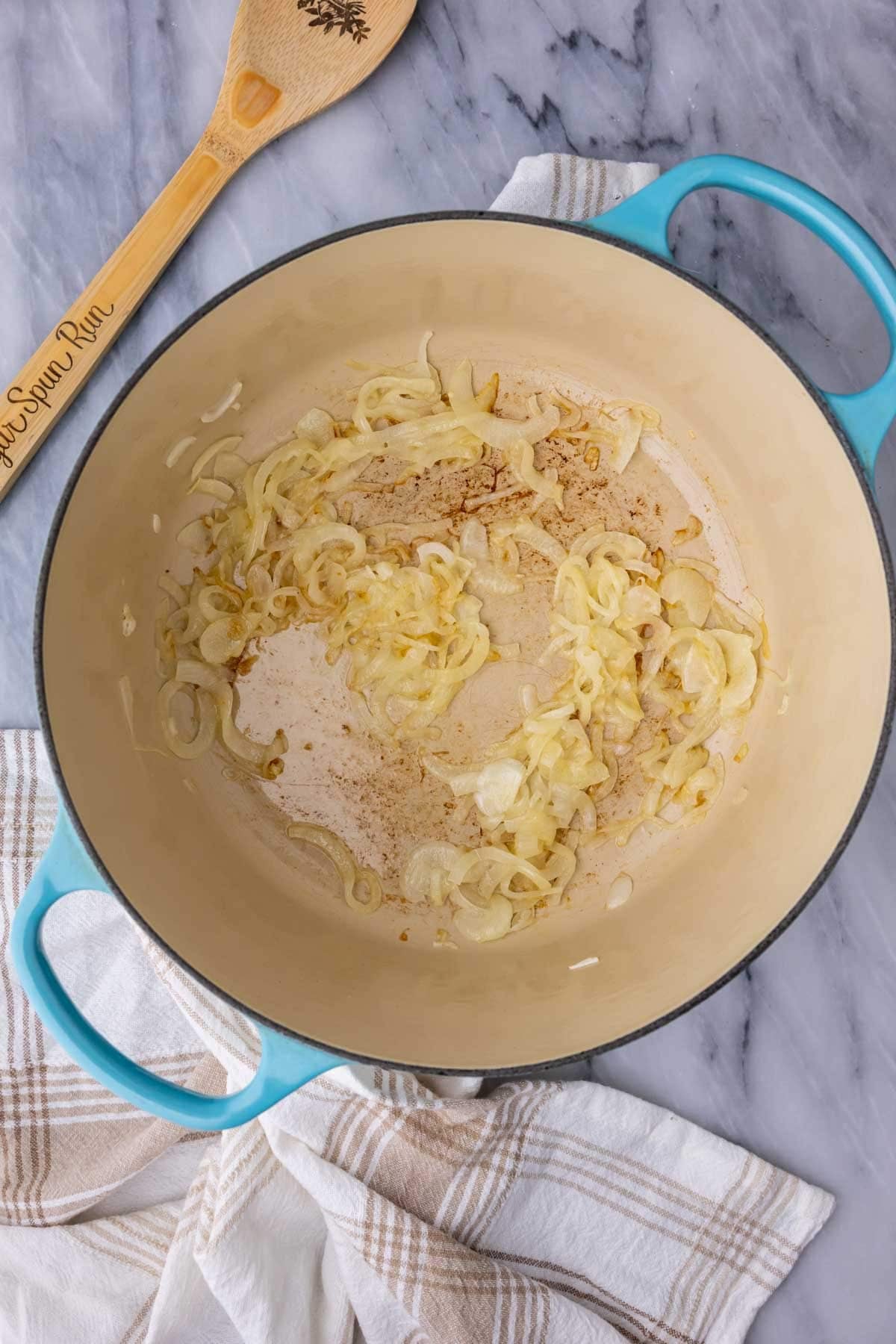
- Cook the onions. Melt the butter over medium heat, then add the onions. Cook til translucent and softened, checking and stirring every so often so they don’t burn. While the onions are cooking, prepare your potatoes.
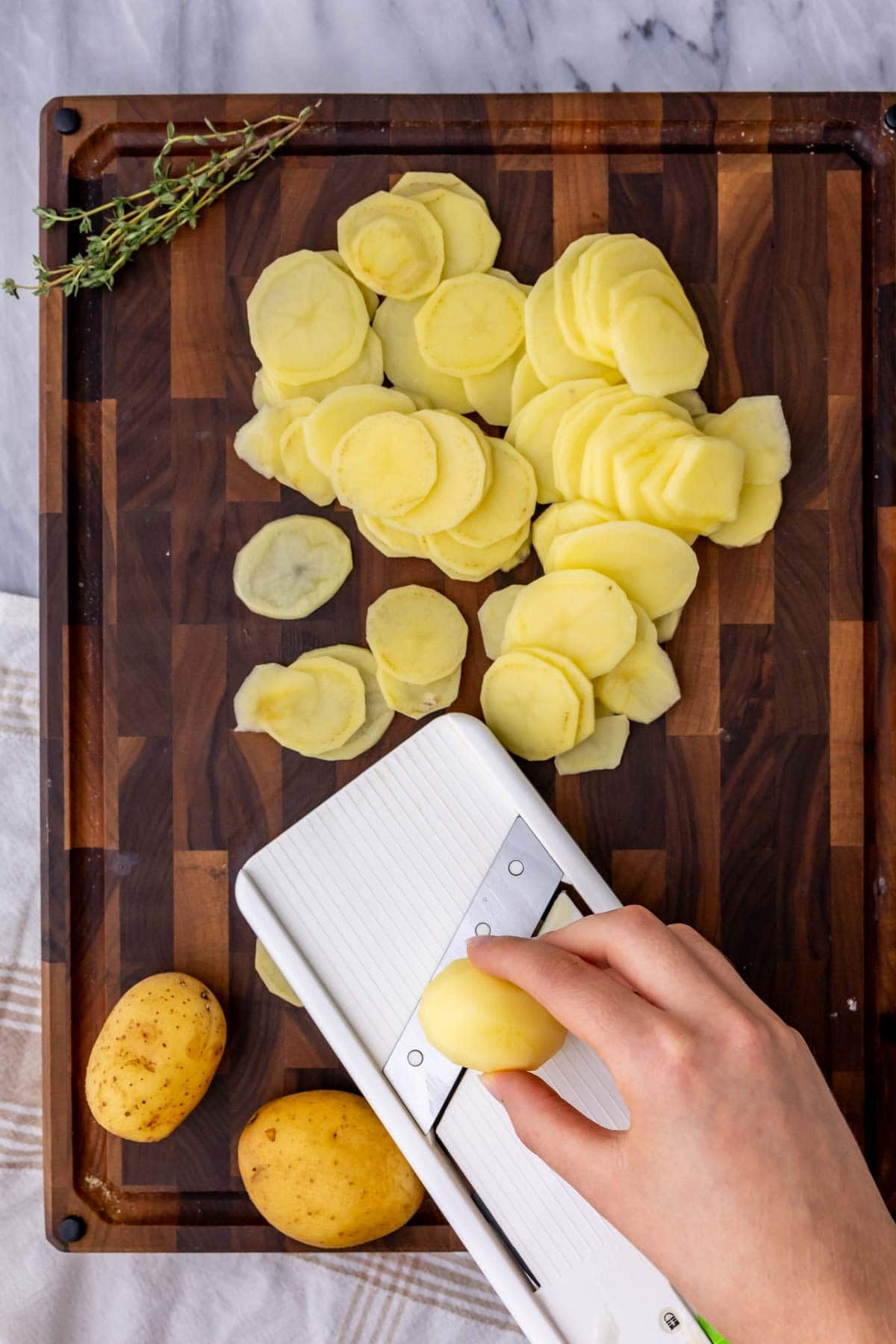
- Prep your potatoes. Slice your potatoes into even ⅛” slices so they cook evenly. Do not rinse the potatoes after slicing! We need that starch for the proper creamy texture and smooth sauce after baking. A mandoline slicer (linked to the one I love and use) is a great tool to have on hand to quickly and evenly cut through the potatoes. Just make sure to use the hand guard!
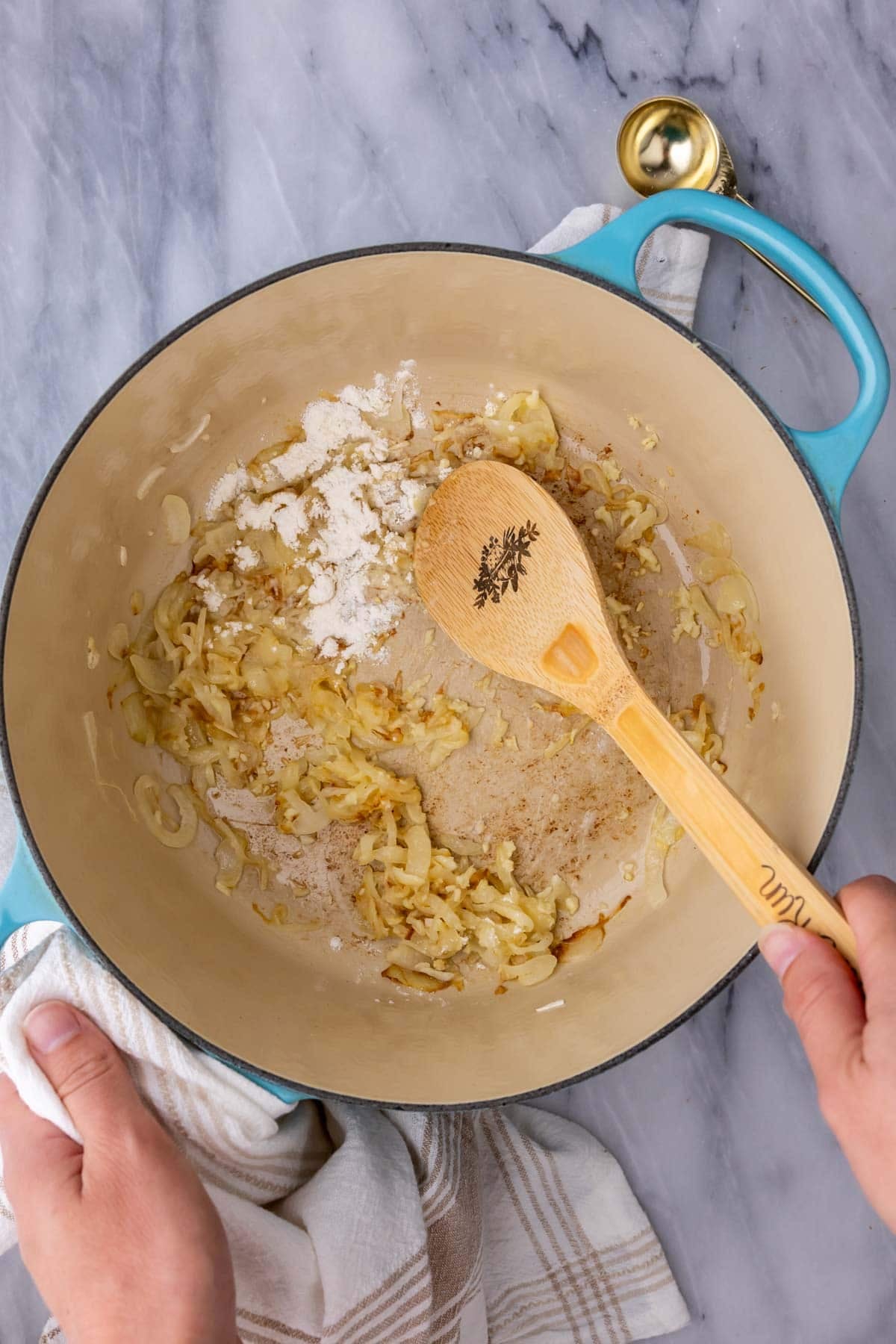
- Start building the roux. Add the garlic to the onions and cook until fragrant, then stir in the flour. Cook, toasting the flour for about a minute or so (builds flavor!).
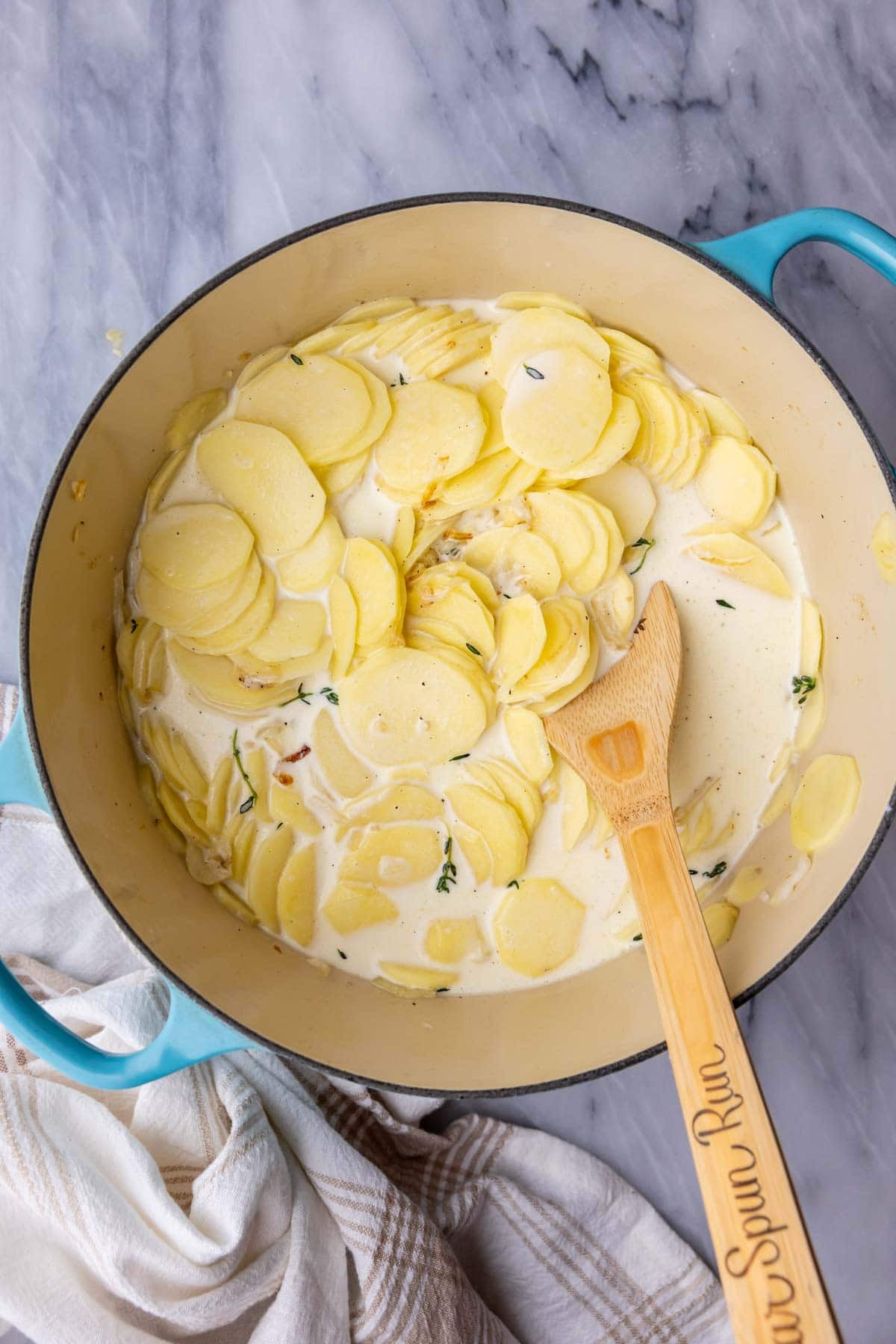
- Add remaining ingredients. Add your potatoes, salt, mustard, spices, cream, and milk. Stir everything well to combine.
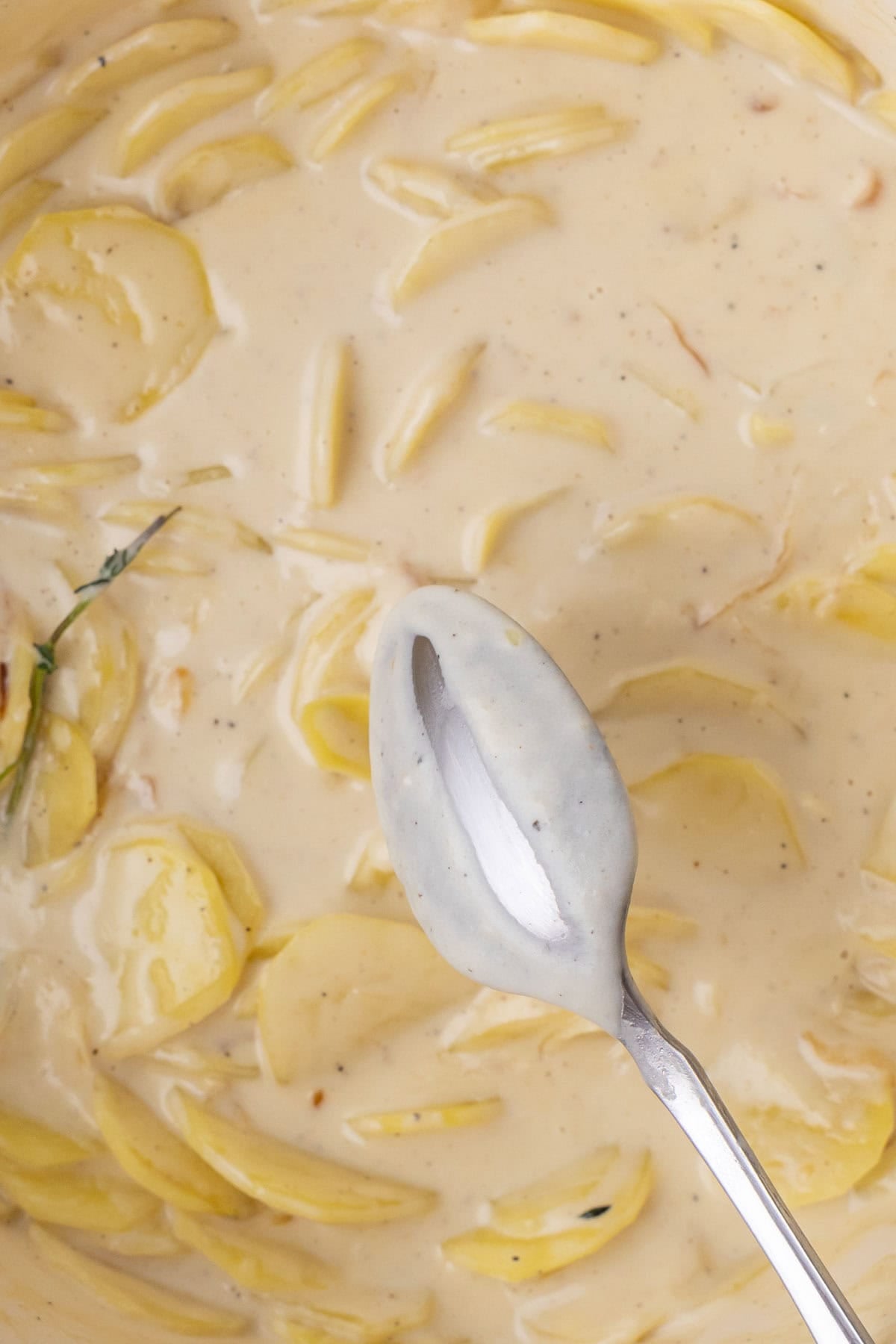
- Simmer til thickened. Increase the heat to a notch above medium. Let the mixture simmer gently until the sauce thickens enough to coat the back of a spoon. It should cover in an opaque layer, and if you use your finger (careful, it’s hot!) to make a trail through the sauce, the sauce holds and doesn’t flow back into the trail. Note the potatoes will be slightly softened, but they certainly won’t be tender yet, this is normal and totally fine!
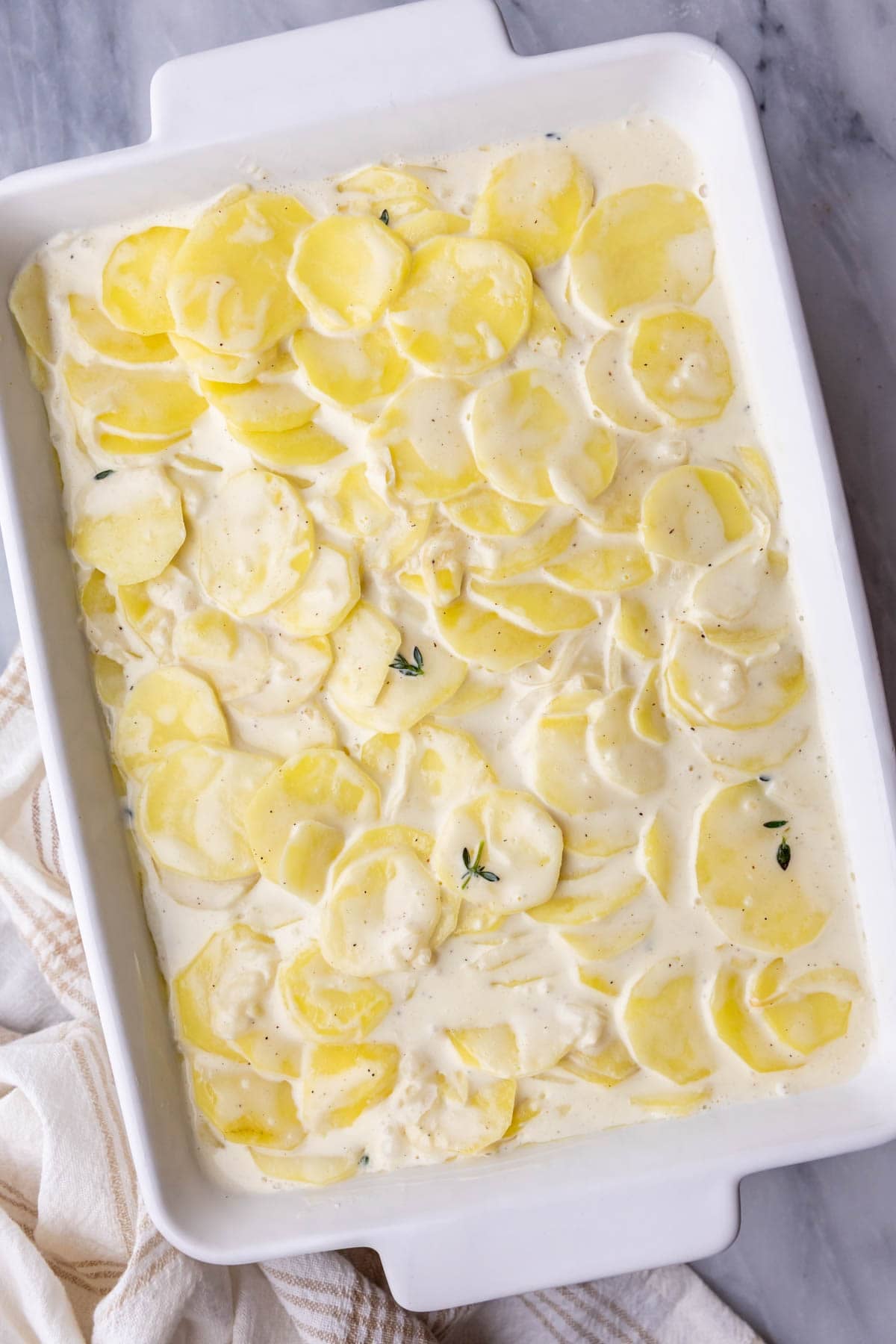
- Bake. Transfer the mixture to a buttered baking dish and bake until the potatoes are tender and the top is nicely golden, about 45 minutes.
Sam’s Tip
I prefer a glass or ceramic baking dish. While metal will work, metal pans conduct heat more quickly and efficiently. While that’s good for some recipes, here I prefer that glass or ceramic heats more slowly, minimizing the risk of the sauce becoming too hot too fast and separating or over-browning. If metal is your only option, just check the potatoes earlier than indicated in the recipe.
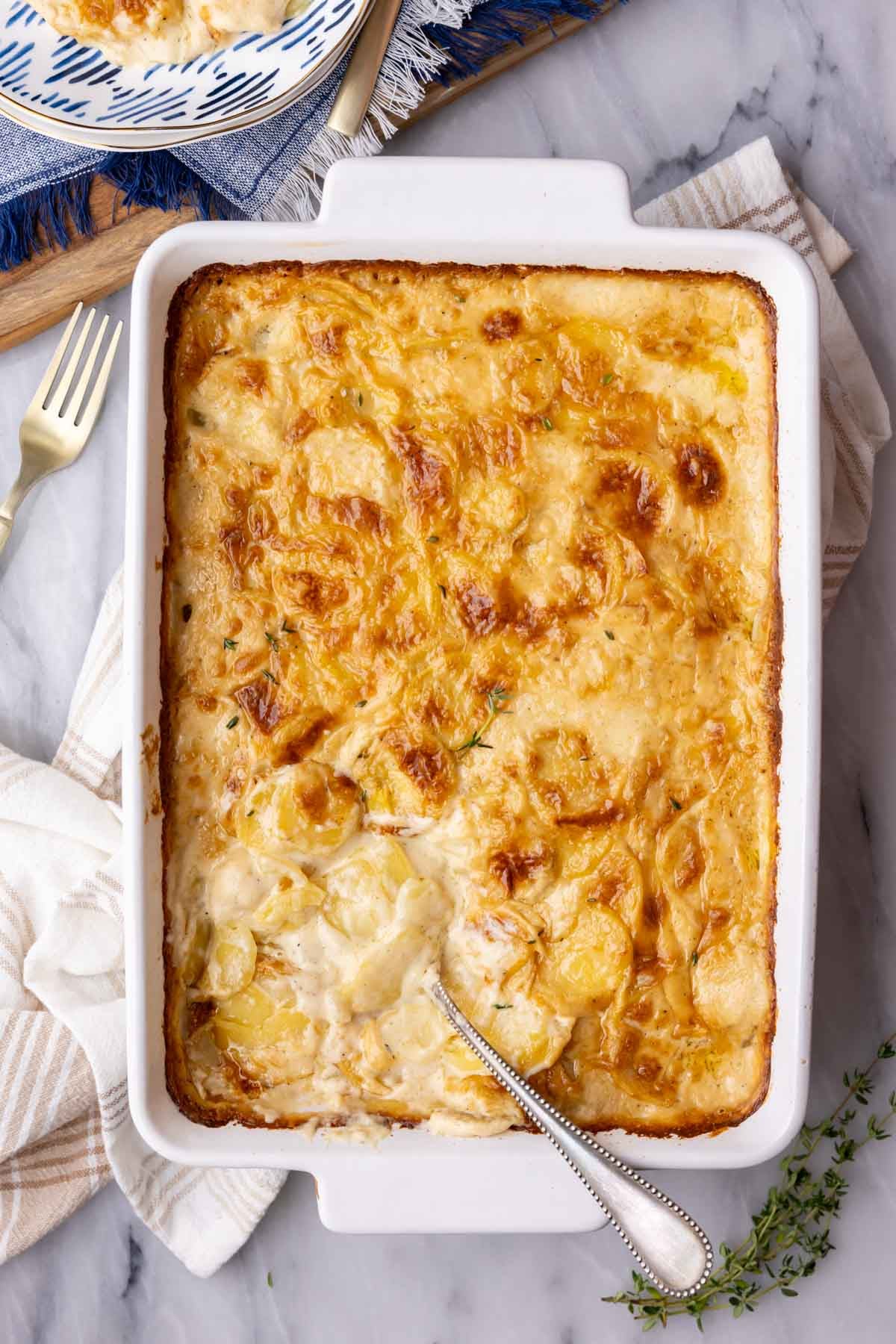
- Rest before serving. Allow the dish to rest before serving, otherwise the sauce will seem too thin. I usually give mine 15 minutes to rest before we dig in.
Sam’s Tip
I don’t recommend adding cheese on top of your scalloped potatoes before baking, unfortunately it can become oily thanks to the long bake time. Instead I include instructions for adding the cheese inside the potatoes, or, if you want to add cheese on top, sprinkle it on top during the last 5-10 minutes of bake time (just until it’s melted).
Frequently Asked Questions
Cutting the potatoes in advance (makes them turn gray), cutting the potatoes unevenly or too thick (leads to uneven cooking), rinsing the potatoes after cutting (we want that starch!), not cooking the sauce long enough (makes it runny), and serving right away (the sauce needs time to cool and thicken).
Good scalloped potatoes don’t require a lot of bells and whistles, but there are a few key but subtle ingredients that help make them better than you’re expecting. Building on a butter, onion and garlic based roux adds incredible depth, but a bit of Dijon mustard also adds nuance (I thought ground mustard would be the winner, but Dijon blew it out of the water!) and fresh thyme also adds complexity. Nutmeg is also another unexpected star that adds depth and a little something special. Finally, you can even add cheese to my scalloped potatoes recipe; I include instructions for this in the recipe notes below.
Absolutely! I extensively tested this recipe to make sure it was make-ahead friendly, and this recipe works excellently for making a day (or two) in advance! Prepare the recipe as instructed through cooking the potatoes on the stovetop. Then, pour them into a greased baking dish and allow everything to cool 15-30 minutes. You won’t bake the potatoes at this point, instead cover them with foil and refrigerate for up to 48 hours.
Once you’re ready to bake, remove from the refrigerator and allow to sit at room temperature for 30 minutes to take the chill off and preheat your oven to 350F (175C). After 30 minutes, transfer the covered dish to the center rack of your preheated oven and bake (still covered!) for 1 hour. After an hour, uncover the scalloped potatoes and continue to cook until potatoes are fork tender and sauce is bubbling (about 10-15 minutes longer). Let the dish rest for 15 minutes before serving
Traditionally, scalloped potatoes are made with thin-sliced potatoes baked in a creamy sauce while potatoes au gratin are made quite similarly, but contain cheese. These days, the two terms are often used interchangeably, but I wanted to respect the original differences of the dish (and hope to have an au gratin version coming in the future — ready your cheese grater!).
Serve this Alongside:


Planning to make this recipe for Thanksgiving? Check out my full list of Thanksgiving side dishes for more turkey sidekicks 🦃
Enjoy!
Psst… Did you hear I wrote a cookbook? 💜
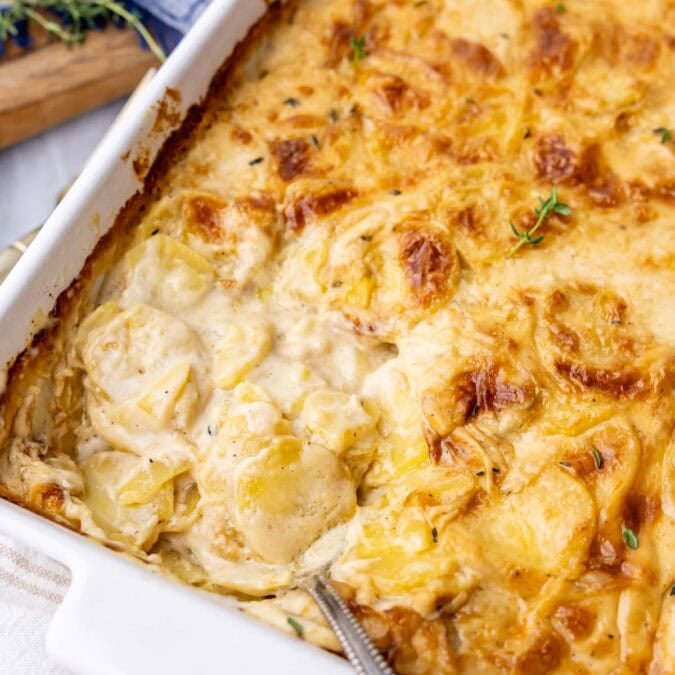
Scalloped Potatoes
Ingredients
- 3 Tablespoons salted butter
- 1 cup (140 g) thinly sliced white or yellow onion, (about 1 medium onion)
- 3 lbs (1.36 kg) yellow or gold potatoes
- 1 Tablespoon minced garlic
- 3 Tablespoons all-purpose flour
- 1 ½ teaspoons table salt
- 1 ½ teaspoons Dijon mustard
- ½ teaspoon ground black pepper
- ⅛ teaspoon ground nutmeg, (optional)
- 1 teaspoon fresh thyme leaves, (or ½ teaspoon dried thyme)
- 1 ½ cups (360 ml) heavy cream
- 1 ½ cups (360 ml) whole milk
- See note if you would like to add cheese
Instructions
- Preheat oven to 350F (175 C) and generously grease a 13 x 9” (33 x 23 cm) baking dish with butter. Set aside.
- Heat a large pot or Dutch oven over medium heat. Once warm, add butter and onions and cook until the onions are softened and translucent. While the onions cook, prepare the potatoes (if needed, turn down the heat so the onions don’t burn and be sure to stir occasionally, if they begin to burn, add a splash of water or broth).3 Tablespoons salted butter, 1 cup (140 g) thinly sliced white or yellow onion
- Prepare the potatoes: Wash and dry the potatoes, peel, then slice into even ⅛” (3mm) thick slices (I use this mandoline, it makes the slicing easy and consistent). Do not rinse the potatoes after slicing. Set aside.3 lbs (1.36 kg) yellow or gold potatoes
- Once onions are softened, add garlic and cook until fragrant, about 30 seconds.1 Tablespoon minced garlic
- Sprinkle flour over the onion and garlic and stir until it coats the onions and no dry flour remains, then cook (stirring) another 30-60 seconds longer.3 Tablespoons all-purpose flour
- Add the potatoes, salt, mustard, pepper, nutmeg, thyme, cream, and milk and stir well. The liquid will not cover the potatoes at this point, this is fine.1 ½ teaspoons table salt, 1 ½ teaspoons Dijon mustard, ½ teaspoon ground black pepper, ⅛ teaspoon ground nutmeg, 1 teaspoon fresh thyme leaves, 1 ½ cups (360 ml) heavy cream, 1 ½ cups (360 ml) whole milk
- Increase heat just above medium and continue to cook, stirring frequently. Bring to a gentle simmer and simmer until the sauce has thickened to a creamy consistency that coats the back of a spoon (sauce will be opaque over the spoon and if you draw a line through it, it will hold). The potatoes may have softened some, but will not be fork tender yet, this is fine. Remove from heat and carefully pour into prepared baking dish and spread into an even layer.
- Transfer to center rack of the oven and bake, uncovered, for 40-50 minutes, until potatoes are tender when pierced with a fork.
- Remove from oven and allow to cool for at least 15 minutes before serving to allow the sauce to thicken properly.
Notes
Adding cheese
Scalloped potatoes are traditionally made without cheese. However, if you would like to add cheese, shred 6 oz (170 g) of Gruyere or cheddar (best to shred it yourself and not use pre-shredded, and if using cheddar use a milder variety rather than anything extra sharp). After cooking the potatoes on the stovetop, allow the sauce to cool for 5 minutes before stirring in the cheese until melted then bake as indicated. If you’d like to add additional cheese on top, sprinkle a small amount over the dish during the last 5-10 minutes of baking (otherwise it can become too hot and can separate/become oily).Storing
This dish is best served fresh and warm, but leftovers can be stored in an airtight container in the refrigerator for up to 4 days.Making in advance
Prepare the recipe as instructed through step 7 (pouring the potatoes into the dish after cooking on the stovetop). Allow to cool 15-30 minutes, then cover with foil and refrigerate for up to 48 hours. When ready to bake, remove from the refrigerator and allow to sit at room temperature for 30 minutes, preheat your oven to 350F (175C) at this time. After 30 minutes, transfer covered to the center rack of your preheated oven and bake, covered, for 1 hour. Uncover and continue to cook until potatoes are fork tender and sauce is bubbling (about 10-15 minutes longer).Nutrition
Nutrition information is automatically calculated, so should only be used as an approximation.
Like this? Leave a comment below!